Uncategorized Archives - Page 3 of 3 - Lashley Land
Hunting Public Land in Nebraska: Your Complete Guide

Hunting Public Land in Nebraska: Your Complete Guide

Nebraska ranks among the Midwest’s finest hunting destinations, carrying forward a rich tradition that spans generations. With over 1.2 million acres of publicly accessible land, including state, federal, and conservation partner properties, Nebraska offers hunters exceptional opportunities across its diverse landscape.

Nebraska’s public hunting grounds span from the rugged terrain of the Pine Ridge to the expansive grasslands of the southwest, providing hunters with varied land and abundant game opportunities. The state’s Wildlife Management Areas (WMAs) and Open Fields and Waters program lands give hunters access to prime hunting territory throughout the season.

The state’s wildlife populations reflect its habitat diversity. Nebraska’s terrain supports thriving populations of whitetail and mule deer, while its grasslands host numerous upland bird species, including ring-necked pheasant, sharp-tailed grouse, and greater prairie-chicken. The state’s river bottoms and woodlands provide excellent habitat for wild turkey, while waterfowl hunters find success along the Platte River and the numerous wetlands scattered across the state.

What makes Nebraska exceptional is the genuine hunting experience it offers. Here, hunters can find true solitude in open spaces where the natural sounds of wildlife and prairie winds prevail. Unlike more populated hunting destinations, Nebraska’s public lands provide the space and freedom that modern hunters seek, making it an ideal place to not only hunt but also to establish roots and own a piece of this hunting paradise through Lashley Land and Recreational Real Estate.Hunting Public Land in Nebraska: Your Complete Guide

Essential Permits and Regulations

Before heading out to Nebraska’s public hunting grounds, it’s crucial to understand the state’s licensing and regulations. The primary requirement for all hunters is to obtain a valid hunting permit. For residents, this starts with purchasing a basic hunting permit, while non-residents need to secure a special permit. Additional species-specific permits may be required depending on your quarry, such as permits for mule deer and turkey or migratory bird stamps for duck and goose hunting.

Hunter education is a cornerstone of the Nebraska Game and Parks Commission’s commitment to safe and responsible hunting. All hunters born after January 1, 1977, must complete a certified hunter education course before purchasing a hunting permit. This requirement applies to hunters age 12 through 29, though there are apprentice hunter programs available that allow new hunters to try the sport under the supervision of an experienced mentor. The state offers both traditional classroom courses and convenient online options to complete this requirement.

Nebraska’s hunting regulations are designed to ensure sustainable wildlife habitats while maximizing public access opportunities. Legal hunting hours typically run from 30 minutes before sunrise to 30 minutes after sunset, though specific season dates may vary by species. The state is divided into multiple public areas, each with its own set of regulations and quotas. Bag limits are strictly enforced and vary by species, season, and zone.

Youth hunting opportunities are particularly emphasized in Nebraska, with special seasons and programs designed to introduce young people to the sport. Hunters under 16 years of age can participate in youth seasons for deer, turkey, and small game, often getting first access before regular seasons begin. These youth hunts typically feature more lenient regulations and increased mentor involvement to ensure a safe and positive introduction to hunting.

For the most current information on seasons, zones, and special regulations, hunters should always consult the annual Public Access Atlas and check the Nebraska Game and Parks Commission website before heading afield. Remember that regulations can change from year to year, and staying informed is part of being a responsible hunter in Nebraska’s public land.

Hunting Public Land in Nebraska: Your Complete Guide

Navigating Public Access Lands

Nebraska offers an impressive network of public land spanning over 1.2 million acres, providing diverse opportunities for hunters throughout the Cornhusker State. Understanding how to access and navigate these public areas is crucial for a successful hunt.

The cornerstone of public access hunting in Nebraska is the Open Fields and Waters (OFW) program, which opens privately owned lands to walk-in hunting through partnerships with landowners. These areas provide valuable hunting grounds throughout the state and are clearly marked with appropriate signage. Additionally, hunters can access Wildlife Management Areas (WMAs), which are specifically managed for wildlife habitat and public hunting opportunities.

The Nebraska Public Access Atlas is an indispensable tool for hunters planning their outings. Available both in print and digital formats, this comprehensive guide maps out all public land across the state. The interactive online version offers real-time updates and allows hunters to scout locations using aerial imagery before heading into the field. For the most current information, the digital atlas is recommended over the printed version, as property access can change throughout the season.

Modern technology has revolutionized how hunters navigate public land. The Nebraska Game and Parks Commission offers mobile-friendly mapping tools that work offline, ensuring you can check property boundaries and access points even in areas with poor cell service. The interactive GIS map portal provides additional layers showing seasonal restrictions, parking areas, and special hunting zones.

When accessing public land, hunters must park in designated areas only, typically marked by signs or indicated in the Public Access Atlas. Respect private property boundaries, which are usually marked with signs or fence posts displaying specific colors indicating public access areas. Remember that different properties may have varying regulations – some areas might restrict vehicle access to marked trails only, while others may be walk-in only.

Stay vigilant about boundary restrictions, checking carefully for posted signage indicating special regulations or prohibited areas. Many public areas maintain 100-yard safety zones around facilities and parking areas where hunting is not permitted. Always consult the Public Access Atlas and on-site signage for specific rules governing each property.
Hunting Public Land in Nebraska: Your Complete Guide

Seasonal Hunting Opportunities in Nebraska

Big Game Hunting

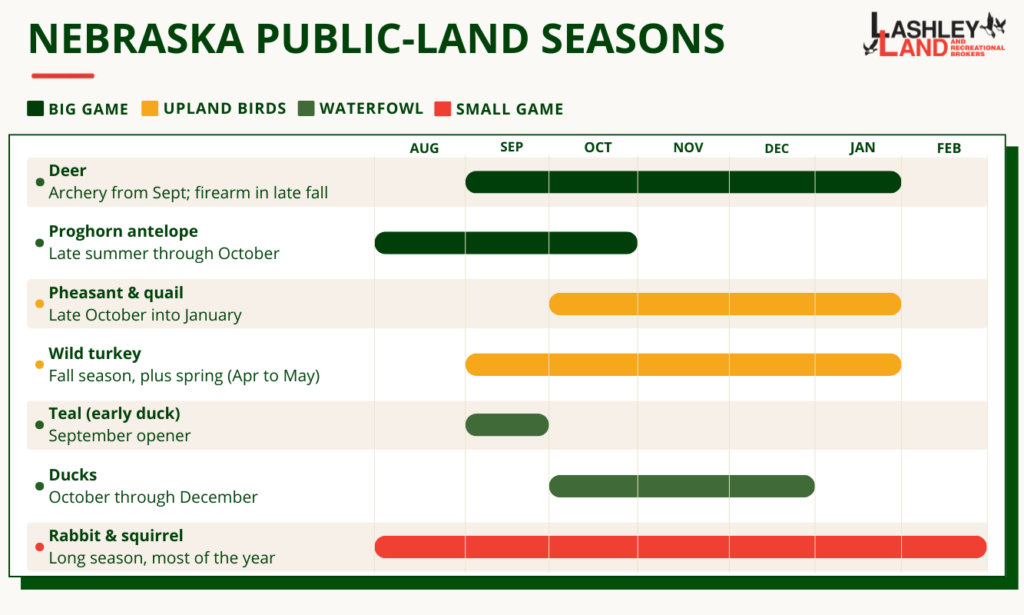
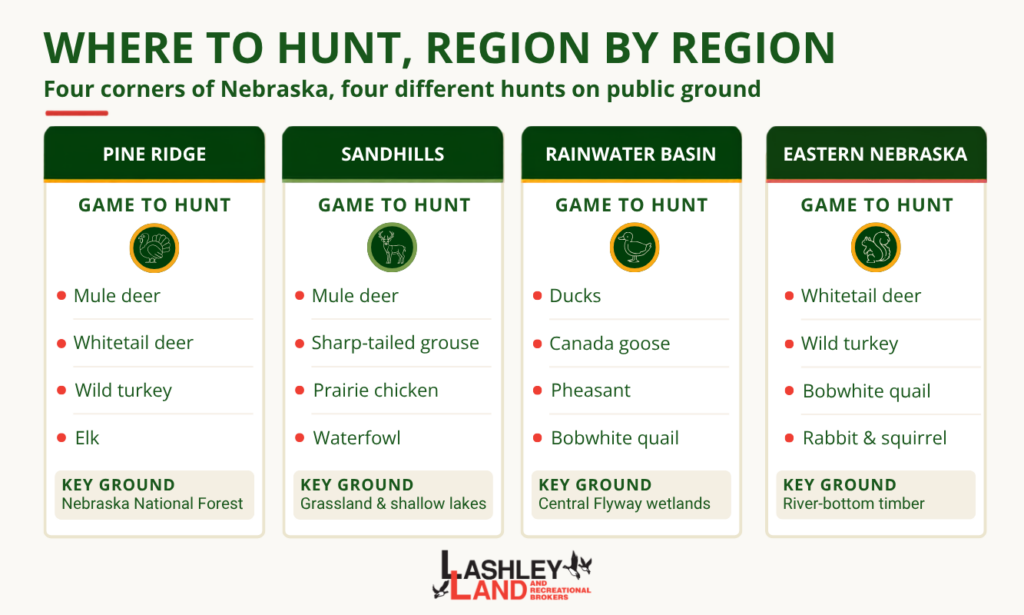
Nebraska’s diverse public lands offer premier deer hunting opportunities across the state. Fall brings the most anticipated seasons for big game enthusiasts. Whitetail deer hunting runs from September through January, spanning archery through rifle seasons. Mule deer hunting is particularly excellent in western Nebraska, with the Pine Ridge and Nebraska Sandhills regions offering prime opportunities. Pronghorn antelope hunting takes place from August through October, primarily in the Panhandle region, where terrain and habitat are ideal for these swift creatures.

Upland Bird Hunting

The state maintains its reputation for exceptional upland bird opportunities throughout the hunting seasons. Ring-necked pheasant hunting extends from late October through January, with excellent success rates in public access areas near McCook and Imperial. Bobwhite quail hunting thrives in Eastern Nebraska counties, where habitat conditions create perfect environments for these popular game birds. Wild turkey hunting offers both spring and late seasons, with the most productive areas found along the Missouri River and Republican Rivers corridors.

Waterfowl Hunting

Following the Central Flyway migratory bird patterns, Nebraska provides outstanding waterfowl hunting opportunities. Duck season reaches its peak from October through December, with exceptional hunting in the Rainwater Basin of central Nebraska and along the Platte River corridor. A special early teal season in September offers additional opportunities for waterfowl enthusiasts, allowing hunters to target these fast-flying birds before the main duck season begins.

Small Game Opportunities

Year-round public hunting is available for various small game species throughout Nebraska. Cottontail rabbits and squirrels provide consistent hunting opportunities, particularly in the Missouri River bluffs and adjacent habitat in deciduous forests. These areas offer ideal cover and food sources, making them reliable locations for small game pursuits throughout the year.

Nebraska Hunting Tips for Success

For the most productive hunting experience, focus on early morning and late evening hours when game is most active. During migrations and cold weather periods, mid-day hunting can also prove successful. Nebraska’s public hunting areas are strategically positioned throughout the state’s diverse regions, providing access to various habitat types and game species. Understanding these locations and timing patterns significantly increases chances of success.

Hunting Public Land in Nebraska: Your Complete Guide

Buying Hunting Land in Nebraska

After experiencing the incredible hunting opportunities across Nebraska’s public lands, many hunters find themselves dreaming of putting down permanent roots in the Cornhusker State. Investing in private hunting land offers a unique combination of recreational enjoyment and sound financial planning, with property values consistently appreciating in prime wildlife habitat regions.

The diversity of Nebraska’s landscape creates distinct opportunities for land investment. The Nebraska Sandhills, with its rolling prairie and abundant bird populations, presents exceptional multi-use properties that combine hunting potential with agricultural value. The Pine Ridge area offers dramatic terrain and thick forests, perfect for those seeking more challenging deer-hunting experiences and scenic beauty. Meanwhile, the river corridor regions along the Missouri River provide excellent migratory bird hunting opportunities and year-round recreational value.

Today’s market presents compelling investment opportunities in Nebraska hunting properties. Many parcels feature established food plots, existing blinds and stands, and natural resources – all elements that contribute to both immediate hunting enjoyment and long-term property value. Whether you’re looking for a weekend retreat or a legacy property to pass down through generations, Nebraska’s privately owned lands offer remarkable potential for both personal enjoyment and investment growth.

For those ready to transform their Nebraska hunting experience from occasional visitor to permanent stakeholder, Lashley Land and its team of experienced land specialists can help navigate the journey. Our deep understanding of Western Nebraska’s hunting regions, combined with extensive real estate expertise, ensures you find the perfect property that aligns with both your hunting aspirations and investment goals.

Ready to explore available hunting properties? Contact Lashley Land today to discover current listings that match your criteria. Our team can arrange private viewings of selected properties and provide detailed information about hunting potential, property improvements, and investment outlook. Take the first step toward owning your piece of Nebraska’s hunting paradise – reach out now to begin your land ownership journey.

Lake McConaughy Fishing – A Premier Destination for Anglers and Landowners

Lake McConaughy Fishing – A Premier Destination for Anglers and Landowners

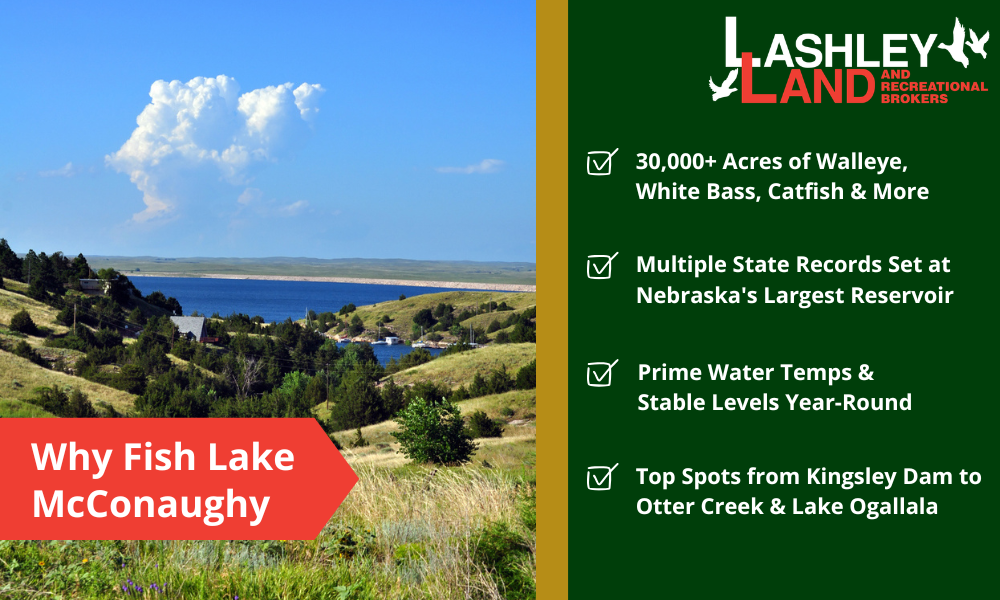
Lake McConaughy, or “Big Mac” as locals call it, is Nebraska’s largest reservoir and one of the top walleye fishing destinations in the United States. Spanning over 30,000 surface acres and stretching roughly 22 miles long, this lake in Keith County draws anglers from across the Midwest in pursuit of trophy game fish, state records, and year-round fishing opportunities.

With abundant walleye, white bass, catfish, wiper, northern pike, and smallmouth bass, Big Mac offers something for every angler, and for landowners, it’s a chance to own property near one of Nebraska’s most sought-after outdoor locations.

Lake McConaughy Fishing – A Premier Destination for Anglers and Landowners

What Makes Lake McConaughy a Top Fishery

  • Trophy walleye fishing – Lake Mac is widely considered one of the best walleye fisheries in the country, with multiple Nebraska state records set here. The lake also hosts walleye tournament events that draw competitive anglers from across the region. Many consider it a proving ground for anyone who aspires to be the greatest walleye angler in their circle.
  • Diverse game fish – Beyond walleye, anglers target white bass, smallmouth bass, channel catfish, wiper, northern pike, and gizzard shad. Bass fishing picks up throughout the warmer months around rocky points and submerged structure.
  • Ideal conditions – Stable water levels, optimal water temperature, and a strong forage base create a thriving habitat. With 30,000+ surface acres, there’s plenty of room to find your spot whether you’re fishing from a boat or from shore.
  • Year-round opportunity – Spring and fall are prime for walleye as cooler water temperatures push fish shallow. Summer is best for white bass, wiper, and catfish in deeper water. Winter ice fishing is productive on Lake Ogallala for trout.
Lake McConaughy Fishing – A Premier Destination for Anglers and Landowners
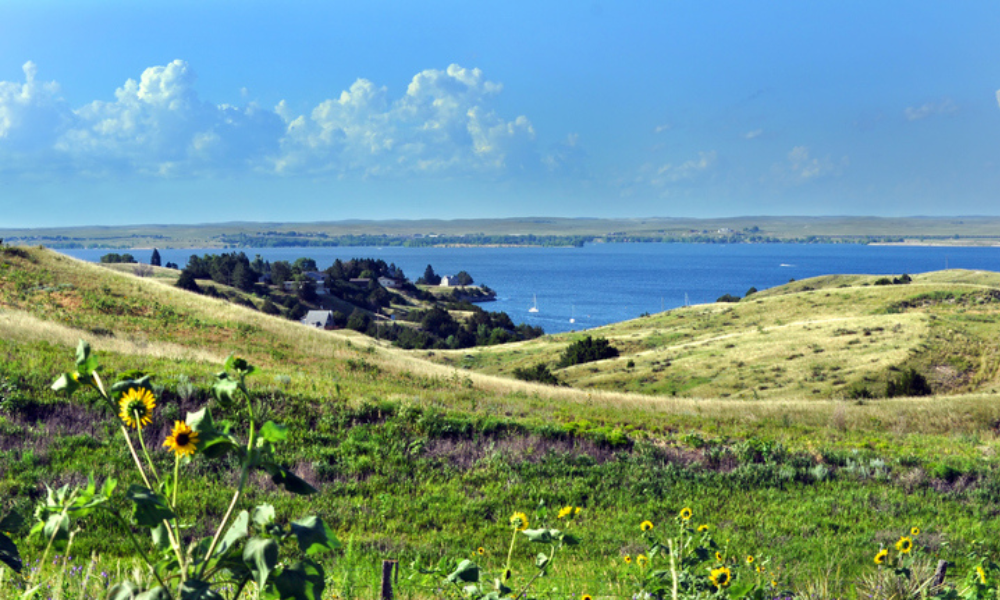
Rolling Nebraska grassland slopes down to blue, Lake McConaughy. Tiny white sailboats dot small bay.

Best Fishing Spots at Lake McConaughy

  • Martin Bay – The most popular shore fishing spot for walleye and white bass. Sandy bottom with a gradual drop-off. The surrounding beach areas make it a great spot for families, too.
  • Otter Creek – Excellent for catfish, smallmouth bass, and northern pike. Rocky structure and current create prime habitat and solid bass fishing opportunities.
  • Kingsley Dam – Deep water and structure near the dam make this a hotspot for walleye fishing, wiper, and pike, especially in spring and fall when fish migrate toward the dam.
  • Lake Ogallala – Just below the dam, this smaller lake offers excellent trout fishing in cooler waters. The Lake Ogallala Campground nearby is a convenient base for anglers.
  • North Platte River – Flows nearby and provides excellent fishing for catfish, walleye, pike, and other species. The broader Platte River system is one of Nebraska’s most important waterways.

Tips, Techniques, and Gear

Local fishing guides recommend mixing techniques depending on the season and species:

  • Artificial baits – Crankbaits and soft plastics work well for walleye and bass. Shad-pattern artificial baits are especially effective given the forage base. Cut bait is the go-to for catfish.
  • Gear with advanced features – A medium-action spinning rod with braided line handles walleye in deeper water. Look for rods with sensitive tips and smooth drag systems for bigger game fish.
  • Boat positioning – Drifting along underwater structures or trolling near drop-offs increases your chances. If you don’t own a boat, local fishing guides offer guided trips with all equipment provided.
  • Shore vs. boat – Boat fishing opens up deeper structure in summer. Shoreline fishing is productive spring and fall at spots like Martin Bay and Otter Creek.
  • Stay updated – Check with the Lake McConaughy Visitor Center or a local fisheries biologist before heading out. Water levels, fish activity, and bait recommendations shift throughout the season.

Fishing Licenses, Guides, and Trip Planning

  • Fishing licenses – You’ll need a valid Nebraska fishing license before casting a line. Fishing licenses are available online through the Nebraska Game and Parks Commission or at local vendors in Ogallala. Out-of-state anglers need a nonresident license. There’s no dumb question when it comes to making sure you’re legal on the water—check requirements before you go.
  • Fishing guides – If you’re new to the lake or want to dial in your technique, hiring a local guide is worth it. Guides know the seasonal patterns, the best spots, and which bait is producing on any given week.

Beach Camping, Family Fun, and Nearby Amenities

Lake McConaughy isn’t just for anglers—it’s a destination the whole family can enjoy.

  • Beach camping – Big Mac is known for its wide, sandy beach areas that stretch for miles. Beach camping is one of the most popular ways to experience the lake, with anglers setting up camp right on the sand for dawn access to the water.
  • Family-friendly environment – Kids can swim and play on the sand while parents fish from shore or take the boat out. Several designated beach areas and parks offer a relaxed, family-friendly environment for all ages.
  • Reservations – Some camping areas accept reservations through Nebraska Game and Parks. Book ahead for peak summer weekends. The Lake Ogallala Campground is a quieter option just below the dam with access to both Lake Ogallala and the North Platte River.
  • Nearby amenities – Ogallala is a short drive from the lake and has a grocery store, gas stations, tackle shops, and restaurants all within a few miles of the water.

Regulations and Conservation

Lake McConaughy’s quality depends on sustainable practices. Anglers play a critical role.

  • Possession limits – The Nebraska Game and Parks Commission enforces size and possession limits for walleye, bass, catfish, northern pike, wiper, and other species. Always check current guidelines before fishing.
  • Creel clerks – These data collectors record fish species, sizes, and catch rates to help biologists make stocking and habitat decisions. Share your catch details when asked.
  • Conservation efforts – Nebraska Game and Parks stocks game fish, monitors water temperature and quality, controls invasive species, and works to prevent the spread of zebra mussels.
  • Clean, Drain, Dry – Clean all boats, trailers, and gear before leaving the lake. Drain bait buckets and live wells. Let everything dry before entering another waterbody.
  • Use approved bait – Don’t transport live bait between water bodies. Use only bait approved for Nebraska waters.

Why Buy Land Near Lake McConaughy?

For passionate anglers, owning property near Lake McConaughy means year-round access to one of the best fishing destinations in the United States.

  • Unbeatable access – Wake up minutes from prime fishing spots like Martin Bay, Otter Creek, and Kingsley Dam. No long drives, no crowded boat ramps. You’re close to beach camping, local parks, and the family-friendly environment that makes the area special.
  • Strong investment – Recreational land in Keith County is in high demand. As Nebraska’s largest reservoir continues to attract anglers, boaters, and outdoor enthusiasts, property values near Big Mac keep rising. The area draws consistent website traffic from property seekers nationwide.
  • A fishing hub – Between Lake McConaughy, Lake Ogallala, the North Platte River, and Kingsley Dam, the area offers fishing opportunities just miles from your doorstep that are hard to match anywhere else.

Lake McConaughy Fishing – A Premier Destination for Anglers and Landowners

Find Your Ideal Property with Lashley Land

At Lashley Land and Recreational Brokers, we specialize in helping anglers and outdoor enthusiasts find their perfect piece of Nebraska land. Whether you’re searching for a lakefront home, an acreage near the water, or an investment property near Lake McConaughy, our team has the local knowledge and experience to guide you through the process.

Ready to turn your fishing dreams into reality? Browse our available listings and secure your own fishing paradise in Nebraska today. With the best land near Lake McConaughy, your next big catch is never far away!

Nebraska Lakes: Your Guide to the Cornhusker State's Water Destinations

Nebraska Lakes: Your Guide to the Cornhusker State’s Water Destinations

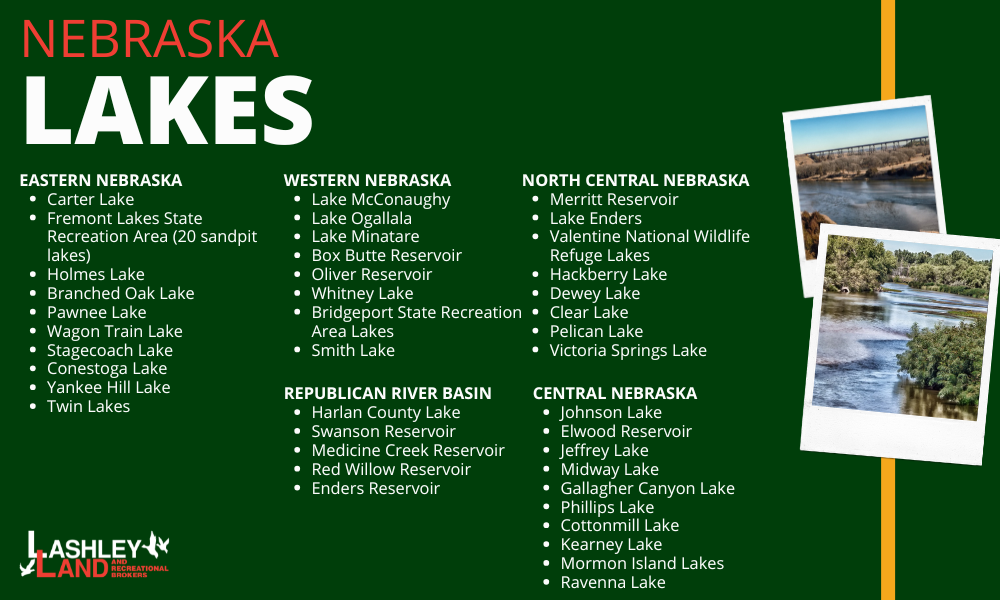
Nebraska’s lakes, reservoirs, and waterways create an aquatic playground that surprises visitors expecting nothing but prairie. From the 30,000-acre expanse of Lake McConaughy to the wildlife-rich shores of Harlan County Reservoir, these bodies of water offer world-class outdoor activities: bass fishing, recreational boating, swimming beach access, and so much more.

Shaped by both nature and human ingenuity, Nebraska lakes stretch from the Missouri River border to the Platte River valley and beyond. The Nebraska Game and Parks Commission manages these resources for recreation, while many also provide flood control, irrigation, and vital wildlife habitat.

Whether you’re chasing largemouth bass, launching from a boat ramp at dawn, or scouting lakefront property, this guide covers the recreation areas and destinations worth knowing.

Nebraska Lakes: Your Guide to the Cornhusker State's Water Destinations

Nebraska’s Largest Lakes and Reservoirs

Lake McConaughy (“Big Mac”)

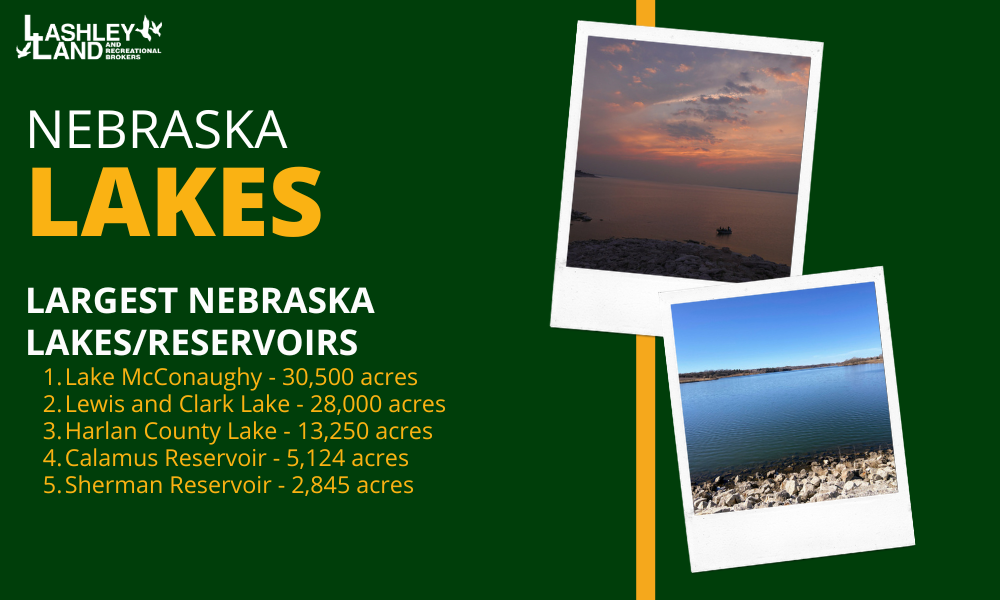
Nebraska’s largest lake dominates Keith County with approximately 30,000 surface acres, 100+ miles of shoreline, and depths reaching 142 feet near Kingsley Dam. Highlights include:

  • Miles of white sandy swimming beach areas
  • Multiple boat ramp facilities with recent upgrades
  • Trophy fishing for walleye, northern pike, smallmouth bass, and channel catfish
  • Expanded campgrounds with modern electrical hookups
  • Advance reservation camping required May–September

The Lake McConaughy State Recreation Area continues to see infrastructure investment from the Parks Commission, including new boat docks, improved angler access, and accessible kayak launches.

Harlan County Reservoir

The state’s second-largest lake spans 13,250 acres with 75 miles of shoreline in south-central Nebraska. Managed by the U.S. Army Corps of Engineers — no state park permit required.

  • Six campgrounds with electrical hookups, shower buildings, and picnic areas
  • Paved Pheasant Ridge Walking Trail along the lake edge
  • Excellent fishing for white bass, channel catfish, and walleye
  • 300,000+ trees planted for wildlife habitat restoration
  • Prime birding, including occasional Whooping Crane sightings

Calamus Reservoir

Clear waters, excellent walleye and northern pike fishing, and well-maintained boat ramp facilities make Calamus a favorite for anglers and families in central Nebraska.

Lewis and Clark Lake

This Missouri River recreation area along the South Dakota border offers water sports, camping with electrical hookups, and multiple distinct recreation areas.

Lake Minatare

A panhandle favorite featuring boat ramp access, maintained swimming beach areas, diverse fish populations, and essential wildlife habitat for migratory birds.

Nebraska Lakes: Your Guide to the Cornhusker State's Water Destinations

Popular Recreation Lakes by Region

Eastern Nebraska

  • Glenn Cunningham Lake (Douglas County): This 390-acre public lake in Omaha offers a fishing jetty, six-mile trail loop, disc golf, kayak launches, and campgrounds with electrical hookups. Great largemouth bass fishing, channel catfish, crappie, and walleye.
  • Carter Lake: Excellent fishing and convenient boat ramp access on the Nebraska-Iowa border.
  • Holmes Lake (Lincoln): Beloved urban fishing spot with improved aquatic vegetation management.
  • Fremont Lakes: Multiple sandpit lakes, each with unique fishing opportunities.

Central Nebraska

  • Johnson Lake: Top destination for water skiing, with maintained picnic areas and beaches.
  • Medicine Creek Reservoir: Outstanding bass fishing for channel catfish and largemouth bass.
  • Maskenthine Reservoir (Stanton County): A 100-acre lake within 680 acres of recreation area near Norfolk. Sand swimming beach, 33 camper pads with electrical hookups, boat ramp, and hiking trails. Stocked annually with northern pike, walleye, and channel catfish. No entrance fee required.

Western Nebraska

  • Lake McConaughy: The crown jewel (see above).
  • Swanson Reservoir: Excellent fishing and camping facilities.
  • Lake Minatare: Key recreation area for the panhandle region.

Water level at western reservoirs can fluctuate with irrigation demands — check conditions before your trip.

Fishing in Nebraska Lakes

Nebraska lakes support diverse fish populations that draw anglers nationwide. Bass fishing has produced catches in the double figures at several locations.

  • Lake McConaughy: Walleye, Northern Pike, Smallmouth Bass
  • Harlan County Reservoir: White Bass, Channel Catfish, Walleye
  • Calamus Reservoir: Walleye, Northern Pike
  • Glenn Cunningham Lake: Largemouth Bass, Channel Catfish, Crappie
  • Maskenthine Reservoir: Northern Pike, Walleye, Largemouth Bass, Bluegill
  • Merritt Reservoir: Largemouth Bass, Bluegill
  • Medicine Creek: Channel Catfish, Crappie

Water Recreation Beyond Fishing

Recreation areas managed by the Nebraska Game and Parks Commission provide:

  • Modern boat ramp facilities at most public lakes
  • Designated swimming beach areas
  • Maintained picnic areas and shelters
  • Camping with electrical hookups
  • Hiking and biking trails for wildlife recreation

Water sports enthusiasts flock to Lake McConaughy and Harlan County Reservoir for water skiing and recreational boating. Big Mac’s mile after mile of white sand shoreline rivals coastal destinations.

Conservation and Management

The Parks Commission works alongside the Nebraska Department of Water, Energy, and Environment (DWEE) — formed in July 2025 by merging the Nebraska Department of Environment and Energy with the Department of Natural Resources.

Key initiatives include:

  • Invasive species prevention: Zebra mussel control through Clean, Drain, and Dry protocols. Currently established in five Nebraska waterbodies including Lewis and Clark Lake and the Missouri River.
  • Water quality monitoring: DWEE’s Ambient Lake Monitoring Program conducts weekly sampling at 42 lakes statewide, May–September.
  • Wildlife habitat restoration: Native prairie restoration, tree planting, and migratory corridor protection.
  • Facility upgrades: Ongoing improvements to boat ramp access, campgrounds, and picnic areas.

Planning Your Lake Visit

  • Spring: Excellent fishing, mild temperatures
  • Summer: Peak season for water sports and swimming beach activities
  • Fall: Beautiful scenery, continued fishing
  • Winter: Ice fishing where conditions permit

Don’t forget:

  • Fishing license (required for anglers 16+)
  • Boating permits and park entry permits
  • Camping reservations — especially for Lake McConaughy and Harlan County Reservoir during summer
  • Clean, Drain, and Dry protocols between water bodies
Nebraska Lakes: Your Guide to the Cornhusker State's Water Destinations

Lashley Land: Your Key to Lake Living in Nebraska

Nebraska lakes offer more than recreation — they represent real investment opportunity. Property values in lake communities have shown steady appreciation, especially around Lake McConaughy, Johnson Lake, and Harlan County Reservoir.

With over 140 years of combined experience in Nebraska land sales, Lashley Land & Recreational Brokers understands the unique value of lakefront and recreational properties. Our team offers unmatched insight into local property values, water rights, and the recreational opportunities that make lake living rewarding.

Ready to explore lake property opportunities? Contact Lashley Land to schedule a free property consultation.

What Is Nebraska Known For? Discover Its Rich Heritage and Natural Beauty

Short Answer: Nebraska, or the Cornhusker State, has a rich history, culture, and natural beauty in the heart of the Midwest.

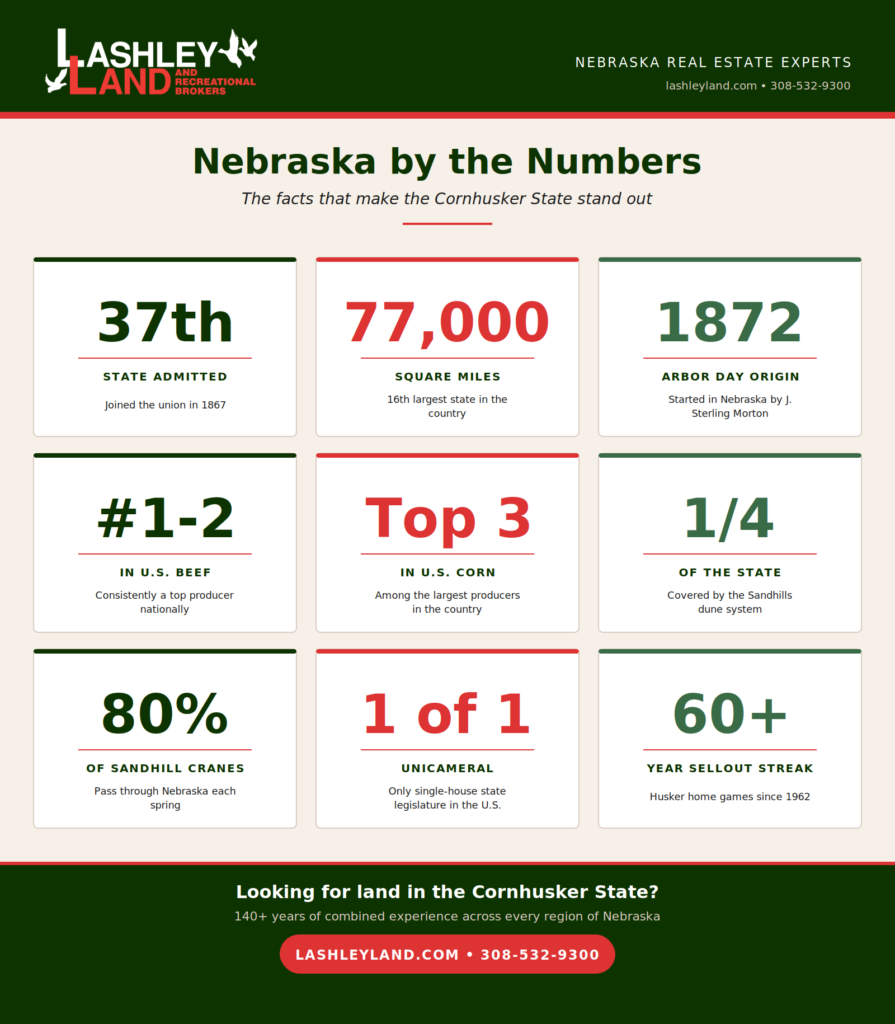
Most people picture cornfields and open landscapes, but the state holds far more. Native American tribes like the Omaha, Pawnee, and Lakota shaped its early history, and the Nebraska Territory served as a key point on the Oregon Trail before joining the union as the 37th state in 1867.

Today, the state balances its agricultural past with the modern energy of cities like Omaha and Lincoln. Visitors can enjoy urban amenities, historic landmarks, and small-town charm in the same trip. Add in iconic geological formations, a passionate football culture, and a roster of famous Nebraskans, and the state stands out for far more reasons than most travelers expect.

What Is Nebraska Known For? Discover Its Rich Heritage and Natural Beauty

Nebraska’s Plant Life and Wildlife

Nebraska’s native plants fall into four main groups: grasses, wildflowers, shrubs, and trees. Native grasses like big bluestem, little bluestem, switchgrass, and Indiangrass cover the prairies. Wildflowers like prairie coneflower, blazing star, and goldenrod color the grasslands through summer and fall. Eastern red cedar, cottonwood, bur oak, and ponderosa pine anchor the woodlands.

The animal life is just as varied. Mountain lions and bobcats range across the western half of the state. Bison are protected on managed herds at refuges and ranches. Whitetail and mule deer thrive across nearly every county. Prairie dogs build their towns on the plains, and several bat species roost in caves and along river bluffs.

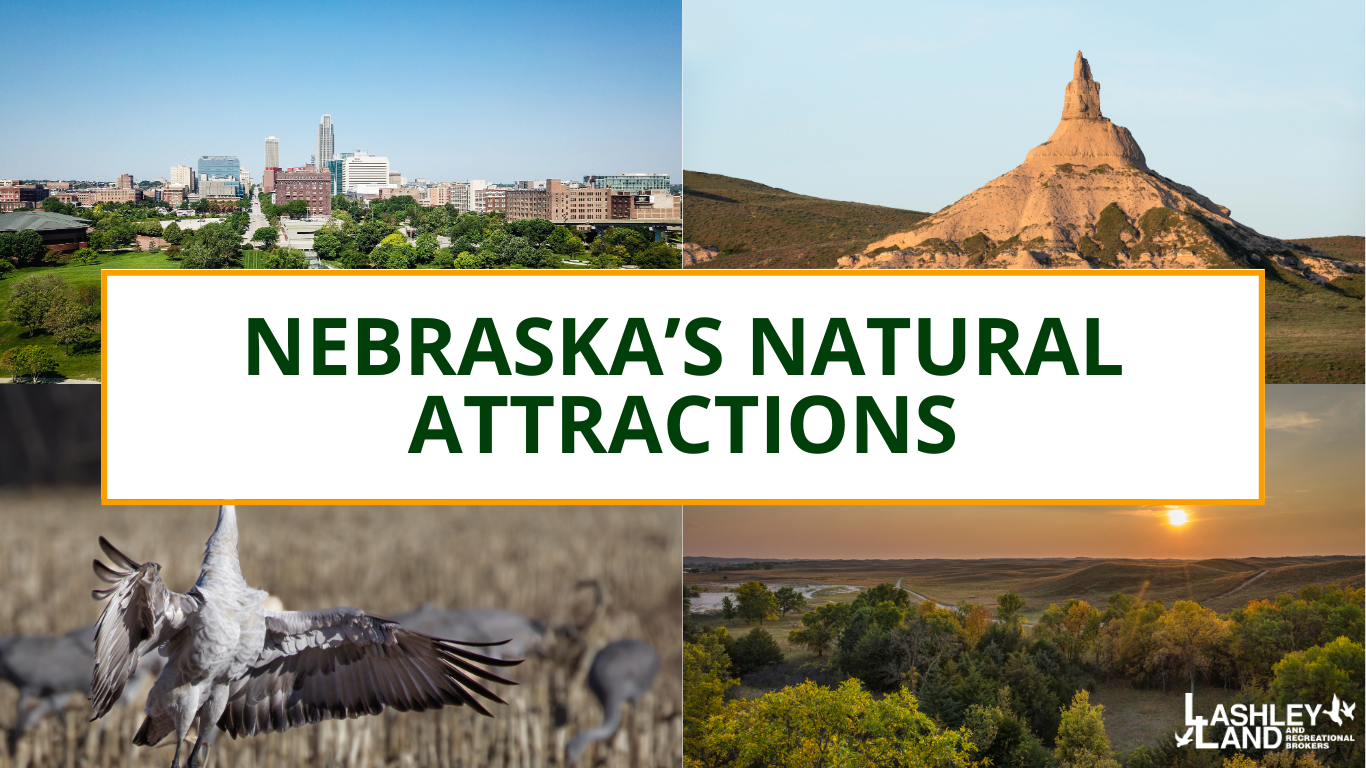
The Platte River hosts one of North America’s great wildlife spectacles every spring. Roughly 80% of the world’s sandhill cranes stop along the Platte during migration, with hundreds of thousands of birds gathering at one time. Birders travel from around the world to see them for the first time and return year after year.

Agriculture: Corn, Beef, and the Cornhusker Identity

Nebraska’s nickname (The Cornhusker State) goes back to the 19th century, when farmers harvested corn ears by hand and “husked” them in the field. The Cornhusker name stuck, and it now applies to the state, the university, and the broader identity of Nebraska’s work culture. The image fits. Nebraska ranks among the top corn producers in the country every year, and corn drives ethanol, livestock feed, and export markets across the state.

Beef carries equal weight. Nebraska is often called the beef state for good reason. It consistently ranks first or second in beef production nationally. Nebraska was ranked #2 in 2026 with 5.6 billion pounds of beef produced. The combination of corn for feed and grass for grazing gives the state a built-in advantage that other beef states cannot match.

The Nebraska State Fair in Grand Island highlights this heritage every August. Livestock shows, agricultural exhibits, music, crafts, and family-friendly attractions draw crowds from across the Midwest. The fair connects modern visitors to the rural traditions that still shape daily life across most of Nebraska.

The Land: Prairies, Sandhills, and Iconic Formations

What Is Nebraska Known For? Discover Its Rich Heritage and Natural Beauty

Nebraska’s landscape covers more ground than most outsiders realize. The state features vast prairies, pine woods, river valleys, and dramatic geological formations across its width.

In the west, Scotts Bluff National Monument rises above the North Platte River, and Chimney Rock, a famous landmark of westward expansion, served as a key marker for pioneers crossing the Great Plains on the Oregon Trail. Both formations still draw visitors who want to walk the same routes and take in the same views.

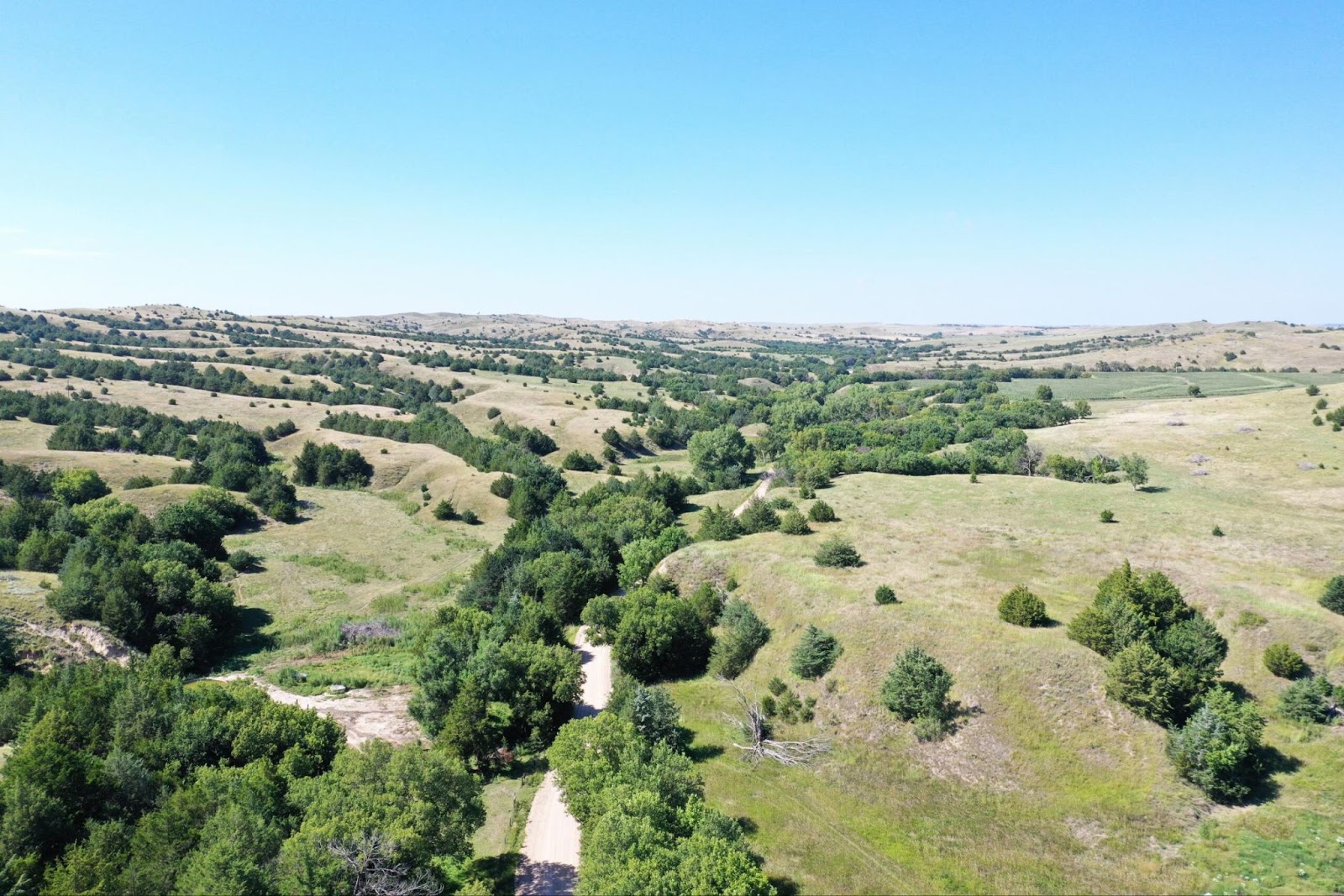
The Nebraska Sandhills form the largest sand dune system in the Western Hemisphere, covering about a quarter of the state. Native grasses stabilize the dunes, which makes the region one of the top cattle grazing areas in the country.

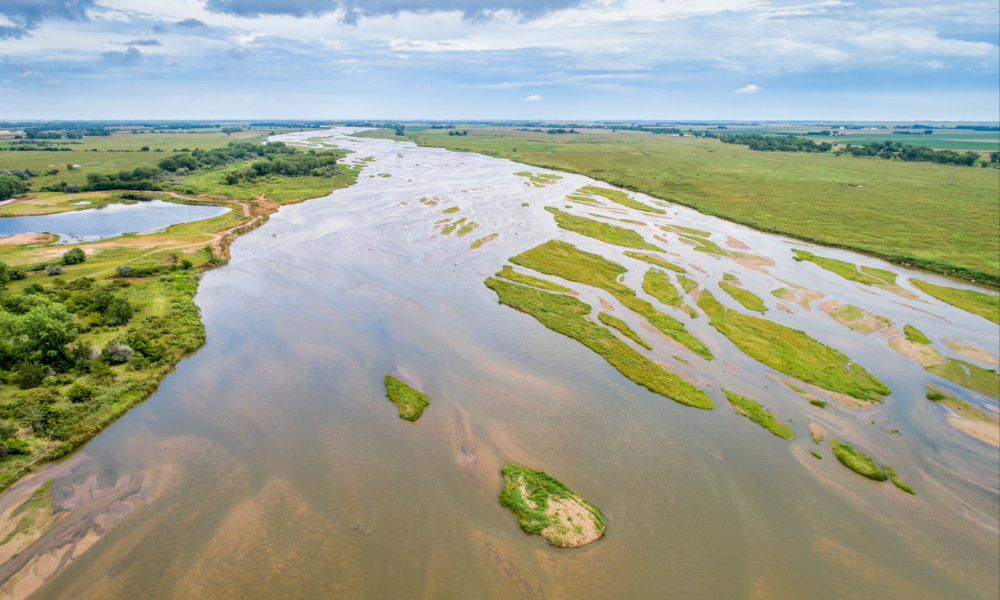
Three major rivers shape life across Nebraska. The Platte River and Missouri River feed agriculture, support wildlife, and offer fishing, boating, and kayaking. The Niobrara National Scenic River draws paddlers and waterfall hunters to its northern stretch. Together, the rivers connect almost every region of the state.

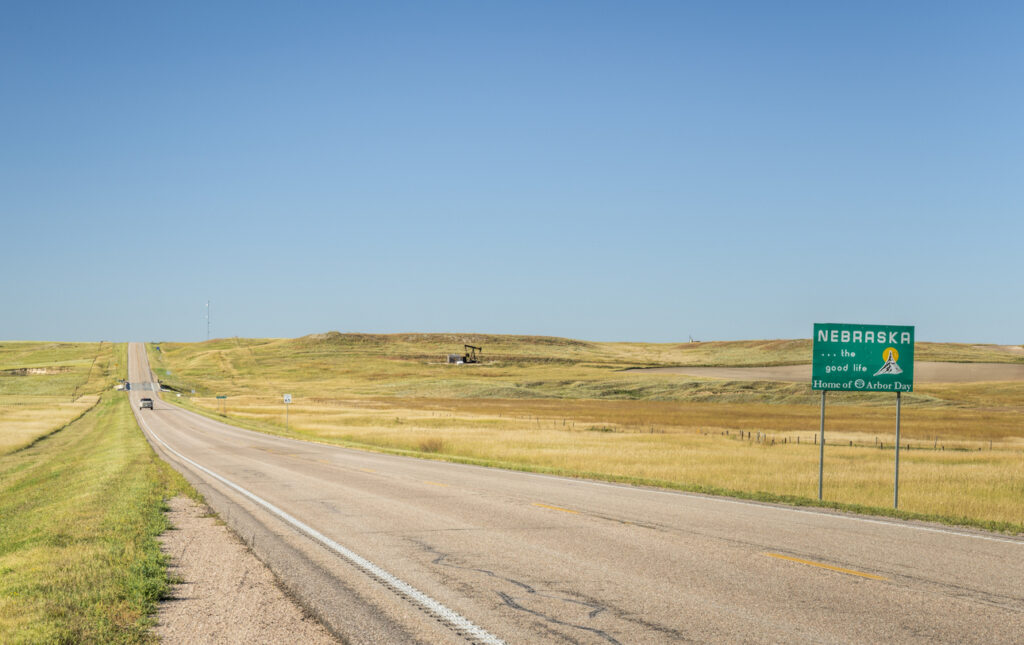
Arbor Day: A Nebraska Original

What Is Nebraska Known For? Discover Its Rich Heritage and Natural Beauty

Arbor Day, which is now a national holiday, started in Nebraska. The holiday began in 1872 when J. Sterling Morton, a Nebraska City newspaper editor and tree advocate, proposed a statewide tree-planting day. Nebraskans planted around one million trees on that first Arbor Day. The idea spread quickly, and Arbor Day is now observed across all 50 states and in countries around the world.

The roots of the holiday trace back to the landscape itself. When early settlers arrived in the 1800s, most of the state held prairie grasses with few trees outside the river valleys. Morton and others wanted to add windbreaks, shade, and lumber to the open plains. Tree planting helped reshape the Nebraska landscape over the next century.

Nebraska City still serves as the home of the National Arbor Day Foundation. Visitors can tour Arbor Lodge State Historical Park, Morton’s restored mansion and historic site, and the surrounding tree gardens. The site remains a popular stop for school groups and families across the state.

Husker Football

Few college football programs hold the kind of grip on a state that Nebraska football holds. The University of Nebraska-Lincoln Cornhuskers play home games at Memorial Stadium, which becomes the third-largest population center in the state every game day. The stadium has sold out every home game since November 1962, the longest active sellout streak in college football.

The fan culture matches the streak. Nebraskans wear scarlet and cream from Saturday morning through Sunday evening during the season, and Husker gear shows up in stores across the state year-round. The team also has a long tradition of fan respect for opposing players, with crowds applauding visiting teams as they leave the field after games.

Football brings the state together in a way few other traditions can. Families plan reunions around home games, small-town diners run watch parties, and Husker pride travels with Nebraskans who move out of state. The team’s history of national championships in the 1970s, 1990s, and beyond keeps the program woven into the state’s identity.

Food: From the Reuben to Kool-Aid

What Is Nebraska Known For? Discover Its Rich Heritage and Natural Beauty

Nebraska food culture runs deeper than corn and beef, though both show up on most menus. 

The Reuben sandwich, with corned beef, sauerkraut, Swiss, and Russian dressing on rye, was invented in Omaha. Most accounts credit Reuben Kulakofsky, a local grocer, who made the original version at the Blackstone Hotel in the 1920s. Today, the sandwich is on diner menus across the country, but Omaha still claims it, even producing an original menu with a Reuben listed for 50 cents from 1937.

Kool-Aid is another Nebraska original. Edwin Perkins invented the powdered drink mix in Hastings in 1927, and the state designated Kool-Aid as its official soft drink in 1998. Hastings hosts an annual Kool-Aid Days festival every summer.

The Runza sandwich is a Nebraska staple with roots in the state’s Volga German community. The pocket sandwich filled with seasoned ground beef, cabbage, and onions inside a soft bread shell has become a regional comfort food. Runza Restaurants is headquartered in Lincoln and operates locations across Nebraska and a handful of nearby states.

Notable Nebraskans

Nebraska has produced an unusual number of recognizable names in business, entertainment, and history. 

Warren Buffett, one of the most well-known investors in the world, was born in Omaha and still lives in the same house he bought in 1958. His company, Berkshire Hathaway, draws tens of thousands of shareholders to Omaha every spring for its annual meeting.

Hollywood traces several major careers back to Nebraska. Marlon Brando was born in Omaha and grew up partly in the state before launching his acting career. Johnny Carson, the longtime host of The Tonight Show, grew up in Norfolk and credited his small-town Nebraska upbringing throughout his career.

Civil rights leader Malcolm X was also born in Omaha in 1925. The Malcolm X Memorial Foundation maintains the birthsite, which is open to the public and serves as a center for education and community events.

Sightseeing and Roadside Stops

What Is Nebraska Known For? Discover Its Rich Heritage and Natural Beauty

Nebraska holds an unusual mix of roadside landmarks, museums, and historic sites that reward travelers who slow down. 

Carhenge, near Alliance, copies the layout of Stonehenge using 39 painted vintage cars. The site started as a family tribute in 1987 and has grown into one of the most photographed roadside stops in the country.

The Cowboy Trail crosses northern Nebraska along an old Chicago and North Western Railway corridor. Once finished, it will be one of the longest rail-trails in the United States at over 300 miles. Hikers, bikers, and horseback riders use the trail year-round. The state also sits along the original Lincoln Highway, the first transcontinental road in the United States, which still runs through central Nebraska along much of U.S. Route 30.

Other notable stops include:

Major Cities

What Is Nebraska Known For? Discover Its Rich Heritage and Natural Beauty

Nebraska’s major cities offer different takes on Midwestern life.

Omaha is the largest city in the state and serves as a national hub for finance, transportation, and insurance. The Henry Doorly Zoo and Aquarium, consistently ranked among the top zoos in the world, anchors the city’s tourism. The Old Market district draws visitors with brick streets, restaurants, and local shops.

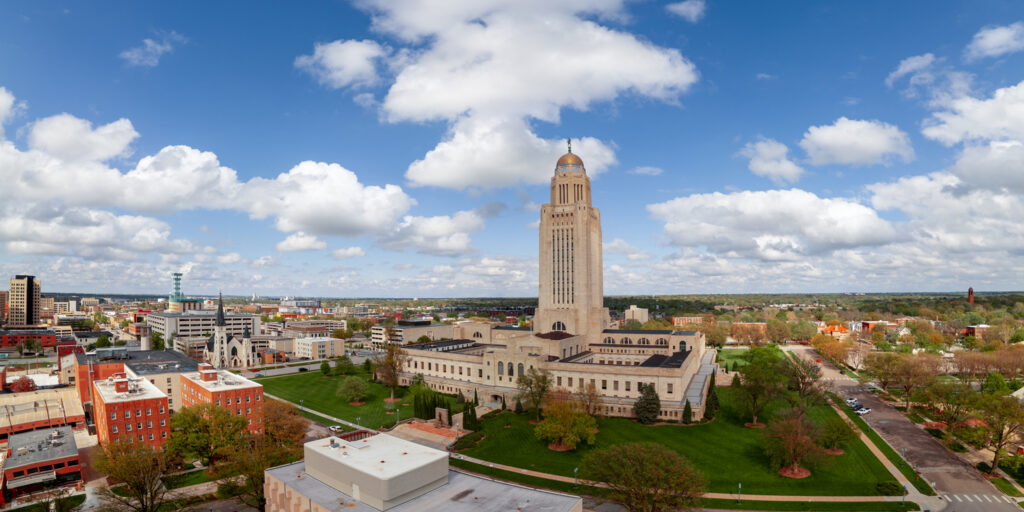
Lincoln, the state capital, holds the University of Nebraska-Lincoln, the state capitol building, and a busy arts scene. The Haymarket District turns historic warehouses into restaurants, shops, and music venues. Memorial Stadium sits at the center of the city’s football identity.

Bellevue, just south of Omaha, is the oldest continuously inhabited community in Nebraska and home to Offutt Air Force Base. The city also borders Fontenelle Forest, one of the oldest nature preserves in the country.

Grand Island anchors central Nebraska as the third-largest city in the state. It hosts the Nebraska State Fair every August and serves as a stop for the annual sandhill crane migration along the nearby Platte River.

Nebraska’s Economy and the Unicameral

Nebraska’s economy reaches well beyond agriculture, though farming and ranching still drive much of the state’s output. Finance, insurance, transportation, and manufacturing all play major roles. 

Berkshire Hathaway is headquartered in Omaha, and the city is also home to Mutual of Omaha, Union Pacific Railroad, and TD Ameritrade. The combination gives Omaha an outsized presence in national business, considering the state’s overall population.

Nebraska’s political structure is also worth knowing. The Nebraska Legislature is the only single-house, nonpartisan legislature in the United States, known as the Unicameral. The system, adopted in 1937, was designed to cut down on partisan deadlock and make state government more efficient. Senators run without party labels on the ballot.

The state’s workforce is known for a strong work ethic and high levels of educational attainment, which help draw new businesses. A reliable mix of agriculture, finance, and logistics gives Nebraska steady ground during national downturns, and the state continues to attract companies looking for affordable space and a stable labor pool.

Ready to Move to Nebraska? Lashley Land Has You Covered

What Is Nebraska Known For? Discover Its Rich Heritage and Natural Beauty

Nebraska’s diverse landscapes, rich culture, and welcoming communities make it an ideal place to call home. Whether you want a family residence, hunting land, or a working farm, Lashley Land is here to help. 

As one of Nebraska’s leading land brokerages, our team connects buyers and sellers with properties that match their goals across every region of the state. With over 140 years of combined experience, our agents understand Nebraska’s land, from serene woodlands to vast open spaces. We work with clients on hunting tracts, recreational properties, residential acreages, and farm and ranch ground, and we guide each buyer through the process from start to finish.

Contact Lashley Land today to begin your journey toward finding the right Nebraska property.
Investing in Land: Unlocking Opportunities for Financial Growth

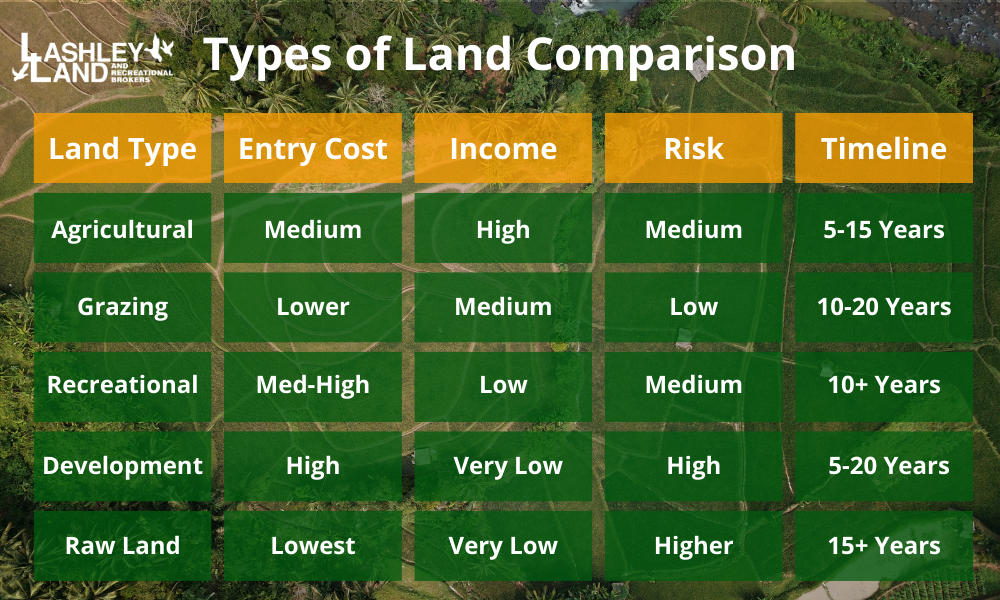
Investing in land, whether residential, commercial, agricultural, or undeveloped, offers a unique opportunity. As the population grows and available land remains constant, land ownership can be a golden opportunity for investors. Historically, land appreciates over time, often outpacing inflation, especially in desirable areas. This makes it a potentially valuable addition to any investment portfolio. Beyond appreciation, land can generate passive income through leasing or development, enhancing cash flow. With a diverse range of land available across regions, from agricultural to waterfront properties, land investment stands out against traditional stock market options. In this blog, we will explore the steps to successful land investment, compare it with other real estate forms, discuss its advantages and risks, and guide you toward achieving your financial goals.

Investing in Land: Unlocking Opportunities for Financial Growth

When it comes to investment properties, several strategies can help you capitalize on this unique asset class. Each method offers distinct advantages and potential returns, depending on your goals and market conditions. Here, we will explore three popular methods: purchasing raw land, investing in agricultural land, and acquiring undeveloped land.

One option is to purchase raw land, which is often available at lower prices because it remains untouched and free of buildings or alterations. This type of investment can yield significant capital gains if you strategically plan for future developments and attract prospective buyers. With the right timing and market demand, you could sell this land at a much higher price in the future.

Another method is investing in agricultural land, which allows you to generate income through farming or raising livestock. Untapped farmland presents opportunities, especially with the growing demand for produce across the United States. Investing in agricultural land can also provide tax benefits and a stable income stream.

A third approach involves acquiring undeveloped land, which is land set aside for future construction. This path requires a solid understanding of local zoning laws and regulations, as they can significantly affect your investment’s potential. Proper research will help you identify areas primed for growth, allowing you to capitalize on appreciation once development begins.

Regardless of the method you choose, conducting thorough due diligence before making any investment decisions is crucial. By exploring these various methods, you can find the approach that best aligns with your long-term investment goals and property values.

Investing in Land: Unlocking Opportunities for Financial Growth

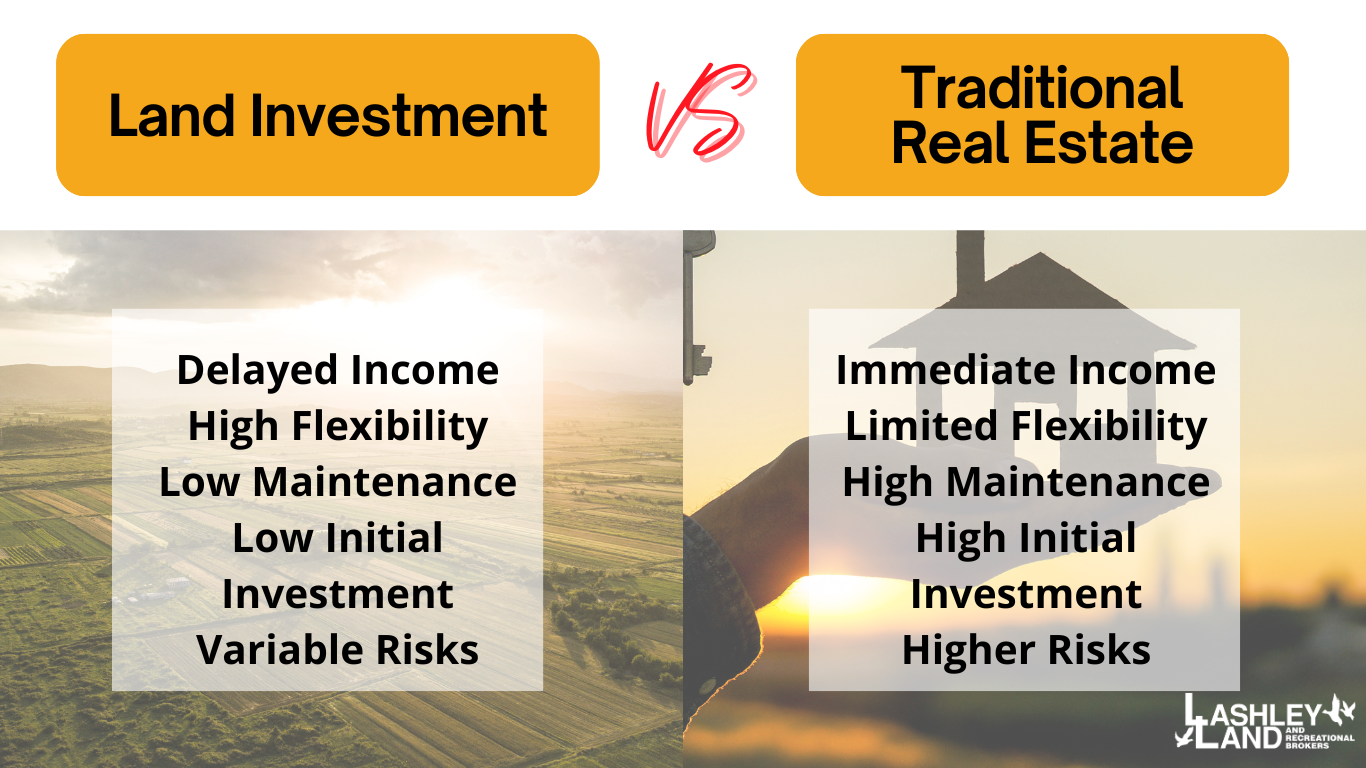
When considering investment options, understanding the differences between land investment and traditional real estate is essential. Each offers unique benefits and challenges, catering to various investor goals. By comparing these two avenues, you can make a more informed decision about land buying.

Leasing or developing land can provide steady income, but significant returns may take time to materialize, especially with raw or undeveloped land that appreciates over time. In contrast, traditional real estate, particularly rental properties, generates immediate cash flow from tenants, offering more predictable revenue through monthly rental payments.

Land investments provide diverse opportunities with less intensive management, allowing for options like short-term rentals or agricultural use. This flexibility enables you to tailor your strategy based on market trends. In contrast, traditional real estate requires ongoing management, which can limit flexibility due to tenant relationships and maintenance responsibilities.

Investing in land typically involves lower maintenance compared to properties with buildings. While landowners manage taxes and occasional inspections, the day-to-day responsibilities are fewer. Traditional real estate demands constant management and can incur significant maintenance expenses, adding stress and expense.

Land investment often requires a lower upfront cost, making it attractive for new investors. Traditional real estate usually demands a larger initial investment, especially for commercial properties, which can require extensive financing. Understanding these financial commitments is crucial for informed decisions.

Land investments are subject to market fluctuations and economic downturns, which can impact value. Traditional real estate carries higher risks related to property management and tenant issues, leading to potential vacancies or significant repairs that can affect cash flow.

Both land investment and traditional real estate have their pros and cons. The choice between the two depends on your investment goals, risk tolerance, and management style. By carefully considering these factors, you can determine which strategy aligns best with your financial objectives and lifestyle, helping you build a diverse and resilient portfolio.

Investing in Land: Unlocking Opportunities for Financial Growth

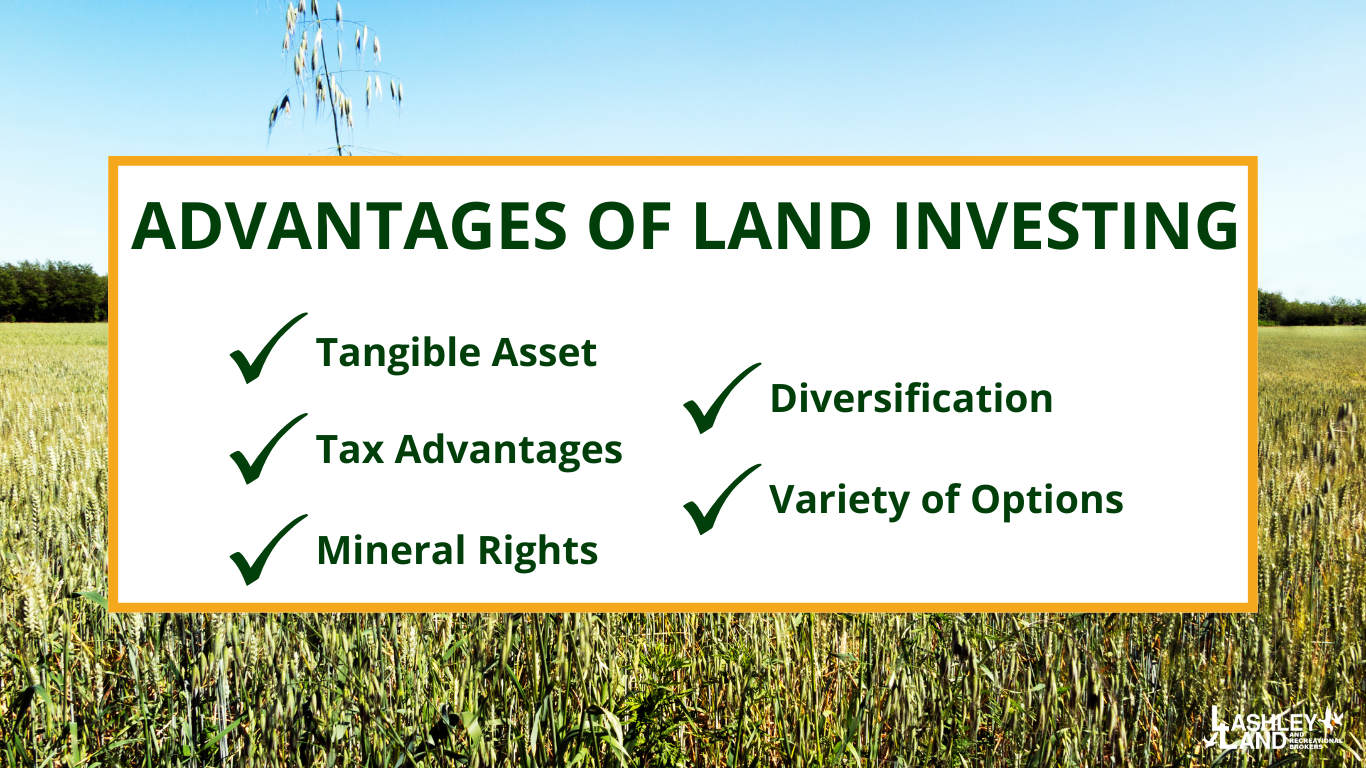
Land investing presents a unique opportunity for those looking to diversify their investment portfolios and secure tangible assets. As a distinct asset class, land offers a range of advantages that can enhance your financial future. Understanding these advantages will help you to make informed decisions on your real estate investment journey.

Investing in land provides numerous advantages, from tangible security to appreciation potential. By understanding the different types of land available, you can strategically enhance your investment portfolio.

Investing in Land: Unlocking Opportunities for Financial Growth

Now that we’ve covered the basics of land investing and its benefits, let’s discuss the challenges and risks. Like any investment, land investing carries certain risks. It’s important to recognize that market performance can vary significantly, and various economic factors can influence land values. Past performance is not a guarantee of future results, so conducting thorough research and due diligence before purchasing is essential.

Land values can fluctuate significantly based on the fiscal year, such as changes in demand, interest rates, and the local government. These fluctuations can make it difficult to predict future returns and land investors may find themselves in situations where the value of their land decreases unexpectedly. Additionally, market cycles can lead to prolonged periods of stagnation, during which land may not appreciate or may even lose value. This uncertainty proves the importance of careful research and a long-term perspective.

Beyond initial capital expenses, investors may face property taxes and maintenance expenses, especially if the land is used for rental purposes. These ongoing expenses can eat into potential profits, making it crucial to budget accordingly.  Understanding these potential costs beforehand can help investors avoid financial strain and better assess the overall viability of their investment.

Local government regulations and zoning laws can greatly affect land use and development potential, particularly for vacant or undeveloped land. Restrictions can impact everything from the types of structures you can build to how the land can be utilized, and failure to comply with these regulations can result in fines or even loss of the property. This regulatory landscape demands that real estate investors stay informed to avoid setbacks.
Understanding these challenges highlights the importance of a solid investment strategy in land investing. Setting clear goals, staying informed about local laws, and conducting in-depth market analysis is vital for navigating the unpredictable landscape of land investment risks. By approaching land investment with diligence and foresight, you can mitigate risks and position yourself for long-term success.

Investing in Land: Unlocking Opportunities for Financial Growth

While real estate investing offers unique benefits, it also comes with specific challenges and risks that require careful consideration and planning. By developing a solid investment strategy and staying informed about market trends and regulations, you can navigate these complexities successfully. If you’re ready to take the next step in your land investing journey, connect with Lashley Land today. Our expertise in the Nebraska market can help you realize your land investment dreams. Let’s start building your future together!

The Ultimate Guide to Buying Hunting Land: From Dream to Reality

For many outdoor enthusiasts, owning private hunting land represents a long-held dream. The idea of having a piece of land where you can connect with nature, manage wildlife, and hunt throughout the year is an appealing vision. This dream, however, goes beyond the thrill of the hunt. It involves owning a private retreat where memories with family and friends can be made for years to come.

Buying hunting land, though, requires careful planning and important considerations. There are many aspects to evaluate, including location, property features, legal issues, and financial responsibilities. The following guide outlines what should be taken into account to make the best decision when purchasing hunting land.

The Ultimate Guide to Buying Hunting Land: From Dream to Reality

Location plays a critical role in selecting hunting land. Ideally, the recreational property should be close enough to your home to make visits on a regular basis. Distance can become a challenge, especially during hunting seasons, if the land is too far away.

It is important to learn more about the area where the land is located. A region known for good hunting and abundant wildlife can make a property more desirable. Additionally, it may be worth looking into whether the surrounding properties are used for hunting, as this can increase the overall game presence.

When it comes to size, your hunting goals should guide the decision. Larger properties provide more opportunities for different types of game, but they also tend to be more expensive and may require more maintenance. Smaller parcels of land, on the other hand, can be easier to manage and more affordable. Terrain features such as water access, food sources, and cover for wildlife should also be evaluated, as these factors directly impact the suitability of the recreational land.

A reliable water source is important not only for the wildlife but also for landowners. Natural sources like rivers, streams, or ponds can enhance a property’s appeal and ensure the land remains habitable for game animals year-round. If the land lacks a natural water source, options for installing a duck pond or other water features should be considered to improve its value.

Having your own hunting land can offer more than just hunting opportunities—it can also serve as a wise investment. Timber quality on the land can affect the property’s value and may even provide revenue if you choose to harvest it. Responsible timber management and timber harvest help improve wildlife habitats while maintaining the land’s worth.

Food plots play an equally important role in attracting game. The soil quality and the amount of sunlight the land receives will impact your ability to plant crops like clover or corn, which are known to draw in deer and other game animals. Accessibility to this real estate should also be kept in mind, as this makes managing them easier.

One of the primary considerations when purchasing hunting land is the game population. A healthy population of whitetail deer or other game is often a top priority for whitetail hunters. It is a good idea to look into local wildlife data and past records of successful hunts in the area. Observing game signs like tracks, rubs, and bedding areas can help determine the property’s potential for future deer hunting success with big bucks.

The Ultimate Guide to Buying Hunting Land: From Dream to Reality

Beyond the features of the property itself, certain legal and practical matters will come into play with land ownership. These considerations are just as important as the land’s physical attributes.

Knowing the exact boundary lines of a hunting property is essential when purchasing hunting land. Confirming these boundaries with the current owner or even hiring a surveyor can help avoid disputes down the line. Legal access to the property must also be verified, particularly if the acre piece is landlocked. Access rights through neighboring properties may need to be negotiated.

Mineral rights should also be checked. It is possible that the rights to resources like oil, gas, or minerals could belong to someone other than the landowner. This can affect your experience as a landowner, so clarifying mineral rights before buying is a good idea.

Understanding the property tax obligations of hunting land is essential. Some areas offer agricultural or conservation tax breaks, which may reduce the overall tax burden. Each county will have different tax rules, so it is important to know what you will be responsible for paying annually.

Hunting regulations in the area should also be examined. There may be zoning laws or restrictions on hunting activity, so it is essential to ensure that the land is suitable for your intended use. Additionally, game laws—including hunting seasons, limits, and methods—can vary by region, so becoming familiar with the regulations is advisable.

The Ultimate Guide to Buying Hunting Land: From Dream to Reality

Buying hunting land involves more than just choosing the right property. Several financial aspects need to be considered, and following a structured buying process can help avoid potential pitfalls.

Beyond the purchase land prices, owning hunting land comes with ongoing costs. These may include property taxes, mortgage payments, and regular maintenance. Landowners often need to budget for tasks such as clearing trails, fixing fences, and improving food plots.

Hunting land has the potential to appreciate in value over time, especially with proper management. Adding features like ponds or food plots can improve the property’s appeal, and timber sales may offer an additional income source. Some landowners also choose to lease their property to other hunters for extra revenue.

Financing options for land purchases can differ from those for residential homes. Land loans typically come with higher interest rates and may require a larger down payment. It may be helpful to work with lenders that specialize in rural properties to find the best loan options available.

The Ultimate Guide to Buying Hunting Land: From Dream to Reality

The process of purchasing hunting land involves a series of steps. For first-time buyers, working with a land broker who has experience in rural properties may simplify the process. Brokers can help you navigate the complexities of buying land in your price range and can provide valuable insight into the market.

Inspecting the property is another important part of the process. It is advisable to look at factors such as water availability, environmental conditions, and whether the property aligns with your hunting goals.

Setting a clear budget can make negotiations smoother. Knowing how much you are willing to spend, including the cost of any planned improvements, is essential for a successful purchase.

If the cost of a large tract of land is out of reach, small parcels can offer an affordable alternative. These properties are often easier to manage and own land. Expanding the property in the future might also be an option if your budget allows for it.

The Ultimate Guide to Buying Hunting Land: From Dream to Reality

Buying hunting land is a rewarding journey for prospective buyers that requires thoughtful planning and consideration. By evaluating key factors such as location, property features, legal issues, and financial responsibilities, you can ensure that you make a well-informed decision that aligns with your goals.

If assistance is needed with the process, working with an experienced land brokerage like Lashley Land can be beneficial. Lashley Land’s real estate agents are dedicated to guiding buyers through the complexities of purchasing hunting land and helping them find the right place that meets their expectations.

Whether your dream involves a small hunting retreat or a larger, multi-purpose property, contact Lashley Land to support you every step of the way.

A Guide to Nebraska Hunting Seasons

Nebraska is a haven for hunters. From forests to prairies, it is a paradise for both seasoned hunters and beginners. In addition to its landscapes, the state is full of diverse wildlife, some of which are native to Nebraska. Like in other states, hunting season in Nebraska is determined by the type of game and region. The type of hunting you prefer, may it be during archery season, muzzleloader season, or rifle season also plays a role in determining season dates. 

Generally, the hunting season varies for each game species. However, these seasons are regularly evaluated and adjusted based on population dynamics and hunter input. Always refer to the most current Nebraska hunting guide for actual dates, regulations, and any season updates or changes before heading out on your hunting expedition. 

Nebraska offers various hunting seasons, each specified by the type of game species. 

Deer Antelope Elk Bighorn Sheep Turkey
Archery: Sept. 1 – Dec. 31, 2024
Special Landowner: Nov. 9 – 11, 2024
November firearm*: Nov. 16 – 24, 2024
Muzzleloader: Dec. 1 – 31, 2024
October River Antlerless Firearm: Oct. 1 – 15, 2024
River Antlerless Late Firearm: Jan. 1 – 15, 2025
Antlerless Only Season Choice: Sept. 1, 2024 – Jan. 15, 2025
Limited Landowner: Sept. 1, 2024 – Jan. 15, 2025
Late Antlerless Only Firearm: Jan. 1 – 15, 2025

Remember, these seasons are determined by the Nebraska Game and Parks Commission to serve the dual purpose of maintaining animal population levels and providing a safe, enjoyable hunting experience for everyone.

A Guide to Nebraska Hunting Seasons

Regardless of whether you are a lifelong Nebraska hunter or this will be your first season, it is essential to familiarize yourself with some fundamental concepts that guide hunting in Nebraska. These not only ensure responsible and sustainable hunting practices but also contribute to a more rewarding hunting adventure. 

Understand the concept of bag limits. The bag limit refers to the maximum number of animals from a specific species that an individual hunter can lawfully harvest in a single day or over a particular season. These limits are set to sustain and control the population of game species. In Nebraska, the daily bag limit for various game birds can range from two to fifty, depending on the species. 

Anyone looking to hunt in Nebraska is mandated to get a hunting license. The license varies based on: 

  • Age: In Nebraska, hunting licenses are categorized by age. Youth hunters (typically under 16) may require a special youth license, while adults (16 and older) need a standard license. Senior citizens may be eligible for discounted rates or special licenses.
  • Type of Game: Nebraska offers different licenses for various types of game, such as deer, turkey, upland game birds, and waterfowl. Each type of game may require a specific license or permit, and some game species might have additional tag requirements.
  • If You Are a Nebraska Resident: Nebraska residents often receive lower fees for hunting licenses compared to non-residents. Additionally, there might be specific licenses available only to residents, and non-residents might need to apply for different licenses or permits to hunt in Nebraska.

It is important to understand the specifics of your hunting license to avoid legal complications. You can purchase these licenses online, at wildlife agencies, or from specialized hunting retailers. 

Before getting a hunting license in Nebraska, most individuals are required to complete a Hunter Education Course, focusing on safety, ethics, and wildlife management. This course is important to ensure a safe hunting environment and preserve our hunting heritage. There are also specialized courses for individuals looking to hunt with bows. 

Nebraska has opportunities to introduce youth to hunting via various programs. For young hunters, there are youth hunting days, mentorship programs, and specific youth hunts. These initiatives aim to foster respect for wildlife, teach hunting techniques, and enhance outdoor survival skills, all while ensuring hunting remains a family-friendly activity.

A Guide to Nebraska Hunting Seasons

Nebraska’s landscapes make for diverse hunting grounds. The state has a unique composition of land types and habitats that house many diverse game species, catering to different hunting styles.

Eastern Nebraska takes on a flatter, rolling landscape, with expansive river bottom locations, providing a contrasting hunting experience. Regions such as the Platte River Valley and the Elkhorn River Valley are popular spots thanks to the mix of woodland, river, and open grassland — an ideal habitat for deer, turkey, waterfowl, and upland game. 

In Western Nebraska, you are welcomed by a dramatic landscape, characterized by rugged, hilly terrains and striking elevation changes. Areas such as the Pine Ridge, Wildcat Hills, and the expansive Niobrara Valley are perfect locations for hunting deer, turkey, or small game. Because of the more challenging terrain and wildlife abundance, Western Nebraska offers a mix of adventure and adrenaline rush for hunters. 

A Guide to Nebraska Hunting Seasons

Nebraska offers a diverse range of hunting areas, including both public and private lands. These areas are managed to support various types of game, making Nebraska a prime destination for hunters of all levels.

The OFW Program provides public walk-in hunting access on private lands, significantly expanding the range of hunting opportunities available to the public. This initiative makes it easier for hunters to explore and enjoy Nebraska’s diverse hunting landscape without needing special permits or permissions from landowners.

Wildlife Management Areas in Nebraska are managed specifically for wildlife conservation and hunting. These areas are strategically located to provide habitats for game species, ensuring a sustainable hunting experience while supporting wildlife populations.

State Recreation Areas offer a combination of outdoor recreational activities, including hunting. These areas are ideal for hunters who also enjoy other outdoor pursuits like fishing, camping, or hiking, providing a well-rounded outdoor experience.

Nebraska’s State Parks, while primarily focused on conservation and recreation, also permit hunting in designated areas. These parks offer unique hunting experiences, often surrounded by some of the state’s most scenic landscapes, making the hunt as visually rewarding as it is challenging.

The NRDs manage land and water resources across Nebraska, some of which are open for public hunting. These districts are particularly important for controlling erosion, conserving water, and maintaining habitats that support both wildlife and hunting opportunities.

Nebraska’s U.S. Forest Service Lands, such as the Nebraska National Forest, offers expansive areas for public hunting. These lands are managed for multiple uses, including conservation, recreation, and wildlife management, providing hunters with vast, diverse terrains to explore.

With such a broad selection of hunting grounds, Nebraska offers a hunting spot that suits any hunter’s preference. Wherever you choose to hunt, the underlying message should be respect for the land and its wildlife.

A Guide to Nebraska Hunting Seasons

At Lashley Land, our passion for Nebraska Land is unmatched. Whether you are an experienced hunter looking for your next hunting ground or someone new wanting a taste of the hunter’s thrill, understanding the hunting seasons is the first step towards owning a piece of Nebraska. At Lashley Land and Recreational Brokers, we are ready to guide you to your dreamland, making every hunting season count. After all, Nebraska is not only a great place to hunt, it is a wonderful place to call home. Contact Lashley Land to learn more.

What to Look For When Buying Land: Your Guide to Finding the Perfect Plot

Are you considering buying land for the first time? Owning land is not only an excellent investment but also opens the door for you to create a home tailored to your lifestyle. When we talk about lifestyle, we are not just talking about what you can see out of your window, but also about accessibility to amenities, being part of a community, and the peacefulness of rural living.

Buying a plot of land, particularly in a rural area like Nebraska, is a big decision that can offer many benefits. It provides an avenue to experience a lifestyle many people can only dream of, filled with the beauty of the outdoors and a serene atmosphere. 

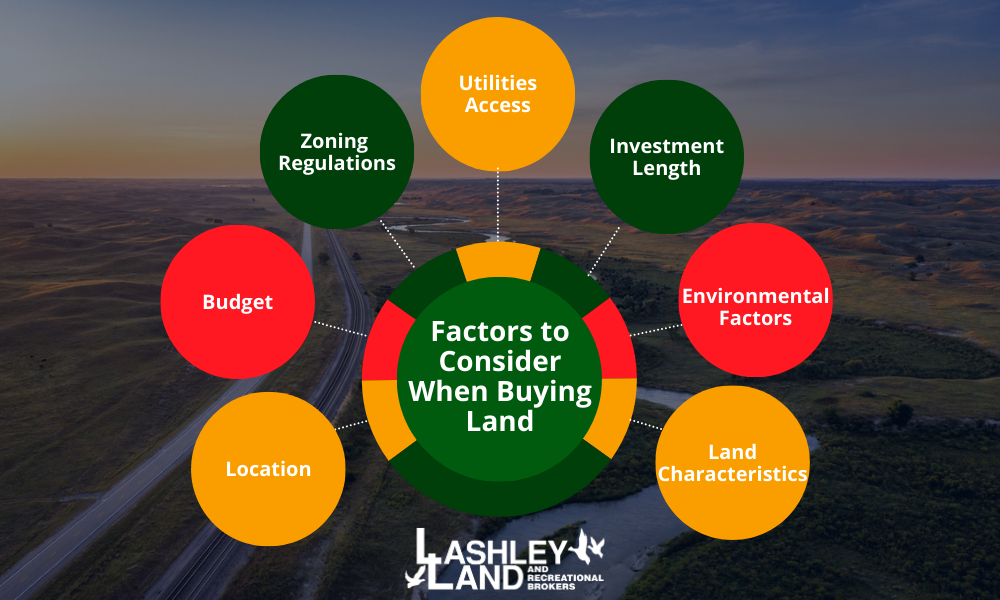
However, navigating the land purchase process can feel complex and daunting for potential buyers. There are many factors that you need to carefully consider, such as zoning regulations, flood zones, property taxes, and more. 

In this blog post, we aim to equip you with all the knowledge you need to make an informed decision when buying land. With the right guidance and information, you’ll be ready to own your piece of Nebraska land. Read on as we highlight what you need to know before buying the plot of land you have been dreaming about. 

What to Look For When Buying Land: Your Guide to Finding the Perfect Plot

The process of buying land often requires more due diligence compared to buying a pre-built residential property. But what does due diligence mean in the context of buying vacant land? Essentially, it is the careful assessment of various aspects of the land before finalizing the purchase. This important step helps in identifying potential issues that might affect your intended land use, ensuring that your land purchase is the right decision. 
Many potential buyers find it helpful to work with real estate agents who specialize in land transactions. Real estate agents have the expertise to navigate through various stipulations and legalities that are unique to land purchases. They play a crucial role in guiding buyers on aspects such as researching the previous owner, understanding deed restrictions, and ensuring a thorough title search. 

Title Search

A title search can help identify any potential legal issues with the property’s title and reveal if the seller has the legal authority to sell the land. This could save you from disputes in the future. 

Deed Restrictions 

As part of your due diligence, it is also necessary to look into any deed restrictions that might be tied to the land. These are rules that dictate what can and cannot be done on the plot of land. For example, some land may be restricted from certain types of construction due to environmental concerns or might have limitations on how many structures are allowed on the property.
Zoning Regulations

Understanding the local zoning department regulations is another critical factor. The zoning ordinances determine what the land can or cannot be used for. It is important to ensure that these regulations align with your intended use of the land, be it for residential, commercial, agricultural, or other purposes. 

Homeowners Association

If you’re planning to build a home there, also make sure to check with the homeowners association rules if there’s one overseeing the community and the potential implications of not having a building permit.

What to Look For When Buying Land: Your Guide to Finding the Perfect Plot

It is often said in the real estate realm, “Location, location, location,” and purchasing vacant land is no exception to this principle. When buying land, the location plays an important role on two fronts – your lifestyle and your wallet!

Starting with lifestyle – the location of a plot of land impacts your daily life. How far is it from urban areas or amenities like grocery stores, schools, and medical facilities? It is essential to consider if there is easy access to these necessities, especially in rural areas.

On the economic front, location plays a crucial role in determining property taxes and future property prices. While rural areas in Nebraska are often thought to have lower property taxes, this is not always the case. Rural Nebraskans can sometimes pay higher property and income taxes than their urban counterparts. However, land within city limits or near future development projects, like new schools or hospitals, may offer potential appreciation in value over time, appealing to those looking for a long-term investment.

Flood Zones

Before finalizing your purchase, it is wise to consider the land’s position relative to flood zones. Evaluate the land and the implications of the flood zone designation, which could affect your insurance costs and eligibility for certain types of construction loans. 

Access

Another consideration that is vital when buying a rural property is checking legal access and road access. Does the land have direct access to public roads, or do you have to cross someone else’s property to reach it? If the latter, you must ensure you have a legal right of way. 

Understanding the considerations of a land’s location is an important step for buyers. Whether you see yourself as a resident of a rural haven or closer to the hustle and bustle of city life, understanding the location’s details will enable you to make an informed land purchase decision.

What to Look For When Buying Land: Your Guide to Finding the Perfect Plot

Once you decide on your land’s location, you may be excited to start designing and planning your dream home. However, it is essential to consider the potential additional costs and steps that need to be taken to prepare the land for construction. 

Soil Type

Examining the land’s characteristics should be the first step. This includes understanding the soil type, which can significantly affect your ability to build your home and may impact your landscaping plans. Nebraska, for instance, has a diverse range of soil types across different regions. Soil testing, including a percolation test (or perc test), is necessary to ensure suitability for a septic system. The perc test results will help determine if the soil can adequately support a septic system, a crucial aspect of developing a residential property in rural areas. 

Water Access

Adequate access to water is another important consideration when preparing the land for building. It is crucial to understand water rights when considering land in rural areas. Especially for families who envision orchards, gardens, or agricultural fields, understanding this is important.

Sewage

Are you planning to install a sewer system or will you rely on a septic tank? These decisions can have a significant influence on the prepared budget. Remember that installing a septic system and constructing a septic tank can incur additional costs and considerations. 

Sustainability

Beyond the land’s characteristics and preparation, look towards sustainable energy sources. Are there opportunities to harness solar power that can be both cost-effective and environmentally friendly? Considering the direction of your home can make a considerable difference to the potential energy you can harness with solar panels.

Development

Lastly, the purchase cost of undeveloped land is typically lower compared to developed land. However, bear in mind that the cost of additional preparation before construction starts can sometimes add up, subtly hidden in the forms of grading, clearing, and excavating the raw land into a construction-ready site. 

Envisioning your dream house on vacant land can be exciting, but a thorough understanding of land preparation and the potential additional costs involved helps ensure a smooth process after the land purchase. When you are informed and prepared, envisioning gardens, fruit trees, or a small ranch on your land will not just be a dream but become a reality.

What to Look For When Buying Land: Your Guide to Finding the Perfect Plot

Investing in land is a major step, particularly in the beautiful rural areas of Nebraska. Given the complexities of land buying—from due diligence to location analysis—having the right real estate guidance is crucial. An experienced agent can simplify this process, helping you navigate each step with confidence and ensuring you find the perfect property. At Lashley Land, we specialize in connecting you with the perfect piece of Nebraska real estate, offering expert advice and support throughout the process. Ready to start your journey to owning a dream property? Contact Lashley Land today, and let us help you make your dream of rural living a reality!
Discover the Heartland: Why Nebraska Might Be Your Next Home

From the plains stretching to the horizon to the warm embrace of small-town communities, Nebraska is a hidden gem in the heart of America. Known as the Cornhusker State, Nebraska offers a balanced mix of rural charm and urban vitality. It provides a lifestyle that combines tranquility with opportunities.
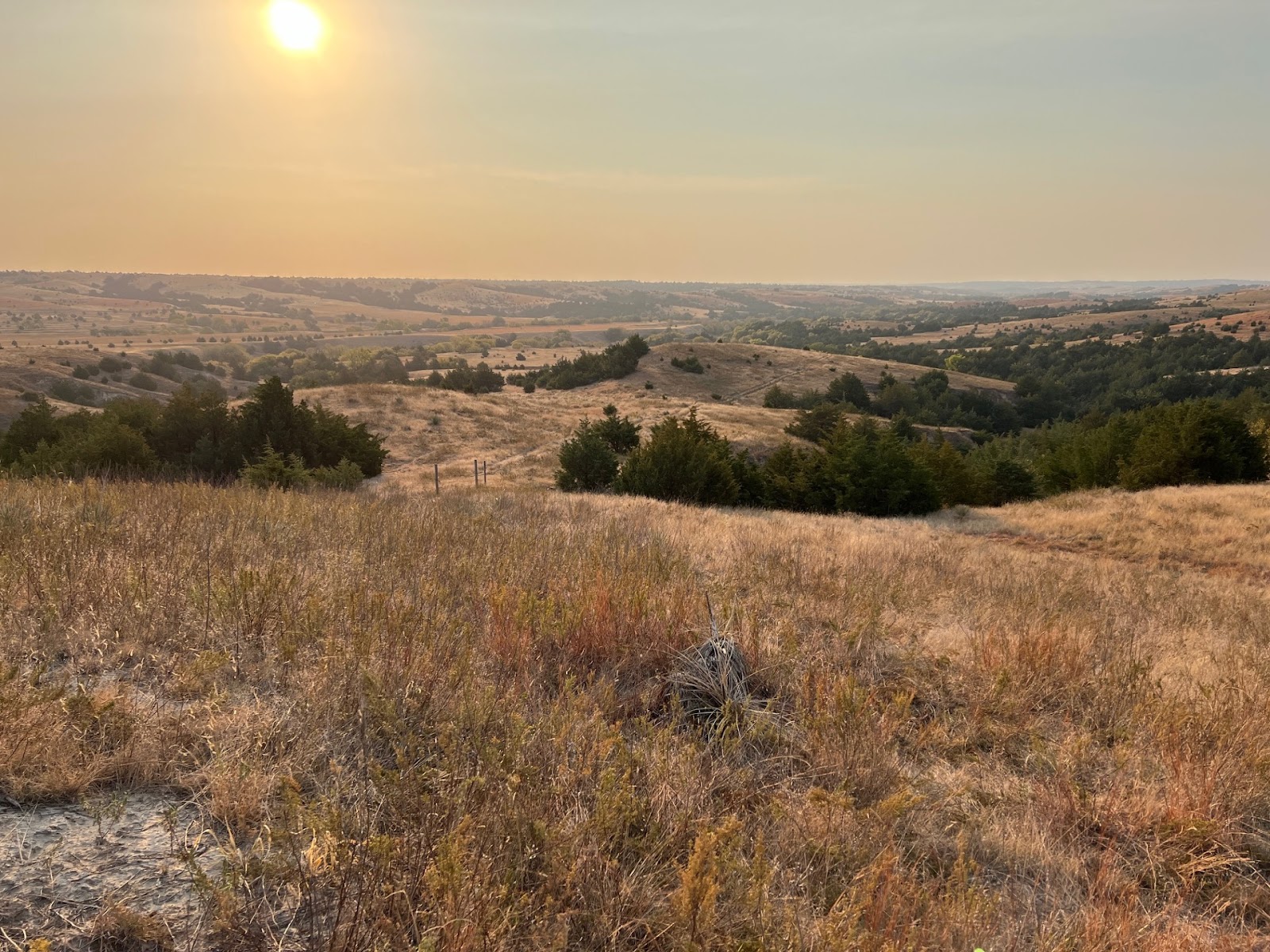
With a diverse landscape and strong community ties, this midwestern state suits those seeking seclusion or friendly communities. Its natural beauty, affordable living, and outdoor activities are what give its appeal. Wondering if Nebraska is a good place to live? Let’s explore why this state might be your next perfect destination.

Nebraska’s diverse landscape ranges from seemingly endless sand hills in the northwest to the verdant prairies in the east, embraced by two significant waterways: the Missouri River to the east and the Platte River through the heart of the state. With grand landscapes such as Chimney Rock and the towering sand cliffs on the banks of the Niobrara River, Nebraska is not lacking in natural wonders.

For every season of the year, Nebraska showcases a different aspect of its beauty. 
  • In winter, locals enjoy hunting big game and waterfowl and hiking trails near the Platte River.
  • In spring, as flowers start to bloom, the annual sandhill crane migration to the Platte River Valley is a must-see. 
  • Summer invites sailing and other water activities on Lake McConaughy, Nebraska’s largest lake. 
  • In the fall, the state’s grasslands become a favorite spot for game-hunting enthusiasts. 

Nebraska’s wide-open spaces not only provide scenic views but also provide access to outdoor activities for residents and visitors. Whether it’s hiking across the Sandhills, camping in one of the many state parks, or wildlife spotting in the Scotts Bluff National Monument, Nebraska offers plenty of opportunities to be at one with nature. This level of immersion in the great outdoors provides a unique way of life in Nebraska that offers peace, tranquility, and adventure in equal measure. 

Ultimately, the natural beauty of Nebraska’s landscape offers an amazing place for anyone seeking an active outdoor lifestyle or wanting to live amidst beautiful scenery. It’s no wonder that more and more people are calling the Cornhusker State home.

Discover the Heartland: Why Nebraska Might Be Your Next Home

Nebraskans look out for each other. Our communities are known for their cooperative spirit, neighborly kindness, and family values, contributing to the state’s low crime rates and a strong sense of safety. Whether you’re in a smaller town like Kearney or a large city like downtown Omaha, the sense of community is seen throughout the state. 

The state is also committed to maintaining a healthy environment for its citizens. Nebraska consistently ranks high in air and water quality surveys, sitting in the eighth spot nationwide for environmental quality. Intensive conservation efforts are underway in Nebraska to maintain and improve these metrics, ensuring the state’s future generations enjoy its natural beauty in a clean, protected environment. 

Nebraska is ranked as the third-best state in the nation for overall quality of life. With vibrant communities, and an exceptional environment, Nebraska proves itself a promising place to live, offering a high standard of living while retaining its welcoming, friendly atmosphere. 

Education is a cornerstone of life in Nebraska. The state is home to a variety of quality public schools and an extensive selection of colleges and universities. The high school graduation rate stands at 87.1%, ranking above the national average. Nebraska’s commitment to education is further reflected in its NAEP math scores, which are notably higher than the national average as well.

Higher education flourishes in Nebraska with the esteemed University of Nebraska. Offering a range of specialized programs, the university attracts students from around the world, all ready to cheer on the Cornhuskers! Other notable institutions include Creighton University, known for its excellent medical school, and Nebraska Wesleyan University renowned for its liberal arts programs.

Stellar healthcare complements Nebraska’s robust education system. The state houses several world-class healthcare facilities, ensuring quality services for its residents. The Nebraska Medical Center is recognized for its cancer and cardiology care, while the Children’s Hospital and Medical Center of Omaha is one of the top-rated pediatric hospitals in the country. The strong healthcare infrastructure coupled with Nebraska’s commitment to public health initiatives ensures a healthy living environment for its residents.

Whether you’re a young professional seeking a degree, a parent prioritizing a good school district, or a retiree needing access to top-notch healthcare services, Nebraska’s focus on education and healthcare makes it a perfect destination for all stages of life. 

Discover the Heartland: Why Nebraska Might Be Your Next Home

Traditionally an agricultural state, Nebraska’s economy has evolved over the years, developing sectors in technology, financial services, and healthcare. This evolution has played a significant role in the state’s economic stability, creating a resilient job market with a range of job opportunities for different skill sets.

Industries experiencing significant growth include biosciences, manufacturing, information technology, and renewable energy. Notably, Omaha is home to five Fortune 500 companies, including Berkshire Hathaway, Union Pacific, and Mutual of Omaha, highlighting the city’s status as a thriving economic hub.

Furthermore, the Cornhusker State stands out for its affordability and economic stability, with an unemployment rate lower than the national average, ranking fourth lowest in the United States. The income levels in Nebraska are also impressive, with the median household income standing above the national average. With economic growth rates in Nebraska that consistently outpace the national average, the state offers its residents a solid economic foundation offering stability and prosperity.

Nebraska provides a thriving landscape for job seekers, business owners, and investors. It’s a state where a strong work ethic, innovation, and entrepreneurship are encouraged and rewarded. Working or starting a business in Nebraska offers a perfect combination of strong economic prospects and a high quality of life.

Discover the Heartland: Why Nebraska Might Be Your Next Home

From outdoor ventures to cultural experiences, recreational opportunities in Nebraska are abundant. The Great Plains provides a playground for outdoor enthusiasts, offering activities including boating, fishing, hunting, golfing, and hiking. 

Sport-fishing in the Missouri River, hiking up the Wildcat Hills, golfing in the Sandhills, or hunting for game in one of the many grasslands, the possibilities to engage with Nebraska’s natural beauty are endless. Parks and reserves like Indian Cave State Park and Niobrara National Scenic River offer scenic trails for hikers and bikers.

Nebraska is also rich in cultural and community events. Throughout the year, residents and visitors can engage in various festivals like the Nebraska State Fair in Grand Island, the AppleJack Festival in Nebraska City, and the popular Omaha Summer Arts Festival. Art enthusiasts can explore numerous art galleries and performing arts venues, such as the Joslyn Art Museum in Omaha and the Sheldon Museum of Art in Lincoln. 

Among the most famous tourist attractions are the Henry Doorly Zoo and Aquarium in Omaha, known for its leading animal conservation efforts and its indoor desert and rainforest habitats. The Durham Museum, also in Omaha, offers a glimpse into the region’s history, while the Bob Kerrey Pedestrian Bridge provides a unique experience of standing in two states at once.

No matter your interests, Nebraska offers several activities for residents to enjoy year-round, contributing to the state’s vibrant and enriched lifestyle.

Nebraska’s living and housing are characterized by a blend of affordability and quality. Nebraska’s home prices and cost of living are well below the national average, assuring affordable living to its residents. Whether you prefer the hustle of cities like Omaha and Lincoln or more tranquil rural areas in the state’s heartland, Nebraska offers a variety of housing options for your lifestyle.

Omaha, the largest city, boasts a vibrant downtown filled with lofts, condos, and apartments. This large city offers an expansive array of single-family homes in safe and family-friendly neighborhoods. The metropolitan area offers easy access to a wealth of amenities including coffee shops, restaurants, shopping centers, and professional sports teams.

Smaller cities like Kearney, Grand Island, or towns in Sarpy County offer a mix of small-town charm and modern comforts. These areas provide appealing options for families, with affordable housing, strong school districts, and lower crime rates. 

For those seeking a retreat or a closer connection to nature, rural areas of Nebraska offer plenty of scope for wide-open living. These areas offer an array of homes, including farmhouses, ranches and independently standing single-family homes. 

Given the state’s diverse range of locales, finding your perfect place in Nebraska is an easy task. Whether looking for the convenience of a bigger city, the charm of a small town, or the tranquility of the country, Nebraska real estate offers options to suit every lifestyle and budget.

Discover the Heartland: Why Nebraska Might Be Your Next Home

If you are looking for a state that balances natural beauty with industrious cities, wide-open spaces with a sense of community, and tradition with innovation, Nebraska might be for you. With its solid economic performance, low cost of living, and warm, welcoming communities, it’s clear that Nebraska is the best place to live for many.

If Nebraska’s qualities have sparked your interest in making it your home, or you’re curious about real estate opportunities in the Cornhusker state, Lashley Land is here to help. With a deep understanding of Nebraska’s land and property market, Lashley Land has been fostering successful transitions into this vibrant lifestyle for decades. Call Lashley Land today to make your Nebraska dream a reality.