
Uncategorized Archives - Page 2 of 3 - Lashley Land
How to Find Investment Properties in Nebraska

How to Find Investment Properties in Nebraska

Nebraska’s agricultural land has consistently outperformed many traditional investments, but finding the right property requires more than browsing online listings. While the housing market in urban areas gets most of the headlines, savvy property investors have long understood that rural Nebraska offers opportunities you won’t find in crowded metropolitan real estate markets.

The best investment properties in Nebraska are found through a combination of working with experienced local land brokers, understanding regional market dynamics, identifying properties with multiple income potential, and conducting thorough due diligence on water rights, soil quality, and long-term value factors.

Whether you’re looking for income-producing farmland, a recreational property with hunting potential, or a ranch with appreciation upside, here’s how to find investment-worthy land in the Cornhusker State.

How to Find Investment Properties in Nebraska

Know What “Investment Property” Means in Nebraska

When most people think of real estate investment in Nebraska, they picture endless rows of corn and soybeans. But Nebraska’s investment opportunities extend far beyond traditional farming operations:

  • Farms and ranches with crop or livestock income, providing steady cash flow for property owners willing to work with tenants or manage operations themselves
  • Recreational land for hunting and fishing that generates rental income through leases while appreciating over the long term
  • Rural acreages near growing communities like Kearney, Grand Island, and Norfolk where residential property gains development potential as towns expand
  • Properties with water rights or mineral value that significantly impact property value in a state where irrigation drives productivity

Defining Your Investment Goals

Before browsing available listings, clarify what you’re actually looking for:

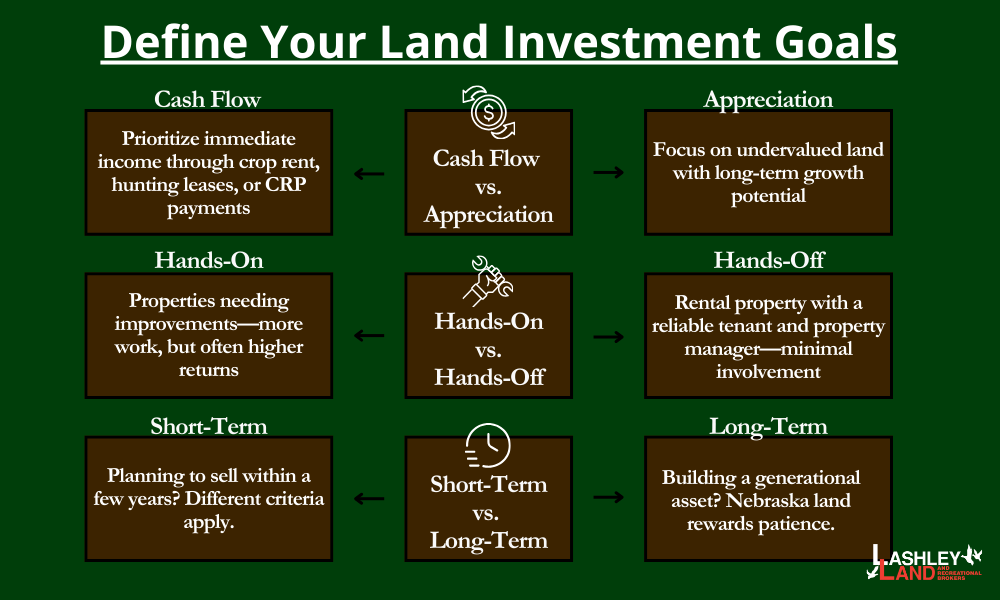
  • Cash flow vs. appreciation: Some investors prioritize immediate passive income through cash rent, while others focus on buying undervalued land for long-term gains
  • Hands-on vs. hands-off: A rental property with a reliable tenant and property manager requires minimal involvement, while a ranch needing improvements takes more attention but often delivers higher returns
  • Timeline considerations: A real estate investor planning to flip within a few years has different criteria than someone building a generational asset

Nebraska land rewards patience. The investors who do best usually think in decades, not quarters.

Where to Look—And Where Most Investors Miss Opportunities

Beyond the Big Listing Sites

Most people start their property search online, scrolling through national platforms like LandWatch, Zillow, or Realtor.com. These sites have their place, but if online listings are your only strategy, you’re seeing the same properties as every other investor in the country.

The reality of rural real estate is that relationships still drive many transactions. Local land brokerages often have access to properties before they hit the public market. Landowners frequently approach brokers they know and trust before deciding whether to list publicly.

Estate sales and inherited properties represent another category that flies under the radar. When families inherit farmland, they don’t always rush to list it. A broker with deep roots in the community often knows about these situations and can facilitate introductions that benefit everyone involved.

Regions Worth Watching

Nebraska’s land market isn’t monolithic. Understanding regional specifics is essential before committing capital: 

  • Eastern Nebraska: Some of the most productive row-crop ground in the country—purchase prices run higher, but so does productivity
  • The Sandhills: Cattle ranching and recreational uses at lower per-acre prices, though properties require significant acreage for meaningful returns
  • River corridors: Properties along the Platte, Loup, Elkhorn, and Republican Rivers attract buyers combining agricultural income with hunting and fishing opportunities
  • The Panhandle: Values heavily dependent on water availability, presenting unique dynamics for the potential investor

Working with a Land Broker Who Knows the Ground

Why Specialization Matters

The difference between a residential real estate agent and a dedicated land specialist is significant. A real estate professional who focuses on land understands soil productivity ratings, water access and rights, hunting pressure and habitat quality, lease rates, and local agricultural economies.

Local knowledge matters enormously. Nebraska has 93 counties, each with its own quirks and market conditions. A broker who’s spent decades working in a particular region knows which areas are gaining value, which properties have hidden issues, and which landowners might be ready to sell. It’s why firms like Lashley Land prioritize deep Nebraska roots and hands-on experience over generic sales credentials.

What an Experienced Broker Brings to the Table

Working with real estate professionals who specialize in land provides distinct advantages:

  • Off-market access: Brokers with established relationships often hear about properties before anyone else and know which estates are being settled
  • Realistic valuations: Experienced brokers can quickly assess whether an asking price is reasonable, protecting investors from overpaying
  • Complex transaction guidance: Help navigating water rights, mineral searches, and financing options saves significant headaches
  • Lender relationships: Financing agricultural land differs from securing a mortgage for a primary residence, and specialized brokers know which mortgage lenders work with rural properties
How to Find Investment Properties in Nebraska

Due Diligence That Protects Your Investment

The Numbers Behind the Land

Smart investors look beyond the purchase price to understand the complete financial picture:

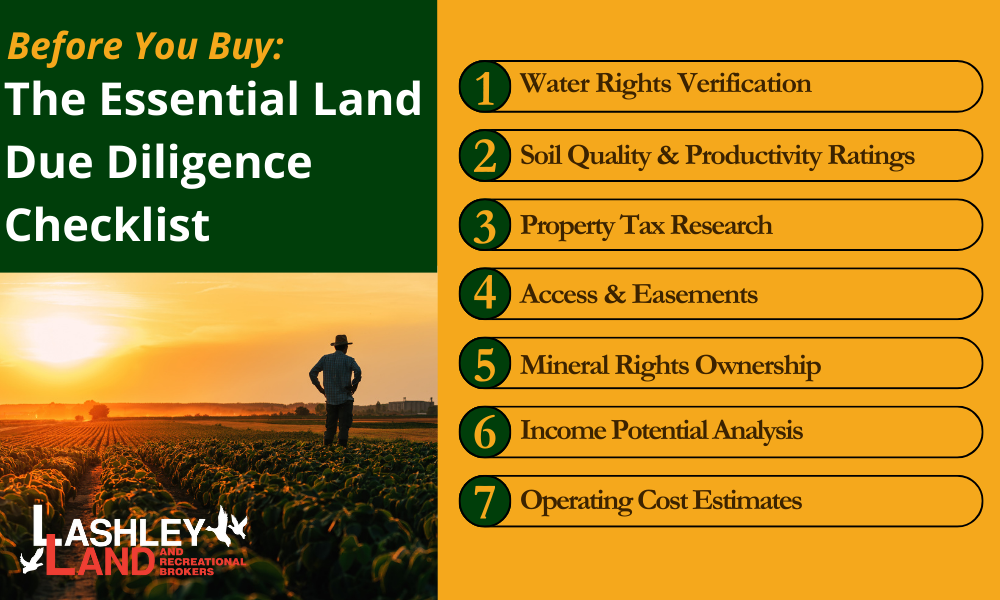
  • Income potential: Cash rent rates for cropland, CRP payments for enrolled properties, or hunting lease income for recreational ground—your county extension office or local broker can provide typical rates
  • Property tax: The most significant ongoing expense, with rates varying considerably across Nebraska’s counties
  • Operating costs: Insurance, maintenance, and property management fees eat into returns more than many first-time investors expect

Understanding these costs ensures the numbers actually work before you commit.

The Details That Make or Break a Deal

Water rights verification is essential for any property where irrigation matters. Nebraska water law is complex, with different rules for groundwater and surface water. Understanding what rights convey—and any restrictions—should happen before you make an offer.

Additional due diligence should cover:

  • Soil quality and productivity ratings from USDA soil surveys
  • Access and easements confirming legal road access and any limitations on building
  • Mineral rights ownership since these are sometimes severed from surface ownership
  • Vacancy rate considerations for properties dependent on tenant income

Understanding what you’re actually buying matters for both current use and future property value.

Making Your Move—From Search to Closing

Timing the Market (Or Not)

Every investor wonders whether to wait for better conditions. The honest answer is that timing land markets is difficult, and waiting for the “perfect” deal often costs more than it saves.

Nebraska land values have generally trended upward over the long term. Investors who waited for a major correction during the past decade mostly watched prices climb higher. Seasonal patterns do affect the market—fall and winter see more listings as harvest wraps up—but quality properties sell quickly in any season.

The best approach is to define clear criteria, work with a knowledgeable broker, and be prepared to act when the right property becomes available.

Financing Agricultural and Recreational Land

Financing land purchases works differently than securing a conventional mortgage for single-family homes or commercial real estate like an apartment building or office buildings. Agricultural lenders like Farm Credit Services and local banks with ag lending departments evaluate productivity, income potential, and your overall financial picture.

Key financing considerations include:

  • Higher down payments: Many lenders require 20-30% down for agricultural properties
  • Different interest rate structures compared to residential mortgages
  • Specialized loan terms that vary based on property type and borrower qualifications

Working with a broker who has relationships with agricultural lenders, or consulting your financial advisor, helps you understand your options and find the best fit for your investment strategy.

How to Find Investment Properties in Nebraska

Find Your Nebraska Investment Property with Lashley Land

Finding investment properties in Nebraska comes down to clarity on your goals, local expertise, and thorough due diligence—not just scrolling through listings. The investors who succeed understand what they’re looking for, work with real estate professionals who know the ground, and verify the details that affect long-term value.

The right property is out there, but it often takes a knowledgeable partner to find it before someone else does. With over 140 years of combined experience in Nebraska land sales, the Lashley Land team brings the local insight, industry connections, and honest guidance that help investors make confident decisions. Whether you’re a first-time investor exploring farmland or an experienced buyer expanding into recreational properties, we’ll help you find opportunities that match your goals, including listings you won’t find anywhere else.

Ready to explore investment opportunities across Nebraska? Contact the Lashley Land team to discuss what you’re looking for and what’s available.

How to Register Your Farm as a Business

How to Register Your Farm as a Business

The short answer: Registering your farm as a business typically involves choosing a business structure (LLC, corporation, sole proprietorship, or partnership), registering with the Nebraska Secretary of State, obtaining an EIN from the Internal Revenue Service, and securing any required state and local permits. The registration process can often be completed in a few weeks, though the right legal structure for your farm operation depends on your specific goals, tax situation, and liability concerns.

Whether you’re turning a family operation into a formal business or starting fresh with newly acquired farmland, registering your farm as a business is one of the most important steps you can take to protect your assets and set yourself up for long-term success.

Let’s walk through each step so you know exactly what to expect.

Why Registering Your Farm Matters

Protecting What You’ve Built

When you operate as an unregistered farm, there’s no legal separation between you and your agricultural business. That means if something goes wrong—an equipment accident, a contract dispute, unpaid debt—your personal assets could be at risk.

Establishing a formal business entity creates a clear line between your personal finances and your farm liabilities. It also gives your operation a recognized business identity, which matters when you’re signing contracts, applying for loans, or entering into land transactions. For anyone serious about building a farm that lasts for generations, this protection is foundational.

Financial and Tax Advantages

Beyond liability protection, business registration opens doors to agricultural tax benefits and deductions that aren’t available to hobby farm operators. It makes the application process for FSA farm loans, USDA programs, and disaster assistance much more straightforward. Banks and lenders take you more seriously when you’re operating as a registered business rather than as a sole proprietor with no formal structure.

A registered farm business also simplifies your bookkeeping. When your farm finances are separate from personal accounts (including that business credit card you use for feed and supplies), tracking income, expenses, and depreciation becomes far less complicated. 

How to Register Your Farm as a Business

Choosing the Right Business Structure for Your Farm

Before you file any paperwork, you need to decide what type of business entity makes sense for your situation. Each structure comes with different implications for liability, taxes, and paperwork.

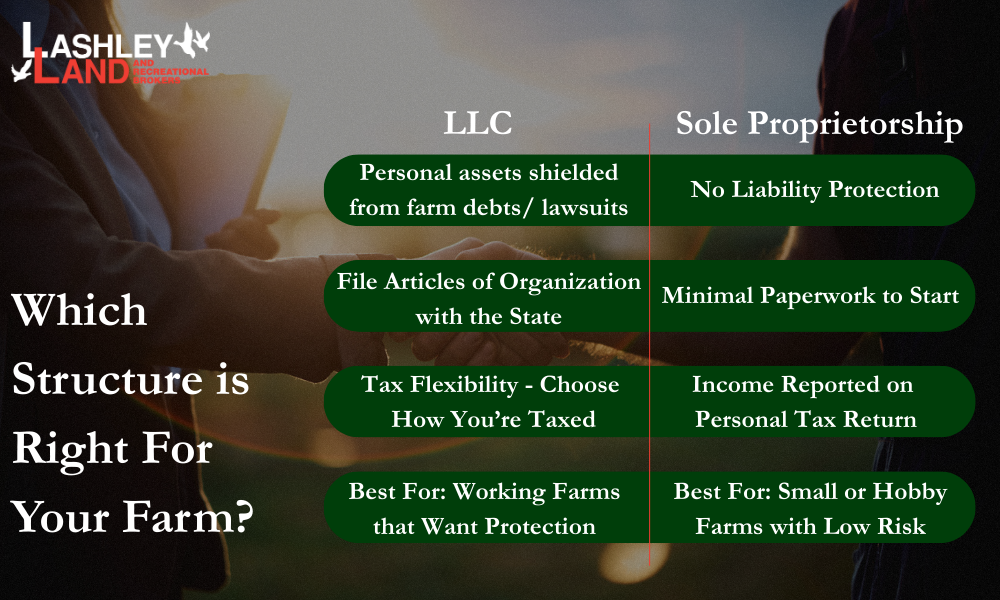
Sole Proprietorship – Simple but Limited

A sole proprietorship is the easiest way to operate a farm business. There’s minimal paperwork, no formal registration required with the state (beyond a fictitious name filing if you’re using a business name different from your own), and you report farm income directly on your personal tax return.

The downside? There’s no separation between personal and business liability. If your operation incurs debt or faces a lawsuit, your personal assets are on the line. This structure works best for small, low-risk operations or true hobby farms where the stakes are relatively low.

Partnership – When You’re Not Going It Alone

If you’re farming with family members, a neighbor, or a business partner, a partnership might make sense. General partnerships are straightforward to form, but each partner shares full liability for the business.

A limited partnership or limited liability partnership offers more protection, limiting some partners’ exposure to the amount they’ve invested. Any partnership arrangement requires a solid agreement that spells out ownership percentages, responsibilities, profit-sharing, and what happens if someone wants out. Without that document, disagreements can get complicated fast.

LLC – A Popular Choice for Nebraska Farmers

The limited liability company has become one of the most popular structures for farm operations across the United States, and for good reason. An LLC provides liability protection—your personal assets are generally shielded from farm debts and legal claims—without the complexity of a full corporation.

LLCs also offer flexibility when it comes to taxes. You can choose to be taxed as a pass-through entity (like a partnership or sole proprietor) or elect corporate taxation if that’s more advantageous. The filing requirements in Nebraska are relatively straightforward, and ongoing maintenance is minimal compared to corporations.

Corporation (S-Corp or C-Corp) – For Larger Operations

Corporations offer the strongest liability protection and can provide tax advantages for higher-income agricultural operations. However, they come with more paperwork, formal requirements (like holding annual meetings and maintaining corporate minutes), and additional complexity.

An S-Corp allows income to pass through to shareholders, avoiding double taxation. A C-Corp pays taxes at the corporate level, which can be beneficial in certain situations. For most beginning farmers and mid-size operations, an LLC offers the protection of a corporation with less administrative burden.

How to Register Your Farm as a Business

Step-by-Step Registration Process in Nebraska

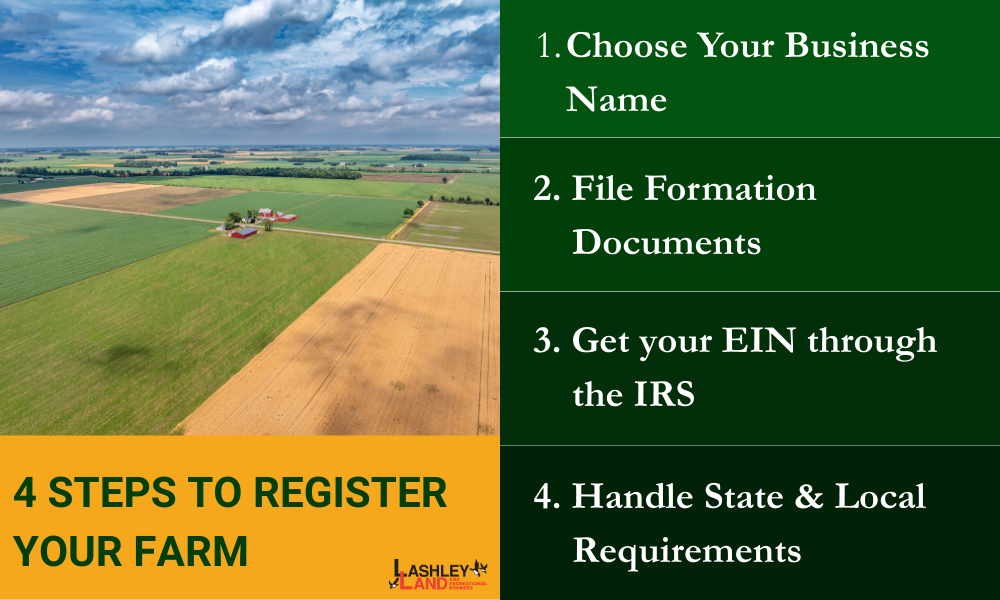
Once you’ve settled on a business structure, here’s how to make it official.

Step 1 – Choose and Reserve Your Business Name

Your business name must be distinguishable from existing Nebraska businesses. You can search the Nebraska Secretary of State’s database to check availability. If you find a name you want but aren’t quite ready to file, you can reserve it for 120 days for a small fee.

If you’re operating under a name different from your own legal name (or your LLC’s official name), you may also need to file a fictitious name registration with your county clerk.

Step 2 – File Formation Documents

For a limited liability company, you’ll file Articles of Organization with the Nebraska Secretary of State. Corporations file Articles of Incorporation. Both can be submitted online or by mail, and filing fees are reasonable.

The documents require basic information:

  • Your business name
  • Registered agent (someone in Nebraska authorized to receive legal documents on behalf of the business)
  • Principal address
  • Names of organizers or incorporators

Step 3 – Get Your EIN from the IRS

An Employer Identification Number is required if you plan to:

  • Hire employees
  • Open a business bank account
  • File certain tax returns

Even if none of those apply right now, having an EIN is useful—it keeps your Social Security number off business documents and establishes your operation as a legitimate business entity. You can obtain an EIN from the Internal Revenue Service for free, and the online application takes just a few minutes.

Step 4 – Register for State and Local Requirements

Depending on your business activity, you may need to register with the Nebraska Department of Revenue. This applies if you’re:

  • Collecting sales tax
  • Hiring employees (which triggers unemployment insurance requirements)
  • Conducting certain types of business

Check with your local government about county permits or zoning compliance. Some agricultural activities have different requirements depending on location. Additional registrations or licenses may include:

  • Premises registration (if you’re raising livestock)
  • Organic certification
  • Specialty crop or value-added product licensing
  • Farm-plated vehicle registration for agricultural equipment used on roadways

Additional Considerations for Nebraska Farm Owners

Operating Agreements and Bylaws

If you form an LLC, Nebraska doesn’t legally require an operating agreement—but you should have one anyway. This document covers critical details:

  • Ownership percentages
  • Decision-making authority
  • What happens if an owner wants to sell their interest
  • How the business will be managed day-to-day
  • Succession plans for passing the operation to the next generation

For multi-generational or family-owned farms, an operating agreement is especially important. It keeps family members on the same page and prevents disputes down the road. Corporations need bylaws that serve a similar purpose.

Water Rights and Mineral Rights

Business registration doesn’t automatically transfer or clarify water rights and mineral rights. These are separate from surface land ownership in Nebraska and need to be addressed during any land purchase or business formation.

Key considerations include:

  • Irrigation rights and permits if your farm operation depends on water access
  • Mineral rights ownership (oil, gas, or other resources beneath your property)
  • Any existing leases or easements that affect how you can use the land

These issues are worth discussing with a land professional before you finalize any transaction.

Insurance and Risk Management

Your business structure affects what types of insurance coverage you need and can obtain. A comprehensive risk management plan should include:

  • Farm liability insurance
  • Crop insurance
  • Equipment coverage
  • Additional endorsement options based on your specific operation

Talk to an insurance agent familiar with agricultural operations to make sure you’re adequately protected. The right coverage can mean the difference between recovering from a setback and losing everything you’ve worked for.

How to Register Your Farm as a Business

Getting Started

Registering your farm as a business takes some upfront effort, but it’s an investment in your operation’s future. The right structure protects your family, simplifies your finances, and positions you to take advantage of the programs and opportunities available to Nebraska’s agricultural community.

Thinking about buying farmland to start or grow your operation? The team at Lashley Land & Recreational Brokers has helped Nebraska farmers and ranchers find the right property for over 140 years combined. From productive agricultural ground to recreational properties perfect for a beginning farmer looking to build something new, we know this land and the people who work it.

Contact us for a free consultation and let’s talk about what you’re looking for.

Nebraska Deer Hunting Guide: Seasons, Land Access, and Expert Local Tips
Powerful Male Whitetail Buck Searches For Female Deer During Fall Rutting Season In Kansas

Nebraska Deer Hunting Guide: Seasons, Land Access, and Expert Local Tips

The Short Answer: Nebraska’s deer hunting season runs from September through mid-January, with archery season (Sept 1–Dec 31), firearm season (Nov 15–23), and muzzleloader season (Dec 1–31). Hunters can access thousands of acres through the Public Access Atlas, state parks, and Open Fields program, or invest in private recreational land for exclusive hunting opportunities. Lashley Land helps hunters find the perfect property across Nebraska’s best deer habitat.

Nebraska Deer Hunting Guide: Seasons, Land Access, and Expert Local Tips

Nebraska’s Deer Hunting Seasons: Know When to Plan Your Hunt

Planning a successful deer hunt starts with understanding Nebraska’s season structure. The Nebraska Game and Parks Commission manages these dates carefully to balance hunter opportunity with wildlife management across the state’s diverse regions.

2025 Season Dates:

  • Archery Season: September 1 – December 31
  • October River Antlerless: October 1 – 15
  • November Firearm Season: November 15 – 23 (nine consecutive days starting on the Saturday closest to November 13)
  • Muzzleloader Season: December 1 – 31
  • Late Antlerless Only Firearm: January 1 – 15, 2026

What Hunters Should Know:

  • The extended archery and muzzleloader windows give you flexibility to work around busy schedules while targeting peak deer movement periods
  • Firearm seasons are shorter but draw heavy participation, especially in areas with strong deer populations
  • Antlerless-only seasons play an important role in maintaining healthy herd sizes and habitat balance
  • Tag distribution and permits vary by region, so check with the Parks Commission or your local parks office early in the planning process

Local Tip from Lashley Land: Our team often recommends planning early archery hunts near river corridors or agricultural fields, where deer movement peaks before hunting pressure builds. Understanding these patterns across Nebraska’s high plains and river valleys can make the difference between a good season and a great one.

Don’t forget your habitat stamp when purchasing your permit. It supports critical wildlife conservation efforts across the state’s publicly accessible lands.

Why Nebraska Is a Hunter’s Haven

Abundant Wildlife and Access Opportunities

Nebraska’s landscape tells a story of diversity. The state’s geography ranges from Sandhills prairies and Pine Ridge bluffs to eastern river valleys and western high plains. Each region supports healthy populations of whitetail and mule deer.

The best places to hunt aren’t always where you’d expect. Trophy whitetails are increasingly common across Nebraska, with the state regularly producing record-book animals. Mule deer thrive in the western regions, offering a different challenge and hunting experience altogether.

Beyond deer, Nebraska Game and Parks Commission manages seasons for big game species including antelope, elk, and even special permit opportunities for bighorn sheep and mountain lion. Wild turkey hunting in the spring season draws hunters from across the region, while upland game like prairie grouse and small game species including gray fox provide year-round opportunities.

The Public Access Atlas, available through the Parks Commission, identifies thousands of acres of publicly accessible lands managed through programs like Open Fields and Waters Program, giving hunters options beyond private land leases.

Landowner and Private Access Options

While public access provides valuable opportunities, private land offers something different: consistency, less pressure, and the ability to manage habitat specifically for the species you’re pursuing.

Here’s what private recreational property can offer:

  • Controlled access means less competition and more predictable deer behavior throughout the hunting season
  • The ability to develop food plots, timber edges, and water sources that attract and hold deer year-round
  • A place to build blinds, establish trail systems, and create the hunting experience you want
  • Long-term investment value that appreciates while providing yearly enjoyment
  • Opportunities for nonresident landowners to secure Nebraska hunting rights through property ownership

Owning hunting property gives you something public land can’t: a place that’s truly yours, season after season. From whitetail habitat in eastern river valleys to mule deer country in the Niobrara Unit, having your own ground means no competition and no uncertainty.

Nebraska Deer Hunting Guide: Seasons, Land Access, and Expert Local Tips

Finding the Right Hunting Property in Nebraska

What to Look for in Recreational Land

Not all hunting land is created equal. After over 140 years of combined experience in Nebraska land sales, the team at Lashley Land knows what separates average property from exceptional hunting ground.

Key Features to Consider:

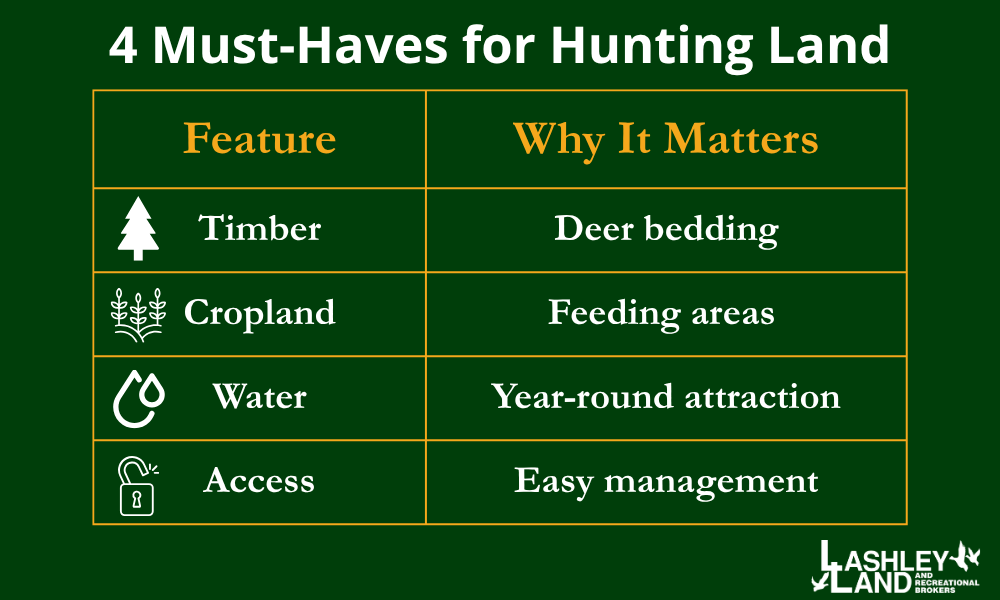
  • Habitat Variety: The best deer properties include a mix of timber for bedding, cropland or native grasses for feeding, and water access for year-round attraction
  • Wildlife Corridors: Natural travel paths between feeding and bedding areas create predictable deer movement and better hunting opportunities
  • Accessibility: Year-round road access and proximity to towns make property management and hunting trips more convenient
  • Improvement Potential: Look for opportunities to add food plots, shooting houses, trail cameras, and habitat enhancements that increase both deer activity and property value

Understanding harvest limits, bag limits, and possession limits for your target species helps you evaluate whether a property can support your hunting goals season after season. Properties near state park lands or within known deer concentration areas may offer enhanced opportunities during both the auxiliary season and primary hunting periods.

Nebraska Deer Hunting Guide: Seasons, Land Access, and Expert Local Tips
Wyoming, USA – October 7, 2022: Father and son walk in the sagebrush looking for deer during a child’s first hunting trip. Holding hands

Why Buy Hunting Land Near Nebraska’s Best Deer Habitat?

A Hunting Property That Grows With You

Recreational land in Nebraska’s prime deer country offers more than just a place to hunt this season:

  • Build Your Own Hunting Paradise: Develop food plots, create trail systems, establish shooting houses, and manage habitat specifically for the deer you’re targeting
  • Multiple Hunting Opportunities: Beyond deer, your property can support wild turkey hunting, waterfowl pursuits, upland game like prairie grouse, and small game hunting throughout the year
  • A Place for Tradition: Hunting land becomes a gathering place for family and friends, creating memories and traditions that last for generations
  • Smart Investment: Well-managed recreational land with good habitat and access in Nebraska holds strong value as hunting properties become increasingly scarce

Find Your Ideal Hunting Property with Lashley Land

At Lashley Land and Recreational Brokers, we specialize in helping hunters find their perfect piece of Nebraska hunting ground. If you’re searching for river bottom whitetail habitat, high plains mule deer country, or mixed-use land that offers both hunting and income potential, our team brings over 140 years of combined experience to guide you through the process.

We understand what makes hunting land valuable—from wildlife corridors and water access to habitat variety and year-round accessibility. More importantly, we know Nebraska’s regions and can help you find property that matches both your hunting goals and your budget.

Start Your Search Today

Ready to turn your deer hunting dreams into reality? If you’re planning this season’s hunt or looking to secure your own piece of Nebraska’s best deer habitat for years to come, Lashley Land can help you find the right property.

Browse our available hunting and recreational land listings and discover properties across Nebraska’s prime deer country from the Pine Ridge to the river valleys. With Nebraska’s combination of long hunting seasons, thriving deer populations, and accessible land opportunities, your next trophy buck is never far away.

Contact Lashley Land & Recreational Brokers today for trusted, local guidance on finding your perfect Nebraska hunting property.

Cost to Develop Land in Nebraska – What Buyers Should Know Before Building

Cost to Develop Land in Nebraska – What Buyers Should Know Before Building

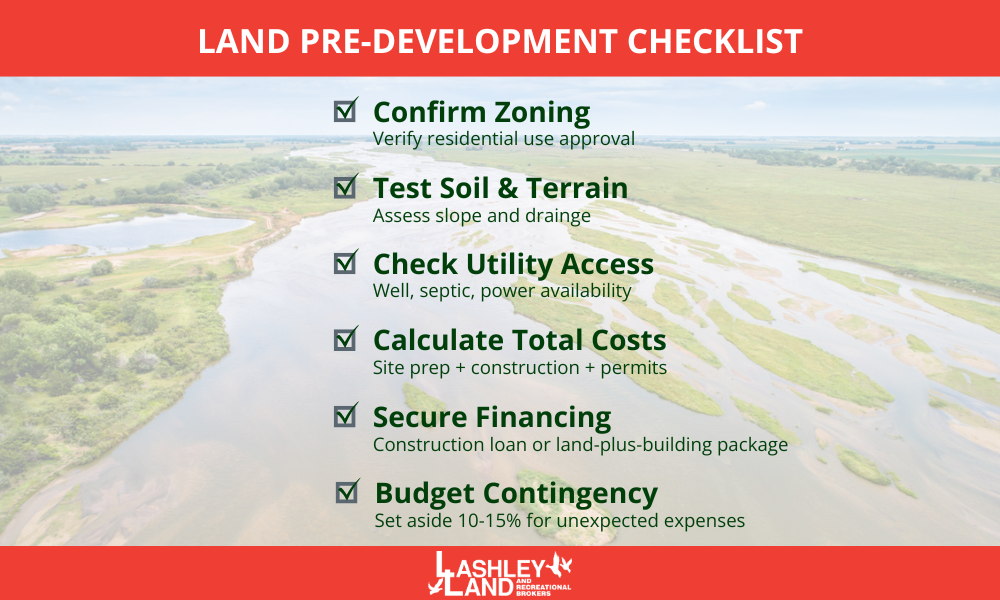
The Short Answer

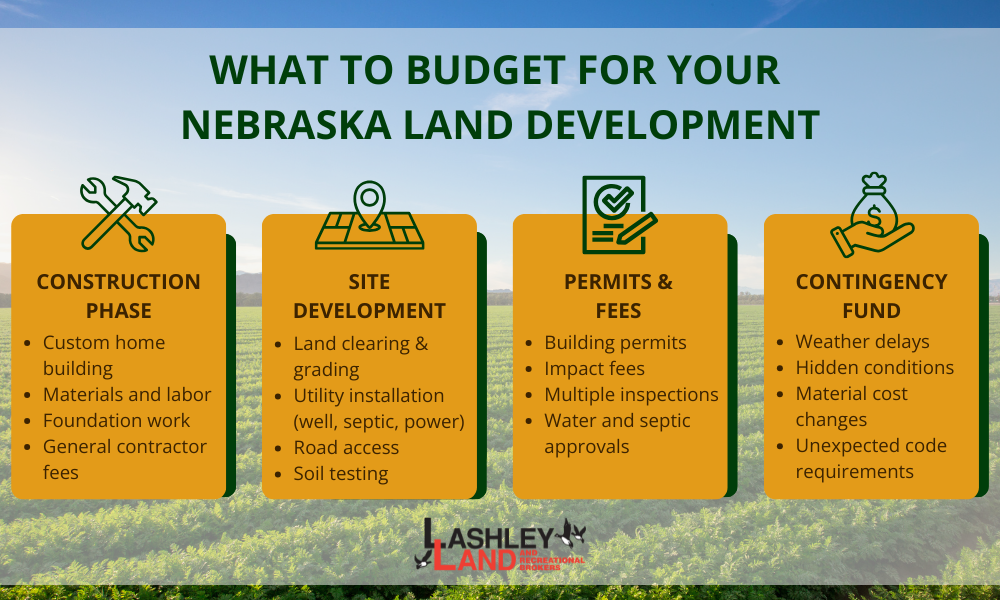
Turning raw land into your dream property in Nebraska involves more than just construction costs. Before breaking ground, buyers should plan for zoning approvals, site preparation, utility installation, building permits, and home construction—typically ranging from $90 and $135 per square foot. Rural areas often require additional costs for wells, septic systems, and electrical connections, making due diligence essential. Understanding local regulations, terrain conditions, and hidden costs is key to avoiding unexpected expenses and keeping your land development project on budget.

Cost to Develop Land in Nebraska – What Buyers Should Know Before Building

Understanding Site Development Costs and Land Preparation

Zoning Requirements and Real Estate Regulations

Before you purchase undeveloped land, confirm it’s zoned for your intended use. Local government regulations may restrict home size, placement, or proximity to natural resources like streams and wetlands. County offices can provide detailed information about setbacks, square footage limits, and other requirements that affect your building plans.

Why this matters: Buying land without proper zoning verification can derail your entire project and significantly increase the total cost.

Lashley Land’s Nebraska expertise helps buyers navigate rural zoning and land-use restrictions before land acquisition, ensuring you invest in a plot of land that matches your building goals.

Site Preparation and Ground Work

The condition of your raw land directly impacts development costs. Site preparation includes:

  • Clearing and grading: Removing trees, brush, and leveling the terrain
  • Excavation: Preparing the building site based on your custom home plans
  • Soil testing: Identifying composition and stability for foundation work
  • Drainage solutions: Managing water flow to protect your investment

Steep or heavily wooded lots cost more to prepare than flat, cleared parcels. Rocky soil conditions or poor drainage may require specialized equipment, adding to labor costs and extending timelines.

Real-world consideration: A gently sloping property near existing roads will have significantly lower site development costs than remote, uneven terrain.

Essential Utilities and Infrastructure

Many Nebraska properties, particularly in rural areas, require substantial utility installations:

 ✔️ Well drilling: Costs vary based on depth and water table location
✔️ Septic system installation: Required where municipal sewer isn’t available
✔️ Electrical connection: Extending power lines or exploring alternative energy sources
✔️ Road access: Building or improving driveways and approach roads
✔️ Natural gas or propane: Planning fuel sources for heating and cooking

Each utility represents a significant line item in your development budget. Properties closer to existing infrastructure naturally have lower costs than isolated parcels requiring extensive hookups.

Permits, Impact Fees, and Regulatory Costs

Local government agencies charge various fees throughout the development process:

  • Building permits: Required before construction begins
  • Impact fees: Charges for schools, roads, and community infrastructure
  • Inspection fees: Multiple visits throughout the construction process
  • Water and septic permits: Separate approvals for well and waste systems

These costs vary significantly by county and should be factored into your upfront budget. Lashley Land’s familiarity with Nebraska jurisdictions helps clients anticipate total permitting expenses during land acquisition.

Construction Costs: Building Your New Home

Average Cost Per Square Foot in Nebraska

Nebraska offers favorable construction costs compared to markets like San Francisco or other high-cost regions. Current estimates place new home construction between $90 and $135 per square foot, depending on:

  • Finish quality and building materials
  • Home design complexity
  • General contractor selection
  • Current material costs and labor availability

This represents good value for buyers looking to build custom homes in rural areas while maintaining quality construction standards.

Foundation Work and Lot-Specific Factors

Your foundation accounts for roughly 10–15% of total construction costs. The specific approach depends on:

  • Soil composition: Clay, sand, or rock affect foundation design
  • Slope and drainage: May require specialized engineering
  • Basement options: Walk-out or full basements add square footage and cost
  • Frost line depth: Nebraska’s climate requires proper frost protection

Properties with challenging terrain or soil conditions will see higher foundation costs but may gain long-term value through creative design solutions that leverage natural features.

Total Project Budget Expectations

When planning your land development project, expect total costs ranging from roughly $177,000 to $462,000 for a complete new home, depending on size, finishes, and site conditions. This includes:

  • Construction materials and labor
  • Site work and utilities
  • Permits and inspections
  • Landscaping and driveway completion
  • Connection to existing infrastructure

Important note: These figures assume relatively straightforward sites. Properties requiring extensive clearing, remote utility connections, or significant grading will require additional budget allocation.

Cost to Develop Land in Nebraska – What Buyers Should Know Before Building

Smart Budgeting Strategies for Nebraska Land Buyers

Planning for Unexpected Expenses and Contingencies

Even well-planned projects encounter surprises. Smart buyers set aside 10–15% of their total budget for:

  • Weather-related delays
  • Hidden rock layers discovered during excavation
  • Soil conditions requiring additional foundation work
  • Material cost fluctuations
  • Code changes or additional permit requirements

This contingency fund protects your project timeline and prevents financial stress when challenges arise.

Choosing the Right Property for Lower Development Costs

Site selection dramatically affects your bottom line. Consider:

Location advantages:

  • Proximity to towns reduces utility extension costs
  • Existing road access eliminates driveway construction
  • Availability of natural gas versus propane-only areas
  • Soil quality and drainage characteristics

Property characteristics that save money:

  • Relatively flat terrain
  • Minimal clearing requirements
  • Access to the electrical grid
  • Favorable zoning without variance needs

Exploring Financing Options and Construction Loans

Financing land development differs from purchasing an existing house:

  • Construction loans: Short-term financing with higher interest rates during building
  • Land-plus-construction packages: Combined financing for land purchase and building
  • Conversion to permanent mortgage: Transitioning from construction to standard home loan

Lashley Land’s network includes financial institutions experienced in rural property lending who understand the unique aspects of land acquisition and development financing. Working with lenders familiar with Nebraska’s real estate market often results in better terms and smoother approval processes.

Why Partner with Lashley Land & Recreational Brokers

Local Insight That Saves Time and Money

Why Partner with Lashley Land & Recreational Brokers

Local Insight That Makes a Difference
With more than 140 years of combined experience, Lashley Land’s team knows Nebraska’s land (soils, zoning rules, and development realities) better than anyone. Their deep local knowledge helps you avoid costly surprises from the very start, guiding you through everything from property selection to permitting.

A Full-Service Partner for Your Building Journey
Lashley Land goes beyond helping you find the right parcel. Their team offers:

  • Zoning and permitting guidance to ensure your land matches your building goals.
  • Utility access evaluations and cost assessments to clarify true development expenses.
  • Connections to trusted professionals—surveyors, builders, and rural lenders who understand Nebraska properties.
  • Personalized consultation for buyers seeking practical, long-term investment success. 

Your Trusted Nebraska Real Estate Partner
If you’re building a home, retreat, or investment property, Lashley Land provides honest, experience-driven advice rooted in Nebraska values. Their comprehensive support means you’ll understand the full cost of development upfront and move forward with confidence.

Cost to Develop Land in Nebraska – What Buyers Should Know Before Building
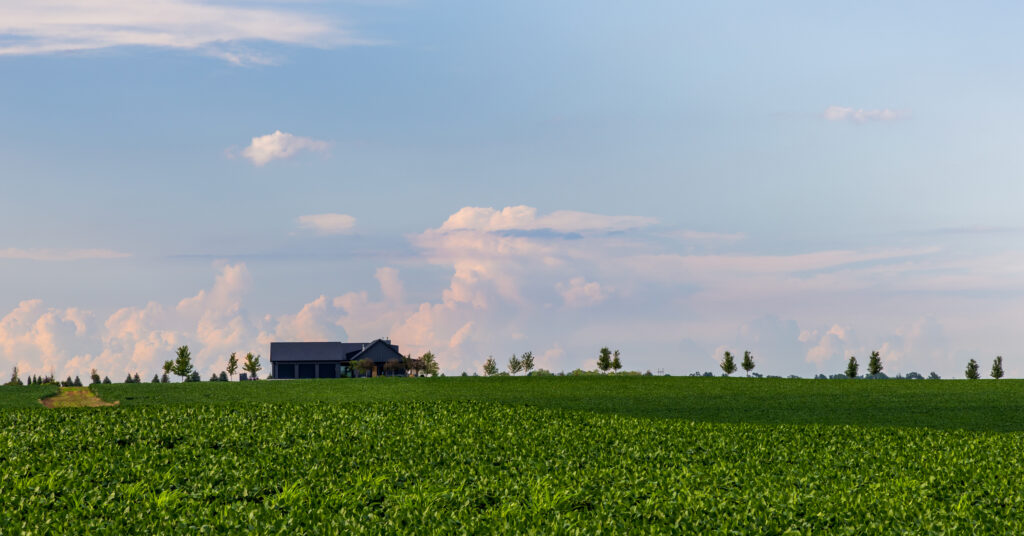
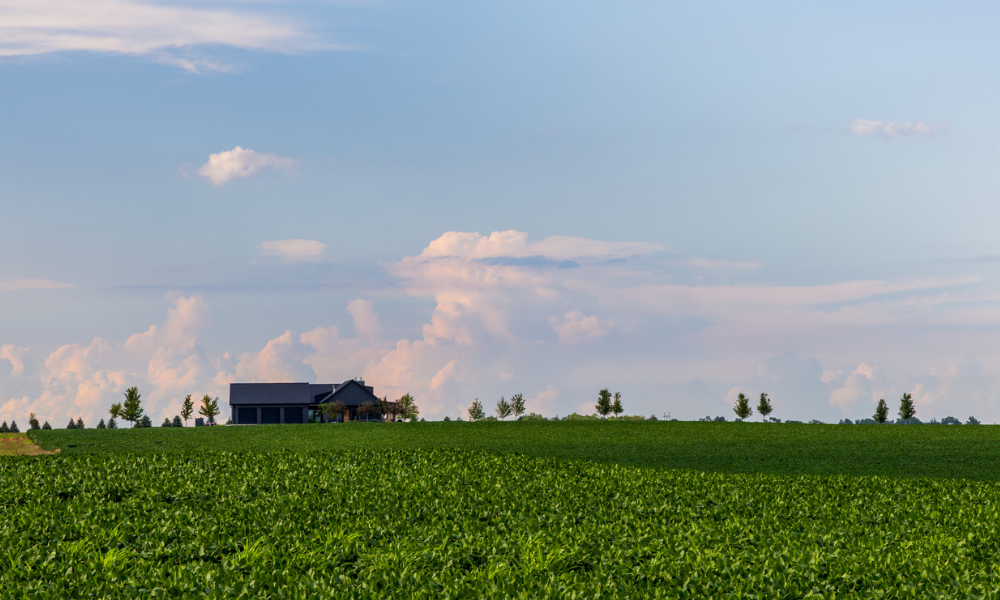
Rural Nebraska landscape on a summer day

Building Smart in Nebraska: Your Path Forward

Developing land in Nebraska offers tremendous opportunity when you understand site development costs, construction expenses, and local regulations. The difference between a smooth project and a costly struggle often comes down to selecting the right property and working with professionals who know Nebraska inside and out.

Building in Nebraska is easier when you have the right partner. Lashley Land’s expertise and connections make every step—from land selection to construction—clear and achievable.

Ready to start your land development journey? Contact Lashley Land & Recreational Brokers to schedule a consultation and discover your perfect spot to build.

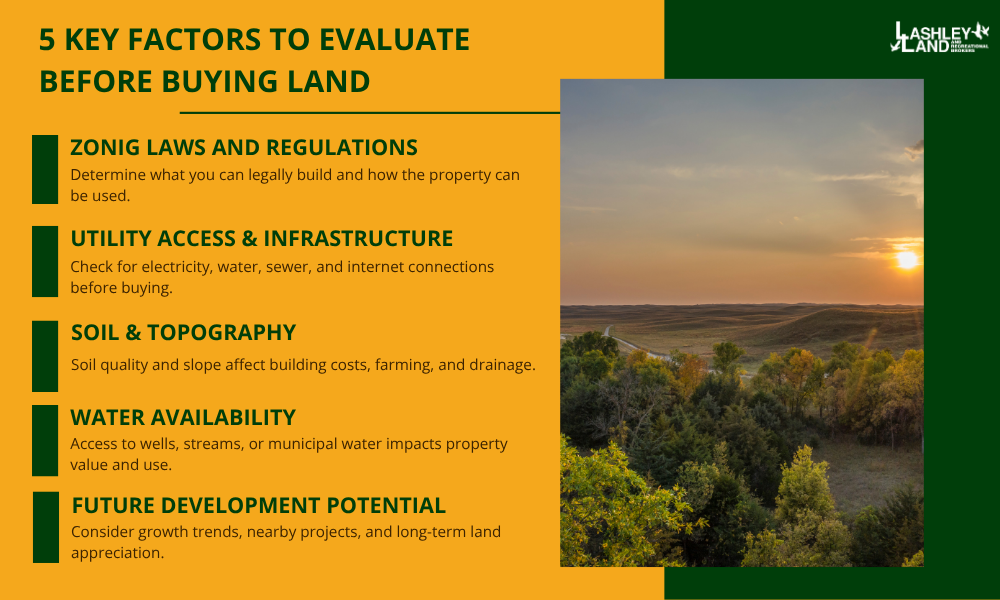
Key Factors Every Buyer Should Consider When Buying Land

When buying land or vacant land, focus on location, legal considerations, and physical characteristics. These three elements determine both the property’s current value and future potential.
Buying land represents one of the most significant land purchases many people make in their lives. Unlike developed residential property, raw land purchases require careful analysis of multiple factors that can affect both immediate use and long-term value. Whether you’re looking for a place to build your new home, start a farm, or create a recreational retreat, understanding what to evaluate before making an informed decision is fundamental to making a sound investment.

Key Factors Every Buyer Should Consider When Buying Land

Accessibility, Surroundings, and Property Value Considerations

Road Access and Accessibility

The type of road access to your vacant land directly impacts its usability and value. Public roads offer the advantage of guaranteed maintenance and snow removal by local authorities. Private roads, while offering more privacy, often require shared maintenance agreements with neighbors and may need additional investment for upkeep.

Weather conditions affect property access throughout the year. Some dirt or gravel roads might become difficult to navigate during the spring thaw or heavy rains. Winter weather can make steep driveways challenging without proper maintenance. Consider asking neighbors about road conditions during different seasons before making a land purchase decision.

Emergency response times depend heavily on road access. Properties far from city limits or with complicated access routes may face longer wait times for emergency services. Contact local fire departments and medical services to understand their ability to reach the property.

Surrounding Area Assessment

Understanding neighboring agricultural land uses helps predict potential future issues or opportunities. Check if adjacent lands are residential, agricultural, or recreational. Large-scale farming operations, hunting areas, or planned developments nearby could affect your undeveloped land’s future use and value.

Research local zoning laws and development plans through the local planning office. New roads, commercial developments, or changes in land use regulations can significantly impact property values. Look for signs of growth like new construction or infrastructure improvements in the area.

Consider drive times to grocery stores, hospitals, schools, and other public services. Properties closer to amenities typically hold value better and attract more potential buyers if you decide to sell later.

Market Value Factors

Recent land sales of similar properties provide the best indication of market value. Look for land sales within the past year that match your property’s size, features, and location. Local real estate agents can provide detailed sales data and market insights.

Population growth, job market strength, and new business development signal potential appreciation. Areas with steady population increases and diverse employment opportunities often see sustained property value growth.

Key Factors Every Buyer Should Consider When Buying Land

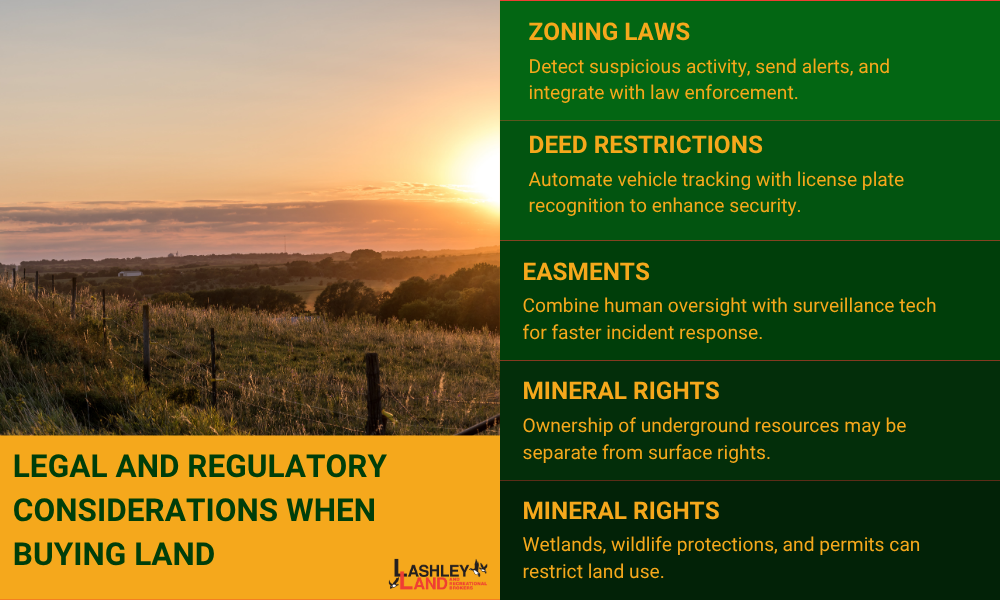
Legal and Regulatory Considerations

Zoning Requirements

Before buying land, checking the property’s zoning classification should be your first step. The local planning department maintains records showing whether the vacant land is classified as residential property, commercial, agricultural land, or mixed-use. This classification determines what you can build and how you can use the land. While current zoning laws might permit your intended use, investigating potential future development in the area helps protect your investment. Many counties publish their long-term development plans online, showing how areas might be rezoned.

Property Restrictions

Understanding deed restrictions prevents unwanted surprises after your land purchase. Review the title insurance carefully for restrictive covenants that might limit construction, land use, or development. Conservation easements give others legal rights to use parts of your property – common examples include utility access or shared driveways with neighbors. Mineral rights ownership can be separate from surface rights, potentially allowing others to extract resources from beneath your vacant land. Request copies of all recorded easements and thoroughly research mineral rights ownership before making an informed decision.

Regulatory Compliance

Local regulations shape what you can do with your undeveloped land. Building codes specify construction requirements, including minimum lot sizes, setbacks from property lines, and building height limits. Environmental regulations may restrict development near wetlands, protect endangered species, or require necessary permits for tree removal. Local ordinances can affect everything from fence height to whether you can keep certain animals on the agricultural land. Meeting with the local planning department helps clarify which regulations apply to your intended use.

Physical Property Features

Terrain and Topography

The vacant land’s physical characteristics will directly impact what you can do with the property. Start by examining soil quality through professional testing, which reveals whether the ground can support building foundations, grow crops, or handle septic systems. Clay-heavy soils may cause drainage problems, while sandy soils might not retain enough moisture for vegetation.

Look at how water moves across the raw land during rainfall. Good drainage prevents flooding and erosion. Walk the property after rain to spot potential flood zone areas. The land’s slope and elevation changes also matter – steep grades can limit building sites and increase construction costs, while flat areas might collect water.

Natural Resources

Available water sources affect both utility access and property value. Check for existing water features like streams, ponds, or springs. Research water rights and mineral rights in your area, as these can restrict how you use surface and groundwater.

Consider the agricultural land’s timber resources – mature trees add value and can provide income if harvested sustainably. The type and health of existing vegetation indicates soil quality and wildlife potential. Diverse plant life usually means better habitat for local wildlife, which benefits hunters and nature enthusiasts.

Infrastructure Status

Understanding available utilities saves money and prevents surprises. Contact local utility companies to verify if electricity, water, gas, and internet services reach the undeveloped land. Getting utilities to remote locations can cost thousands.

If public water isn’t available, you’ll need to evaluate well options. Research local depth requirements and typical septic system costs. Similarly, properties without public sewer access require septic tanks. The soil composition and local regulations determine if a conventional septic system works or if you need alternative solutions.

Power access significantly impacts development costs. Properties with existing power lines offer immediate electricity access. For off-grid locations, consider alternative energy sources like solar or wind power, factoring in initial setup costs and ongoing maintenance.

Financial and Development Considerations

Purchase Costs

When buying land, the upfront costs go beyond the purchase price. Property taxes vary significantly by location, with rural areas generally having lower rates than urban zones. However, tax assessments can change if you plan to develop the vacant land. Most counties calculate land taxes based on current use, zoning, and improvements.

Insurance for vacant lots typically costs less than improved property, but coverage remains important. Basic liability insurance protects you if someone gets injured on your property. Additional coverage may be needed depending on your plans for the land.

Closing costs for land purchases often range from 2-5% of the purchase price. These include title insurance, surveys, recording fees, and loan origination fees if financing is involved.

Development Expenses

Site preparation represents a major expense when developing raw land. This includes clearing vegetation, grading the terrain, and addressing drainage issues. Costs vary based on the property’s current condition and your intended use.

Getting utility access to undeveloped land can be expensive. Water availability might require well drilling or connecting to municipal lines. Electricity installation costs depend on distance from existing power lines. Septic systems are often needed where public services aren’t available.

Access improvements like driveways or private roads must meet local zoning laws. Gravel roads cost less initially but require regular maintenance. Paved access provides durability but comes with higher upfront costs.

Long-term Planning

Regular maintenance prevents small issues from becoming costly problems. This includes controlling erosion, maintaining access routes, and managing vegetation. Setting aside funds for annual upkeep helps avoid unexpected expenses.

Consider how future development could affect property value. Nearby growth might increase land value but also bring higher property taxes. Understanding local planning and development trends helps make informed decisions about your investment.

Key Factors Every Buyer Should Consider When Buying Land

Should I Buy Land?

Buying land involves careful assessment of multiple factors, from land access and intended use to water availability and zoning laws. A thorough understanding of these elements helps you make an informed decision that aligns with your goals. Before finalizing any land purchase, work with qualified professionals to review legal documents, conduct surveys, and verify all property details.

When you’re ready to move forward with your land purchase, Lashley Land offers expert guidance through every step. Our team specializes in agricultural land and ranch management, water rights consultation, financing options, and recreational property development. We bring deep knowledge of rural real estate markets and maintain a diverse portfolio of properties, from farmland to hunting grounds.

Ready to find your perfect land? Contact Lashley Land today to connect with our experienced real estate agents. Let us help turn your land ownership goals into reality with personalized service and local market expertise.

Do I Have Water Rights on My Property? Understanding Ownership, Usage, and Legal Restrictions

Do I Have Water Rights on My Property? Understanding Ownership, Usage, and Legal Restrictions

Water rights represent one of the most valuable yet often misunderstood aspects of property ownership in the United States. These legal entitlements determine how property owners can access and use water resources connected to or flowing through their land—whether it’s a stream, river, lake, or underground aquifer. Understanding your water rights is crucial, as they can significantly impact your property’s value and utility, while also affecting your legal obligations to neighboring landowners and the broader community.

In the United States, two primary water rights systems govern how property owners can use water resources: riparian rights and prior appropriation rights. Nebraska demonstrates these complexities, sitting above the massive Ogallala Aquifer while managing both surface water from rivers like the Platte and extensive groundwater resources that support the state’s vital agricultural economy. The riparian doctrine, predominantly used in eastern states where water is generally abundant, ties water usage rights directly to land ownership along water bodies. Under this system, landowners whose property borders a water source have the right to make reasonable use of that water, provided their usage doesn’t interfere with other riparian owners’ rights downstream.

Conversely, the prior appropriation system, common in western states where water is scarcer, follows the principle of “first in time, first in right.” This doctrine awards water rights based on when the water was first put to beneficial use, regardless of property location relative to the water source. Under this system, senior water rights holders take precedence over junior rights holders during times of shortage.

The Different Types of Water Rights

Surface Water Rights

Understanding surface water rights and riparian rights is essential for property owners with access to rivers, streams, and lakes. In eastern states, the riparian doctrine governs these water rights for riparian landowners whose properties border water sources. This doctrine allows for “reasonable use” of water resources, including irrigation, livestock watering, and recreational activities. However, water users must avoid excessive water diversion and ensure downstream users maintain their access to the water source.

Groundwater Rights

Water accessed beneath the earth’s surface follows distinct regulations from surface water. Most jurisdictions govern groundwater through either absolute dominion or beneficial use doctrine. Property owners typically need right permits for well drilling and must comply with withdrawal restrictions. Many areas require regular water use monitoring and reporting to ensure proper aquifer preservation and sustainable use of water resources.

Special Considerations

When dealing with shared water sources like bordering lakes and streams, cooperative management between neighboring riparian landowners becomes necessary. Clear usage agreements help prevent disputes and ensure fair access for all water users involved.

Seasonal and historical factors also play a crucial role in water rights. Many regions implement specific restrictions during drought periods and enforce seasonal usage limits. In western states, the prior appropriation system recognizes senior water rights, giving priority to historical claims over newer ones. This system ensures that established right holders maintain their rights while accommodating new development within sustainable limits.

Do I Have Water Rights on My Property? Understanding Ownership, Usage, and Legal Restrictions

Legal Framework and Regulations

Federal and State Authority

Water rights in the United States operate under a complex regulatory framework. The federal government establishes fundamental regulations, particularly regarding water quality and drinking water standards, while state engineers and local governments manage the specifics of water right allocation, usage rights, and consumption limits.

Eastern States: The Riparian Doctrine

If you’re a riparian landowner in the eastern United States, your water rights typically follow what’s called the riparian doctrine. It’s pretty straightforward: if you have surface water flowing through or next to your private property, you can use it – as long as you’re being reasonable about it. The key is making sure you’re not using so much that you’re causing problems for downstream water users.

Western States: Prior Appropriation

In Western states, things work through the prior appropriation system. They use what’s called “prior appropriation,” which basically means “first come, first served.” If a water user started using water from a water source before you, they get priority – even if they’re miles away from the river basin. As long as they keep using the water for its original purpose, they get to keep their rights.

Common Legal Restrictions

Before you start making big plans for water use on your property, here’s what you need to know: most states require the right permits if you’re planning to use a lot of water, especially for farming or industrial uses. During droughts, permit holders might face some limitations, and there are usually rules about keeping enough water in streams to protect fish and wildlife. Your local area might also have specific rules about things like watering your lawn or filling up a swimming pool.

The Beneficial Use Rule

Here’s an important principle every right holder needs to understand: water rights come with responsibilities. The “beneficial use” rule means you can’t just claim water rights and sit on them – you need to use the water for something meaningful and not waste it. This could be for farming, water supply to homes, running a business, or even recreation. Just remember that what counts as “beneficial use” can vary depending on where you live.

Do I Have Water Rights on My Property? Understanding Ownership, Usage, and Legal Restrictions

Determining Your Property’s Water Rights

Professional Water Rights Services

Understanding your property’s water rights and surface water status in Nebraska requires specialized expertise. Lashley Land partners with Golden Triangle Land Services to provide comprehensive water rights assessment and management services. Through this partnership, property owners gain access to detailed historical research, current water use analysis, and future rights potential evaluation, all conducted by experienced water rights professionals in the field.

Documentation and Research Process

Our water rights specialists begin with a thorough examination of your property’s documentation history, focusing on Nebraska’s specific prior appropriation system and beneficial use doctrine. This process includes analyzing historical right records, water permits, and ownership information to establish clear timelines and identify any modifications that may affect your rights to both surface water and groundwater resources.

Expert Analysis Services

Through our partnership with Registered Petroleum Landman Coy Fisher, we offer specialized services including:

  • Comprehensive water rights reports and valuations
  • Sub-surface water resources analysis
  • Guidance through the right permit transfers, leases, and sales
  • Market value assessments of water rights
  • Documentation of beneficial use claims

Professional Support Framework

Our water rights services are backed by a network of water users and professionals who understand Nebraska’s unique water landscape, including:

  • Experienced landmen with local expertise
  • Title research specialists
  • Water rights attorneys
  • Property valuation experts

Working with our team ensures you receive accurate, current information about your property’s water rights status while navigating complex legal and regulatory requirements specific to Nebraska’s water laws.

Do I Have Water Rights on My Property? Understanding Ownership, Usage, and Legal Restrictions

Managing and Protecting Your Water Rights

Documentation and Record-Keeping

Understanding and actively managing your water rights is crucial for property rights and sustainable water use. Maintain detailed right records, including permits, historical usage documentation, and any modifications or transfers. Your water right portfolio should include photographs, maintenance records, and correspondence with relevant state engineer offices.

Climate Considerations and Adaptation

As our climate continues to evolve, water rights management in western states has become increasingly complex. Rising temperatures and shifting precipitation patterns are already affecting surface water availability in many regions. Property owners must stay informed about potential climate impacts on their water resources and consider implementing water conservation measures to ensure long-term sustainability.

Community Engagement and Legal Protection

To protect your water right, maintain regular communication with the division engineer and neighboring water users. Join local water users’ associations or river basin groups to stay informed about regional water issues and policy changes. Consider working with a water rights attorney to review your right permits periodically and ensure compliance with current regulations.

Resources and Professional Support

Your water rights are a vital component of your property owner’s value and utility. By understanding their scope, maintaining proper records, and staying proactive in their management, you can help ensure these crucial water resources remain protected for years to come. Contact Lashley Land today to learn more about the water rights for your property. 

Is Buying Land a Good Investment? Expert Insights & Market Trends

Is Buying Land a Good Investment? Expert Insights & Market Trends

The Short Answer: Yes, buying land can be an excellent investment for the right investor. Land offers unique advantages, including limited supply, potential for long-term appreciation, and protection against inflation. Success depends on careful planning, thorough research, and understanding both the benefits and challenges of land ownership.

Land ownership has quietly become one of the most discussed investment strategies in 2025. Unlike built properties, raw land doesn’t depreciate, offers unlimited customization potential, and serves as a reliable hedge against inflation. With current market conditions creating both opportunities and challenges, understanding whether land investment aligns with your financial goals requires understanding a few important factors.

Modern investors must weigh immediate capital requirements against long-term wealth building potential, evaluate different types of land investments, and understand local market dynamics. Whether you’re considering agricultural land, undeveloped property for future development, or recreational acreage, the fundamentals of successful land investment remain consistent across property types.

Why Land Investment Makes Sense in 2025

Land is a Finite Resource

The most compelling reason to consider land investment centers on scarcity. They simply aren’t making any more land, and as populations grow and urban areas expand, the limited supply naturally drives up value over time. This fundamental economic principle creates a built-in advantage for landowners willing to hold properties for long-term appreciation.

Current Market Trends Support Land Investment

The land market remains strong in 2025, with consumer confidence high and buyer activity increasing, especially following recent uncertainty. Several key trends are reshaping the investment landscape.

Remote Work Drives Rural Demand The work-from-home culture has shifted buyer preferences toward suburban and rural areas where land costs less and offers more space. This trend particularly benefits states like Nebraska, where quality land remains available at reasonable prices compared to coastal markets.

Technology Infrastructure Development Data centers for tech companies are creating new demand for rural land, especially properties near existing power stations and energy infrastructure. This development is opening opportunities for landowners in previously overlooked areas.

Limited Inventory Supports Prices Low inventories of quality rural land continue supporting land values throughout 2025. This scarcity benefits sellers and creates competitive markets for well-positioned properties.

Types of Land Investment in Nebraska

Agricultural Land

Nebraska’s agricultural heritage makes farmland a natural investment choice, though recent market data reveals important considerations. Nebraska agricultural land values declined by 2% in 2025 to an average of $3,935 per acre, marking the first decline in six years. Lower crop prices and higher interest rates have created financial pressure on farmers, but fundamentals remain strong.

Grazing Land

Despite recent price adjustments, grazing land values actually increased 1% to 5%, reflecting strength in the cattle market. Working capital remains relatively stable, and the state’s fertile soils and access to the Ogallala Aquifer continue supporting agricultural productivity.

Raw Land for Future Development

Raw land near growing communities offers excellent long-term investment potential. Focus on properties with road access and utility availability, proximity to urban areas experiencing growth, proper zoning for intended future use, and no environmental complications like flood zones.

Development Land

Land positioned for future residential or commercial development offers the highest appreciation potential but requires patience and local market knowledge. These properties typically produce little to no immediate income while waiting for growth, but can deliver substantial returns when development occurs. Success depends on timing, infrastructure access, proper zoning, and understanding local growth patterns. This investment works best for experienced investors with higher risk tolerance who can hold properties for extended periods without income.

Recreational Land

Rural properties perfect for hunting, fishing, or weekend retreats continue attracting buyers seeking work-life balance and outdoor activities. Nebraska offers some of the most diverse hunting opportunities in the nation, from upland game (like pheasants & quail) to big game (like mule deer & white-tailed deer).

Is Buying Land a Good Investment? Expert Insights & Market Trends

Benefits of Land Investment

Tangible Asset You Can Control

Unlike stocks or mutual funds, land provides a physical asset you can visit, improve, and control. This tangible nature offers peace of mind during uncertain economic times and allows you to directly influence your investment’s value through improvements and management decisions.

Multiple Income Opportunities

Land can generate passive income through various approaches:

  • Agricultural leasing to local farmers
  • Recreational activities like hunting leases
  • Cell tower or solar panel installations
  • Parking or storage uses
  • Timber harvesting on forested properties

Hedge Against Inflation

Land often serves as an effective hedge against inflation because its value tends to rise with inflationary pressures. Research shows that real estate, including land, provides effective long-term inflation protection, with studies indicating positive correlations between land values and inflation over extended periods. As the cost of goods and services increases, so does land value and the properties built upon it.

Tax Advantages

Land ownership provides several tax benefits:

  • Lower property tax on undeveloped land versus improved property
  • Potential deductions for property taxes and interest expenses
  • Agricultural exemptions may apply to qualifying properties
  • Depreciation opportunities on certain improvements

Challenges to Consider

Higher Interest Rates and Financing

Interest rates have increased borrowing costs for real estate purchases. Land loans typically require higher down payments (often 20-50% for raw land), higher interest rates than home mortgages, and shorter repayment terms compared to residential financing. According to FDIC standards, raw land may require down payments as high as 30-50% of the total cost with additional costs for closing fees, surveys, environmental assessments, and legal expenses.

Ongoing Costs

While property tax on vacant land runs lower than improved property, you’ll still face annual property tax, maintenance costs for access roads and fencing, and insurance in some cases.

No Immediate Cash Flow

Land ownership builds equity over time while providing potential appreciation as surrounding areas develop. Property may increase in value through infrastructure improvements, zoning changes, or increased demand for the area. However, returns often take years to materialize, requiring patience and long-term thinking.

Unlike immediate income-producing investments, land requires ongoing carrying costs without guaranteed returns. Factor in annual property taxes, maintenance expenses, and opportunity costs when calculating potential returns.

Due Diligence Requirements

Successful land investment requires thorough research, including zoning restrictions and future development plans, mineral rights and water rights, environmental concerns and flood zones, and access rights and utility availability.

What Makes Nebraska Attractive for Land Investment

Strong Agricultural Foundation

Nebraska benefits from fertile soils, irrigation access from the Ogallala Aquifer, and ideal climate conditions for corn and soybean production. The state consistently ranks among top agricultural producers nationally, supporting land values through productive agricultural use.

Reasonable Land Prices

Compared to coastal states, Nebraska offers affordable entry points for new investors, quality agricultural land at competitive prices, and room for appreciation as demand grows from both agricultural and non-agricultural buyers.

Strategic Location

Nebraska’s central location provides excellent access to national markets and transportation networks, supporting both agricultural operations and potential future development projects.

Making Your Decision

Is Buying Land a Good Investment? Expert Insights & Market Trends

Personal Financial Assessment

Before investing in land, evaluate your financial position carefully. Consider your available cash for down payment and ongoing operations. Review your monthly cash flow to understand what you can afford in mortgage payments and carrying costs. Explore loan options through farm credit services, traditional banks, or specialized land lenders.

Investment Strategy Alignment

Think about how land ownership fits your overall investment portfolio. If you’re building wealth for retirement, land can provide long-term appreciation and inflation protection. For immediate income needs, consider how you might generate returns through leasing or other arrangements.

Decision Framework

Write down your investment priorities and timeline. Your list must have features like location, access, and development potential. Calculate the total cost of ownership including purchase price, financing costs, and ongoing expenses. Compare potential returns to other investment options available to you.

Talk to agricultural lenders, tax professionals, and experienced land investors in your area. They can provide insights on local land values and help you evaluate whether land investment makes sense for your situation.

Expert Tips for Land Investment Success

Start with Clear Goals

Define whether you want long-term appreciation through patient holding, active development for quicker returns, passive income through leasing arrangements, or personal use combined with investment potential.

Research Local Markets

Conduct thorough market research to understand local real estate trends, supply and demand dynamics, and property values. Focus on areas with population growth trends, infrastructure development plans, and economic diversification beyond single industries.

Work with Local Experts

Partner with professionals who understand Nebraska land markets including local real estate agents specializing in land, attorneys familiar with land transactions, and surveyors and environmental consultants.

Plan for the Long Term

Land investments often take time to appreciate, so prepare for a long-term commitment. Successful land investors typically think in decades, not years, allowing time for appreciation and development opportunities to emerge.

Market Outlook for 2025 and Beyond

Continued Demand Drivers

The nation faces a housing shortage estimated at 4.9 million homes. This shortage, compounded by rising material costs and labor shortages, creates opportunity for land positioned for future development.

Technology Integration

Technology tools using artificial intelligence and predictive analytics are helping investors identify opportunities more efficiently. Savvy investors leverage these tools for better deal analysis and market evaluation.

Water Rights Increasingly Important

Water rights are becoming more valuable as water scarcity concerns grow. Properties with water access and rights may see additional appreciation beyond basic land values.

Is Land Investment Right for You?

Buying land can be an excellent investment for the right person with proper planning and realistic expectations. Land offers unique advantages including limited supply, potential for appreciation, and protection against inflation. Nebraska provides particularly attractive opportunities with fertile agricultural land, reasonable prices, and strategic location.

Land investment works well for investors with discretionary income beyond emergency funds, patience for long-term appreciation, and ability to handle additional costs like property taxes and maintenance. Success requires substantial capital, thorough research, and understanding local markets.

To get started, analyze your investment goals and risk tolerance, meet with agricultural lenders and land specialists, and research recent sales in your target area. Work with experienced professionals to evaluate specific properties and run financial projections.

Ready to explore land investment opportunities in Nebraska? Contact Lashley Land today. Our team specializes in Nebraska farmland, recreational properties, and investment land throughout west central Nebraska. With over 55 years of experience, we understand the complexities of land investment and can help you find the right property for your goals. Call us to discuss your land investment needs and explore our extensive listings of Nebraska properties.

What Does a Farm and Ranch Manager Do? Top Benefits of Hiring a Farm and Ranch Management Company 

What Does a Farm and Ranch Manager Do? Top Benefits of Hiring a Farm and Ranch Management Company 

Understanding farm and ranch management in short: Managing an agricultural business requires exceptional management skills, dedication, and deep agricultural expertise. Whether you’re overseeing farming operations, crop production, or maintaining vast acreage, a professional farm manager can make the difference between a thriving farm business and one that struggles to meet its potential. In this comprehensive guide, we’ll explore the essential role of farm and ranch managers and reveal why partnering with a management company could lead to sound business decisions. A ranch manager oversees all aspects of agricultural operations, from daily activities to financial planning. They bring professional expertise in land management, livestock care, crop production, and business management while saving farm owners time and maximizing returns.

Modern agriculture has evolved far beyond traditional farming practices. Today’s agricultural enterprise faces complex challenges, including market volatility, new technology adoption, environmental regulations, and resource management. Farm owners must balance daily operational demands with strategic business planning while staying current on industry trends and best practices.

This article explores how professional farm and ranch management companies help agricultural business owners navigate these challenges. You’ll learn about the specific services these companies provide, from handling day-to-day operations to implementing long-term strategies that boost productivity and profitability. Whether you own a small family farm or oversee extensive agricultural holdings, understanding professional management options can help you make informed decisions about your property’s future.

What Does a Farm and Ranch Manager Do? Top Benefits of Hiring a Farm and Ranch Management Company 

Core Responsibilities of Farm and Ranch Managers

Daily Operations Management

Farm managers and ranch managers oversee all aspects of day-to-day farming operations. They monitor livestock health and implement nutrition programs to maintain animal wellness. Their work includes planning crop production rotations, selecting appropriate seed varieties, and managing fertilization schedules. They coordinate equipment maintenance and repairs while supervising agricultural business workers to maintain productive operations.

Financial Management Duties

These agricultural business managers handle complex financial responsibilities that go beyond basic record keeping. They develop and manage operating budgets, analyze market trends to make sound business decisions, and maintain detailed records of all farm business transactions. They prepare documentation for taxes, track expenses, and create financial reporting documents that show the agricultural enterprise’s performance and profitability throughout the year.

Property Management

Property oversight forms a significant part of their farm management role. Managers maintain land quality through soil conservation practices and erosion control. They schedule repairs for buildings, fences, and irrigation systems. They also plan and implement improvements to increase property value and operational efficiency. Their focus includes preserving natural resources while maximizing the productive potential of the agricultural business.

Technical Expertise and Knowledge Areas

Agricultural Science

Farm and ranch managers need deep knowledge of agricultural science fundamentals. This includes understanding livestock health and reproduction through animal husbandry practices. They monitor animal nutrition requirements and develop feeding programs based on seasonal needs. For crop production operations, managers implement rotation schedules that maintain soil fertility while maximizing yields. They analyze soil composition and chemistry to determine proper amendments and fertilization methods.

Business Management

Modern agricultural business operations require strong business management skills. Farm managers track commodity markets and develop marketing strategies to sell products at optimal prices. They create detailed financial reporting and maintain accurate record keeping for tax purposes. New technology plays a growing role, with agricultural business managers utilizing farm management software, GPS-guided equipment, and data analytics to improve efficiency. They also assess and manage various risks, from weather impacts to market fluctuations.

Regulatory Compliance

Staying current with agricultural industry regulations is a core responsibility. Farm business managers must follow environmental protection guidelines for water quality, pesticide use, and waste management. They implement workplace safety protocols to protect staff and maintain OSHA compliance. Many farming operations require specific certifications, such as organic farming credentials or food safety certifications. Managers ensure all permits and licenses remain current while maintaining detailed compliance records.

What Does a Farm and Ranch Manager Do? Top Benefits of Hiring a Farm and Ranch Management Company 

Benefits of Hiring a Management Company

Professional Oversight

Running a farm business involves complex farming operations that require specialized knowledge. A farm manager brings trained professionals who understand animal husbandry, crop production, and land stewardship. These agricultural business managers conduct regular property inspections to monitor operations, evaluate equipment conditions, and assess livestock health. You’ll receive detailed financial reporting that tracks progress, highlights areas needing attention, and documents performance. This oversight helps prevent problems before they become costly issues.

Financial Advantages

Professional agricultural business management companies leverage their market knowledge and agricultural industry connections to improve your operation’s bottom line. They negotiate better prices for supplies, secure favorable contracts for crops or livestock, and maintain relationships with reliable vendors. Their expertise in business management, crop rotation, and livestock care helps maximize productivity while controlling costs. Ranch managers also handle record keeping, prepare tax-ready financial statements, and identify opportunities to increase revenue through sound business decisions.

Time and Stress Relief

Managing farm business operations demands constant attention and quick informed decisions. A farm management company takes on these daily responsibilities, freeing farm owners from hands-on involvement. You won’t need to worry about scheduling workers, coordinating vendors, or handling unexpected issues. The management team’s established network of contractors, veterinarians, and agricultural specialists means faster problem-solving and reliable service. This professional support gives owners more time to focus on other priorities while maintaining confidence in their agricultural enterprise’s care.

What Does a Farm and Ranch Manager Do? Top Benefits of Hiring a Farm and Ranch Management Company 

Why Professional Farm & Ranch Management Makes Sense

Professional farm business management combines specialized agricultural business expertise with proven business management practices. Lashley Land’s ranch manager team brings over 100 years of combined experience in agriculture, offering complete oversight of farming operations, financial planning, and land stewardship. Our farm manager handles everything from crop production and livestock care to market analysis and financial reporting, giving farm owners the confidence their agricultural enterprise is generating optimal returns.

Starting with Lashley Land is simple: We begin with a detailed consultation about your business planning goals, conduct a thorough property analysis, and create a custom farm management plan tailored to your needs. Our experienced agricultural business manager provides regular updates and detailed progress reports while managing your agricultural operation.

Take the first step toward professional farm and ranch management. Contact Lashley Land today to schedule your consultation and discover how our experienced management team can maximize the potential of your agricultural property.

Farm Land for Lease: Should You Lease or Buy?

Farm Land for Lease: Should You Lease or Buy?

The Short Answer: Buying farmland provides long-term equity and complete control, but requires significant upfront capital and ongoing maintenance costs. Leasing offers flexibility and lower initial costs but lacks equity building and may have usage restrictions.

Farmland ownership and leasing represent two key paths farmers can take to secure agricultural land today. With property prices reaching record levels, carefully evaluating both options has become increasingly important. Modern farmers must weigh multiple factors when choosing between purchasing and leasing: immediate access to land against long-term financial planning, degree of operational control, financial flexibility, and varying levels of risk and growth potential.

Agricultural land continues to be a sought-after investment, with steady demand from both owner-operators and tenants driving market activity. Whether pursuing ownership or a long-term lease arrangement, understanding current market conditions, financing and rental options, and the practical implications of each approach is necessary for making an informed decision that aligns with your farming goals and financial capabilities.

Farm Land for Lease: Should You Lease or Buy?

Financial Considerations

Initial Investment Comparison

When buying farmland, the upfront capital requirements are substantial. A typical down payment ranges from 15-20% of the property value. Additional startup costs include closing fees, legal expenses, and setting up necessary equipment and infrastructure.

Leasing farmland presents a much gentler entry point financially. Your initial expenses typically cover the first month’s rent and a security deposit equal to one month’s rent. 

Long-term Financial Impact

Purchasing farmland allows you to build equity with each mortgage payment you make. Your property may increase in value over time, creating wealth through appreciation. Farm owners also benefit from tax advantages through mortgage interest deductions and depreciation claims. You maintain complete control over land improvements and how you use the property.

The financial picture for leasing focuses more on operational flexibility. You face lower financial risk since you’re not tied to a mortgage. Leasing gives you the freedom to relocate if better opportunities arise. Your entire rental payment qualifies as a tax deduction. You also avoid the burden of paying for major property repairs, though your control over improvements is limited. You’ll need insurance coverage for your crops and equipment. The lease agreement outlines your basic maintenance responsibilities. While you won’t pay property taxes directly, you do have less authority to make permanent improvements to the land.

The financial differences between owning and leasing create distinct paths forward. Ownership builds long-term wealth but demands significant capital investment. Leasing provides more flexibility with lower upfront costs but doesn’t build equity. Your choice depends on your financial position and farming goals.

Operational Control and Flexibility

When comparing land ownership to leasing, control over farm operation becomes a significant factor. As a landowner, you have complete farm operator control over property improvements, from building storage facilities to farmland preservation to installing irrigation systems. You can make these long-term investments knowing they’ll benefit your operation for years to come.

Decision-Making Freedom

Owning farmland gives you full control over crop selection and rotation plans. You can choose what to plant based on market conditions and soil health, without needing approval from a landlord. Management practices like tillage methods, fertilizer application, and conservation efforts are entirely your decision when you own the land.

Lease Terms and Timeline Considerations

Lease agreements typically run for 1-5 years, which can limit long-term planning. Short-term farmland leasing may discourage investments in soil improvement or infrastructure, since you might not farm the land long enough to see the benefits. With ownership, you can implement decade-long soil building programs or make major improvements without worrying about lease renewal.

Managing Risk Factors

Land ownership comes with exposure to market value changes – property values can rise or fall based on economic conditions. However, leasing brings its own risks, like potential non-renewal or rental rate increases. Weather impacts and crop insurance decisions become more straightforward with ownership since you don’t have to coordinate with a landlord. The stability of ownership allows for more consistent risk management strategies over time.

Land Quality and Location Factors

The right piece of farmland can make or break your agricultural production. When checking land quality, start with a proper soil fertility test through your local extension office. These tests reveal nutrient levels, pH balance, and organic matter content – information that directly impacts what you can grow and how much you’ll need to spend on fertilizer. Looking at past yield records from the previous owner gives you real-world proof of what the land can produce.

Good infrastructure and resources save time and money in the long run. Check the condition of existing irrigation systems – whether they’re pivot, drip, or flood irrigation. Look for working wells, pumps, and water rights documentation. Storage facilities like grain bins, equipment sheds, and hay barns should be structurally sound and properly sized for your operation. The quality of land access roads matters too – you need reliable ways to move equipment and get products to market in all weather conditions.

Location impacts your bottom line in several ways. Calculate the distance to grain elevators, livestock auctions, or other places you’ll sell your products – fuel costs add up quickly. Study the area’s weather patterns, especially rainfall amounts and frost dates. Talk to neighboring farmers about local challenges like wildlife pressure or drainage issues. Also check if nearby operations could affect yours – for example, you might not want conventional crops next to organic fields due to spray drift concerns.

Looking at recent aerial photos helps spot drainage problems, erosion issues, or unused areas. County soil maps are another useful tool – they show soil types across the property and can highlight potential trouble spots before you commit to buying or leasing.

Farm Land for Lease: Should You Lease or Buy?

Making Your Decision

Personal Financial Assessment

Before deciding between leasing and buying farmland, take stock of your financial position. Look at your available cash – both for down payment and ongoing operations. Farm ownership requires at least a 15-20% down payment, while leasing needs less upfront capital. Review your monthly cash flow to understand what you can afford in mortgage or lease payments. Consider loan options through farm credit services, traditional banks, or USDA programs that offer specialized agricultural financing.

Business Strategy Alignment

Think about how land ownership fits your farm’s future. If you plan to expand operations gradually, leasing provides flexibility to test new areas without long-term commitment. For multi-generational farms focused on building equity, buying land creates a lasting asset. Match your land decision to your risk comfort level – ownership brings more control but also more financial responsibility, while leasing limits both risk and potential returns.

Decision Framework

Write down your priorities and timeline. List must-have features like soil quality, water access, and distance to markets. Calculate both scenarios – include purchase costs, property taxes, and maintenance for buying versus annual lease rates and any improvement limitations for renting. Talk to an agricultural lender, accountant, and experienced farmers in your area. They can provide real-world insights on local land values and help you evaluate the best path forward based on your specific situation.

Farm Land for Lease: Should You Lease or Buy?

Making the Right Choice: Should You Lease or Buy Farmland Owner?

The choice between leasing and buying farmland comes down to your financial position, long-term goals, and current market conditions. Leasing offers flexibility and lower upfront costs, making it practical for beginning farmers or those testing new markets. Buying builds equity and gives you complete control over land improvements, but requires substantial capital and careful consideration of property values, soil quality, and location.

To move forward, analyze your farm business plan, meet with agricultural lenders, and review local land values. Research recent sales in your target area and connect with neighboring farmers about regional challenges and opportunities. Consider working with a farm management service to evaluate specific properties and run financial projections.

For professional guidance on farmland purchases or farm lease agreements, contact Lashley Land. Our agricultural real estate team understands both sides of the lease-versus-buy decision and can help you navigate property selection, financing options, and contract negotiations. Call us today to discuss your farmland goals and explore available properties in your area.

How to Secure a Hunting Land Loan in Nebraska: A Buyer's Guide

How to Secure a Hunting Land Loan in Nebraska: A Buyer’s Guide

You’ve found the perfect Nebraska hunting property—timber-rich bottomland with a creek running through it, or maybe rolling hills dotted with food plots and deer trails. Now comes the big question: “Can I actually get a loan for this?”

Quick Answer: Yes, you can secure financing for hunting land in Nebraska. While it’s different from getting a home mortgage, several loan options exist specifically for recreational and agricultural land purchases. The key is understanding what lenders look for and working with the right team.

Most hunters assume they’ll need to pay cash, but that’s not the case. With proper preparation and the right approach, you can finance your Nebraska hunting property and start building that legacy you’ve been dreaming about.

How to Secure a Hunting Land Loan in Nebraska: A Buyer's Guide

Understanding Hunting Land Loans: The Basics

Hunting land loans aren’t your typical mortgage. When you’re buying a house, the lender knows exactly what they’re dealing with—comparable sales are easy to find, and there’s a steady market for resale. Land, especially recreational land, operates by different rules.

What Qualifies as “Hunting Land” to Lenders

From a lender’s perspective, “hunting land” usually falls into broader categories like recreational property, agricultural land, or raw land. The good news is that many Nebraska hunting properties serve multiple purposes—they might have timber value, agricultural potential, or existing farm income through CRP payments or cash rent.

How These Loans Differ from Home Mortgages

How to Secure a Hunting Land Loan in Nebraska: A Buyer's Guide

The biggest differences you’ll encounter:

  • Higher down payments (typically much higher than conventional home loans)
  • Variable loan terms (agricultural land loans can range from shorter terms to 30-year options, depending on the lender and property type)
  • Longer closing timelines (land loans generally take significantly longer to close than home purchases)
  • More complex appraisal process (land appraisals typically take longer and cost more than home appraisals)
  • Stricter qualification requirements
  • Higher interest rates (land loans often carry higher rates than conventional mortgages)
  • More scrutiny of the property itself

Common Misconceptions

Many hunters believe they can’t get financing at all, or that they need perfect credit and substantial assets. While lenders are more conservative with land loans, they’re not impossible to obtain. Nebraska’s stable agricultural economy and strong land values actually work in your favor.

The other big misconception is that you need to find a “hunting land specialist” lender. In reality, many agricultural lenders, farm credit systems, and even some traditional banks offer recreational land financing—you just need to know how to present your case.

Types of Loans Available for Nebraska Hunting Land

  • Agricultural/Farm Credit Loans: If your hunting property has agricultural potential—crop ground, pasture, or timber—you might qualify for agricultural financing through Farm Credit Services or similar lenders. These often offer the best rates and terms because the land has proven income potential. Even if you plan to hunt it primarily, having 20-30 acres of tillable ground can open doors to ag financing.
  • Recreational Land Loans: Some lenders specialize in recreational properties and understand that hunting land has value beyond just agriculture. These lenders consider factors like location, wildlife habitat quality, and recreational property market trends. They’re often more flexible about properties without agricultural income.
  • Raw Land Loans: Traditional banks and credit unions sometimes offer raw land financing, though terms are typically less favorable. These work best for smaller parcels or when you have a strong relationship with a local bank that knows your financial history.
  • Owner Financing: Don’t overlook seller financing, especially with Nebraska landowners who’ve held property for decades. Many sellers prefer steady monthly payments over a lump sum, particularly if they’re retired farmers looking for reliable income. This can be easier to qualify for and often comes with more flexible terms.

What Nebraska Lenders Look For

  • Down Payment Requirements: Expect to put down a substantial down payment—significantly more than you would for a home purchase. The exact amount depends on the property type, your credit profile, and the lender. Properties with existing income streams (like CRP payments or crop leases) sometimes qualify for lower down payments because they’re seen as less risky.
  • Credit Score Expectations: Lenders prefer borrowers with good to excellent credit scores for the best rates and terms. However, don’t assume you’re out of luck with less-than-perfect credit—agricultural lenders often consider your overall financial picture, including farm experience and asset holdings.
  • Debt-to-Income Ratios: Lenders want to see that you can comfortably handle the new land payment along with your existing debts. If you’re planning to generate income from the property through hunting leases or agricultural activities, some lenders will consider that projected income in their calculations.
  • Proof of Income Stability: Lenders want to see consistent income over recent years. If you’re self-employed or farm part-time, be prepared to provide additional documentation. Having experience managing land or agricultural operations can strengthen your application, even if it’s not your primary income source.

Property Characteristics That Improve Approval Odds

Nebraska lenders favor properties with:

  • Road access and clear legal access rights
  • Water sources (wells, ponds, or streams)
  • Some agricultural potential (even if it’s just hay ground)
  • Existing improvements like farm buildings or hunting infrastructure
  • Clean title without complicated ownership structures

Nebraska-Specific Considerations

How to Secure a Hunting Land Loan in Nebraska: A Buyer's Guide

  • CRP Contracts and Financing Impact: If your hunting property has Conservation Reserve Program (CRP) ground, this can actually strengthen your loan application. CRP provides guaranteed annual income that lenders view favorably, and the habitat improvements benefit both wildlife and soil conservation. However, understand the contract terms—some have several years remaining, while others may be up for renewal soon. This affects both your financing options and long-term property management plans.
  • Water Rights Matter More Than You Think: Nebraska’s water laws can impact your loan approval, especially for properties with irrigation potential or significant water features. Lenders want to ensure water rights transfer with the property and that there aren’t any disputes. A clear water rights situation can actually boost your property’s value and loan prospects. Learn more about how Lashley Land can help. 
  • Hunting Lease Income as Financial Support: If you plan to lease hunting rights to offset carrying costs, some lenders will consider projected lease income—but they’ll want to see comparable lease rates in your area. Nebraska’s strong hunting lease market, particularly for whitetail and waterfowl, can work in your favor if you can document realistic income potential.
  • County Regulations and Zoning: Different Nebraska counties have varying regulations about recreational land use, building restrictions, and agricultural zoning. Lenders prefer properties in counties with stable, predictable regulations. Some counties are more hunting-friendly than others, which can affect both your financing and long-term enjoyment of the property.
  • Seasonal Access Considerations: Nebraska weather can make some properties inaccessible during certain seasons. Lenders want to know that you can reach your property year-round for maintenance and management. Properties with all-weather road access or established field roads typically face fewer financing hurdles.

Working with the Right Team

How to Secure a Hunting Land Loan in Nebraska: A Buyer's Guide

General real estate agents often don’t understand the complexities of land financing or the factors that make Nebraska hunting properties valuable. At Lashley Land, we’ve helped countless hunters navigate the financing process because we understand both what lenders want to see and what makes a property truly valuable for hunting purposes.

A knowledgeable land broker can help you identify properties that fit your financing capabilities, connect you with lenders experienced in land deals, and ensure you’re aware of all the factors that could affect your loan approval. We’ve seen too many hunters fall in love with a property only to discover financing challenges that could have been avoided with proper guidance.

Making Your Hunting Land Investment Work

Strategic property improvements can increase both your hunting success and your land’s value. Food plots, timber management, and water source development not only attract wildlife but also demonstrate to future appraisers that you’re actively managing the property. Keep records of these investments—they contribute to your property’s appreciation.

Secure Your Dream Land Today

Securing a hunting land loan in Nebraska is absolutely achievable with the right preparation and guidance. While the process differs from traditional home financing, thousands of hunters have successfully purchased their dream properties through various loan programs.

The key is understanding what lenders want to see, choosing the right loan type for your situation, and working with professionals who know Nebraska’s land market. Don’t let financing concerns keep you from pursuing your hunting land goals—with proper planning, that perfect Nebraska hunting property can become reality sooner than you think.

Ready to explore your options? Contact Lashley Land for a free consultation about your hunting land goals. We’ll help you understand what properties fit your financing capabilities and connect you with the right lenders for your situation. With our 140+ years of combined experience in Nebraska land deals, we know how to turn your hunting land dreams into reality.