
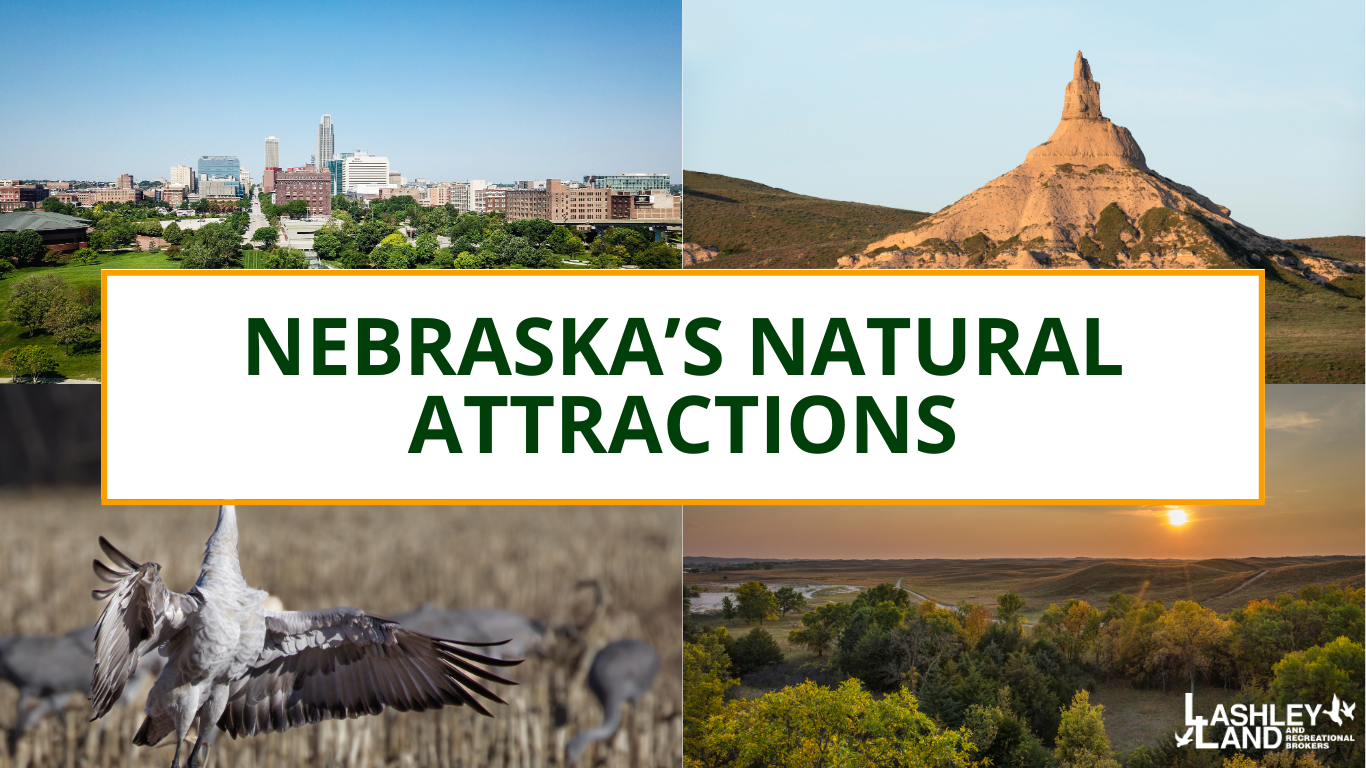
Short Answer: Nebraska, or the Cornhusker State, has a rich history, culture, and natural beauty in the heart of the Midwest.
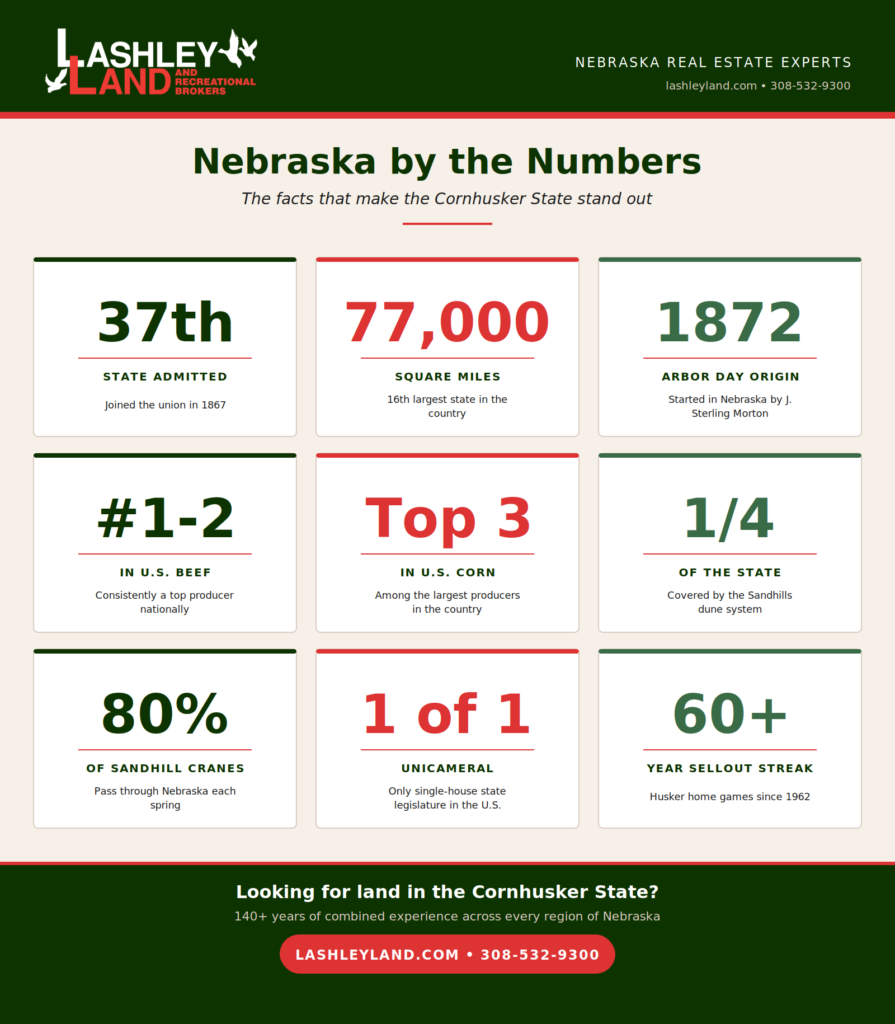
Most people picture cornfields and open landscapes, but the state holds far more. Native American tribes like the Omaha, Pawnee, and Lakota shaped its early history, and the Nebraska Territory served as a key point on the Oregon Trail before joining the union as the 37th state in 1867.
Today, the state balances its agricultural past with the modern energy of cities like Omaha and Lincoln. Visitors can enjoy urban amenities, historic landmarks, and small-town charm in the same trip. Add in iconic geological formations, a passionate football culture, and a roster of famous Nebraskans, and the state stands out for far more reasons than most travelers expect.
Nebraska’s Plant Life and Wildlife
Nebraska’s native plants fall into four main groups: grasses, wildflowers, shrubs, and trees. Native grasses like big bluestem, little bluestem, switchgrass, and Indiangrass cover the prairies. Wildflowers like prairie coneflower, blazing star, and goldenrod color the grasslands through summer and fall. Eastern red cedar, cottonwood, bur oak, and ponderosa pine anchor the woodlands.
The animal life is just as varied. Mountain lions and bobcats range across the western half of the state. Bison are protected on managed herds at refuges and ranches. Whitetail and mule deer thrive across nearly every county. Prairie dogs build their towns on the plains, and several bat species roost in caves and along river bluffs.
The Platte River hosts one of North America’s great wildlife spectacles every spring. Roughly 80% of the world’s sandhill cranes stop along the Platte during migration, with hundreds of thousands of birds gathering at one time. Birders travel from around the world to see them for the first time and return year after year.
Agriculture: Corn, Beef, and the Cornhusker Identity
Nebraska’s nickname (The Cornhusker State) goes back to the 19th century, when farmers harvested corn ears by hand and “husked” them in the field. The Cornhusker name stuck, and it now applies to the state, the university, and the broader identity of Nebraska’s work culture. The image fits. Nebraska ranks among the top corn producers in the country every year, and corn drives ethanol, livestock feed, and export markets across the state.
Beef carries equal weight. Nebraska is often called the beef state for good reason. It consistently ranks first or second in beef production nationally. Nebraska was ranked #2 in 2026 with 5.6 billion pounds of beef produced. The combination of corn for feed and grass for grazing gives the state a built-in advantage that other beef states cannot match.
The Nebraska State Fair in Grand Island highlights this heritage every August. Livestock shows, agricultural exhibits, music, crafts, and family-friendly attractions draw crowds from across the Midwest. The fair connects modern visitors to the rural traditions that still shape daily life across most of Nebraska.
The Land: Prairies, Sandhills, and Iconic Formations
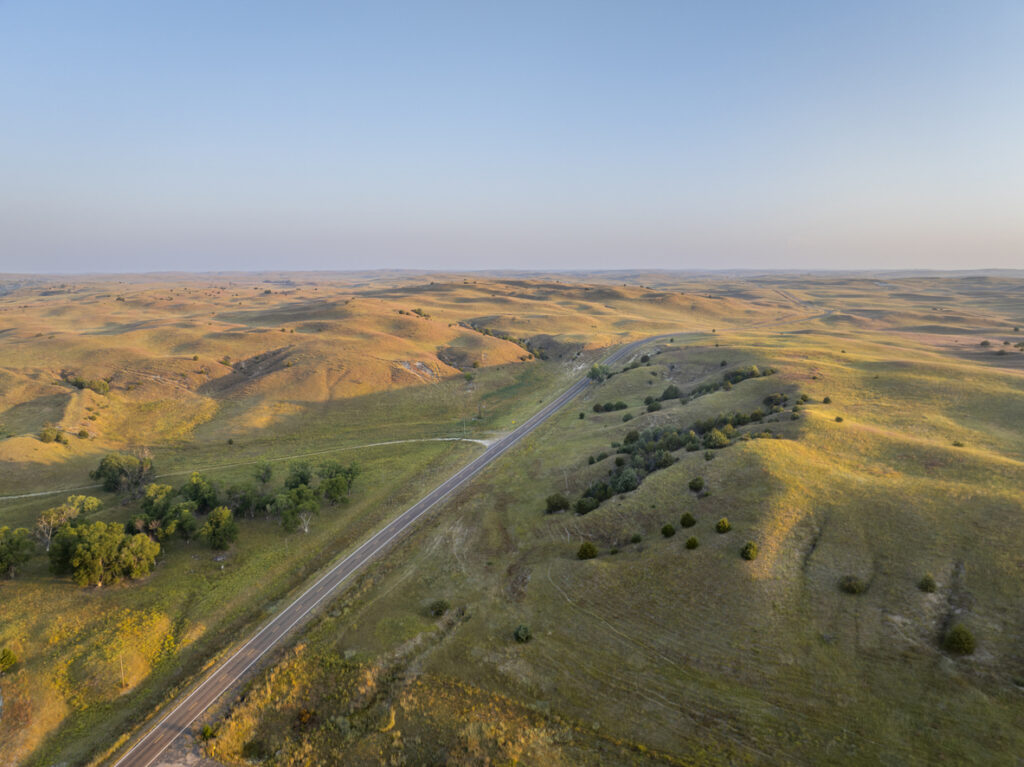
Nebraska’s landscape covers more ground than most outsiders realize. The state features vast prairies, pine woods, river valleys, and dramatic geological formations across its width.
In the west, Scotts Bluff National Monument rises above the North Platte River, and Chimney Rock, a famous landmark of westward expansion, served as a key marker for pioneers crossing the Great Plains on the Oregon Trail. Both formations still draw visitors who want to walk the same routes and take in the same views.
The Nebraska Sandhills form the largest sand dune system in the Western Hemisphere, covering about a quarter of the state. Native grasses stabilize the dunes, which makes the region one of the top cattle grazing areas in the country.
Three major rivers shape life across Nebraska. The Platte River and Missouri River feed agriculture, support wildlife, and offer fishing, boating, and kayaking. The Niobrara National Scenic River draws paddlers and waterfall hunters to its northern stretch. Together, the rivers connect almost every region of the state.
Arbor Day: A Nebraska Original
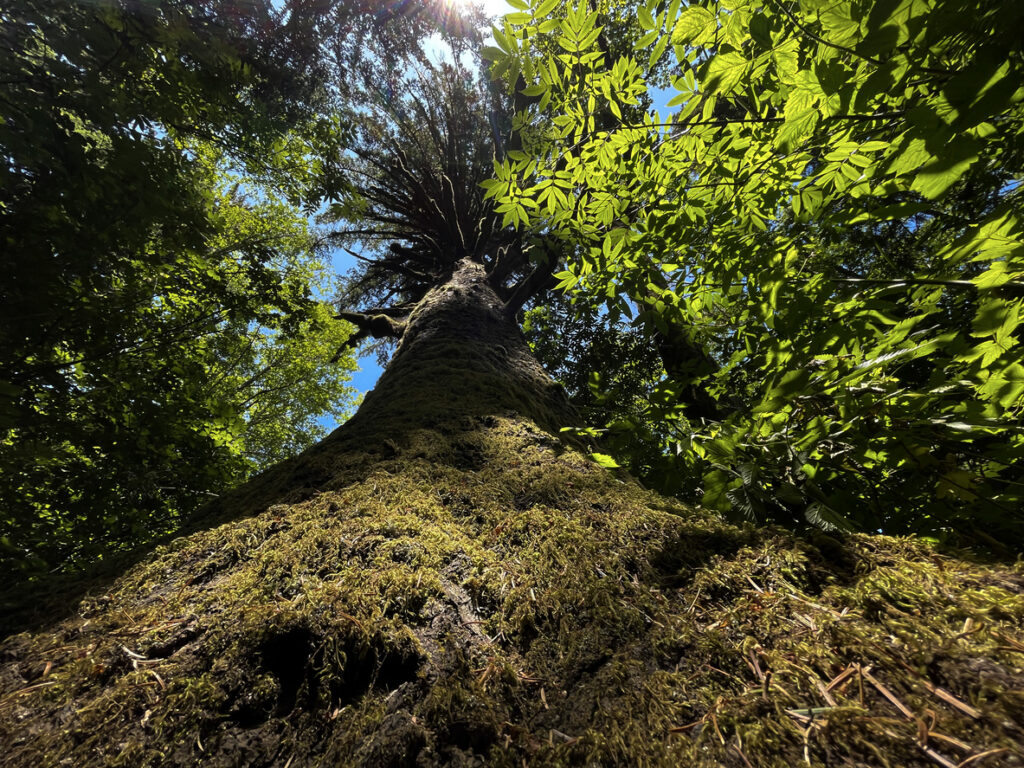
Arbor Day, which is now a national holiday, started in Nebraska. The holiday began in 1872 when J. Sterling Morton, a Nebraska City newspaper editor and tree advocate, proposed a statewide tree-planting day. Nebraskans planted around one million trees on that first Arbor Day. The idea spread quickly, and Arbor Day is now observed across all 50 states and in countries around the world.
The roots of the holiday trace back to the landscape itself. When early settlers arrived in the 1800s, most of the state held prairie grasses with few trees outside the river valleys. Morton and others wanted to add windbreaks, shade, and lumber to the open plains. Tree planting helped reshape the Nebraska landscape over the next century.
Nebraska City still serves as the home of the National Arbor Day Foundation. Visitors can tour Arbor Lodge State Historical Park, Morton’s restored mansion and historic site, and the surrounding tree gardens. The site remains a popular stop for school groups and families across the state.
Husker Football
Few college football programs hold the kind of grip on a state that Nebraska football holds. The University of Nebraska-Lincoln Cornhuskers play home games at Memorial Stadium, which becomes the third-largest population center in the state every game day. The stadium has sold out every home game since November 1962, the longest active sellout streak in college football.
The fan culture matches the streak. Nebraskans wear scarlet and cream from Saturday morning through Sunday evening during the season, and Husker gear shows up in stores across the state year-round. The team also has a long tradition of fan respect for opposing players, with crowds applauding visiting teams as they leave the field after games.
Football brings the state together in a way few other traditions can. Families plan reunions around home games, small-town diners run watch parties, and Husker pride travels with Nebraskans who move out of state. The team’s history of national championships in the 1970s, 1990s, and beyond keeps the program woven into the state’s identity.
Food: From the Reuben to Kool-Aid
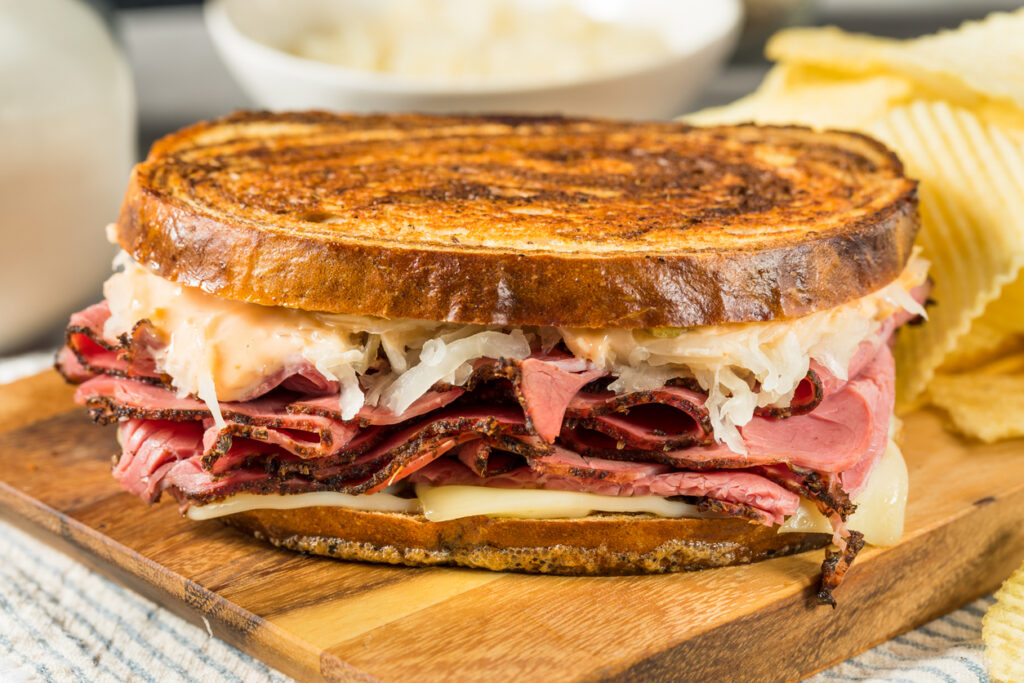
Nebraska food culture runs deeper than corn and beef, though both show up on most menus.
The Reuben sandwich, with corned beef, sauerkraut, Swiss, and Russian dressing on rye, was invented in Omaha. Most accounts credit Reuben Kulakofsky, a local grocer, who made the original version at the Blackstone Hotel in the 1920s. Today, the sandwich is on diner menus across the country, but Omaha still claims it, even producing an original menu with a Reuben listed for 50 cents from 1937.
Kool-Aid is another Nebraska original. Edwin Perkins invented the powdered drink mix in Hastings in 1927, and the state designated Kool-Aid as its official soft drink in 1998. Hastings hosts an annual Kool-Aid Days festival every summer.
The Runza sandwich is a Nebraska staple with roots in the state’s Volga German community. The pocket sandwich filled with seasoned ground beef, cabbage, and onions inside a soft bread shell has become a regional comfort food. Runza Restaurants is headquartered in Lincoln and operates locations across Nebraska and a handful of nearby states.
Notable Nebraskans
Nebraska has produced an unusual number of recognizable names in business, entertainment, and history.
Warren Buffett, one of the most well-known investors in the world, was born in Omaha and still lives in the same house he bought in 1958. His company, Berkshire Hathaway, draws tens of thousands of shareholders to Omaha every spring for its annual meeting.
Hollywood traces several major careers back to Nebraska. Marlon Brando was born in Omaha and grew up partly in the state before launching his acting career. Johnny Carson, the longtime host of The Tonight Show, grew up in Norfolk and credited his small-town Nebraska upbringing throughout his career.
Civil rights leader Malcolm X was also born in Omaha in 1925. The Malcolm X Memorial Foundation maintains the birthsite, which is open to the public and serves as a center for education and community events.
Sightseeing and Roadside Stops
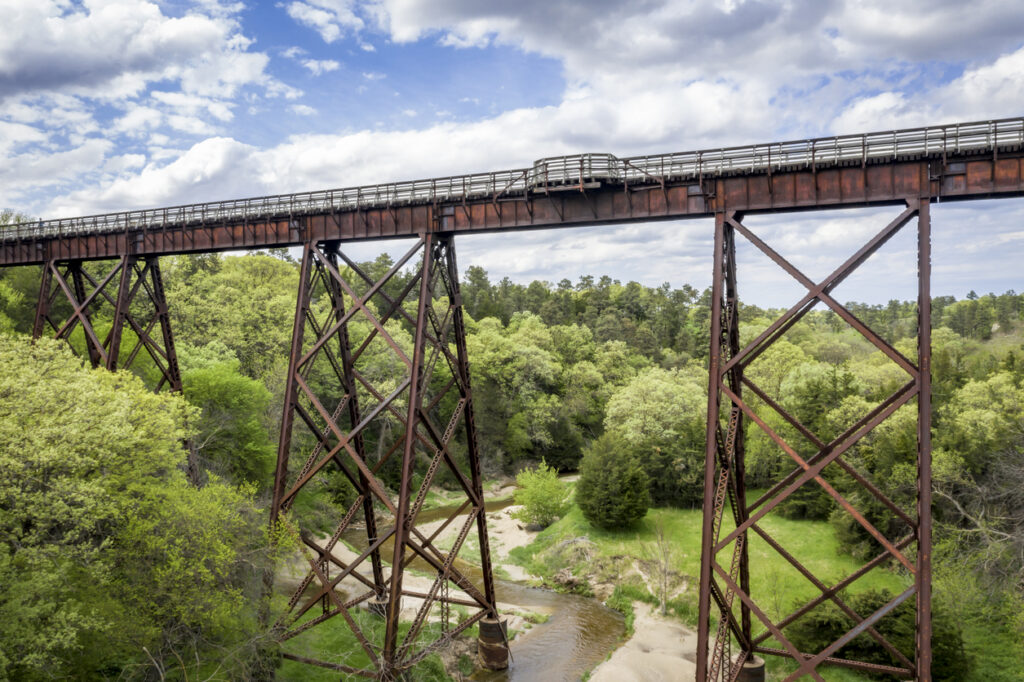
Nebraska holds an unusual mix of roadside landmarks, museums, and historic sites that reward travelers who slow down.
Carhenge, near Alliance, copies the layout of Stonehenge using 39 painted vintage cars. The site started as a family tribute in 1987 and has grown into one of the most photographed roadside stops in the country.
The Cowboy Trail crosses northern Nebraska along an old Chicago and North Western Railway corridor. Once finished, it will be one of the longest rail-trails in the United States at over 300 miles. Hikers, bikers, and horseback riders use the trail year-round. The state also sits along the original Lincoln Highway, the first transcontinental road in the United States, which still runs through central Nebraska along much of U.S. Route 30.
Other notable stops include:
- The Golden Spike Tower in North Platte, which overlooks Union.
- Pacific’s Bailey Yard, the largest railroad classification yard in the world.
- The University of Nebraska State Museum in Lincoln, also known as Morrill Hall, houses Archie, the largest mounted mammoth fossil in the world.
- Homestead National Historical Park near Beatrice preserves one of the first land claims filed under the 1862 Homestead Act.
Major Cities
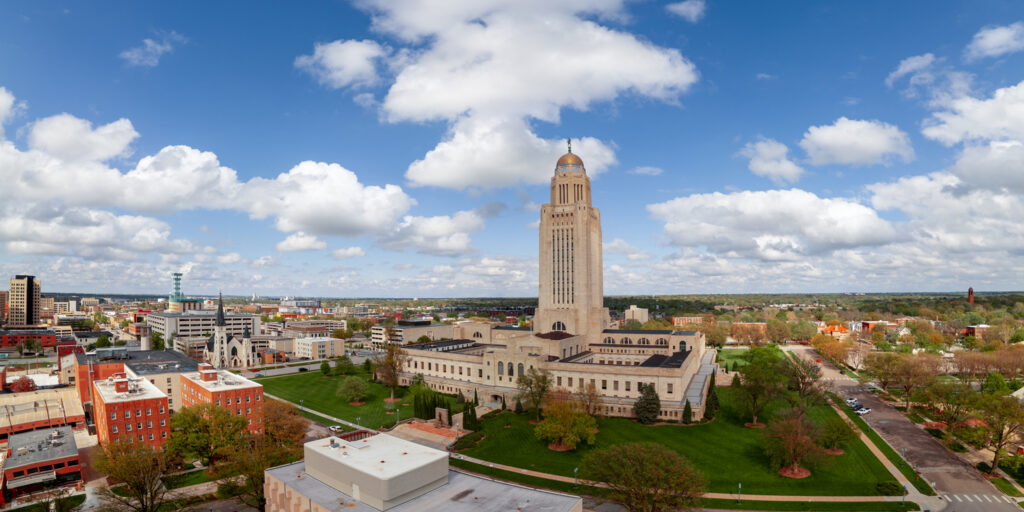
Nebraska’s major cities offer different takes on Midwestern life.
Omaha is the largest city in the state and serves as a national hub for finance, transportation, and insurance. The Henry Doorly Zoo and Aquarium, consistently ranked among the top zoos in the world, anchors the city’s tourism. The Old Market district draws visitors with brick streets, restaurants, and local shops.
Lincoln, the state capital, holds the University of Nebraska-Lincoln, the state capitol building, and a busy arts scene. The Haymarket District turns historic warehouses into restaurants, shops, and music venues. Memorial Stadium sits at the center of the city’s football identity.
Bellevue, just south of Omaha, is the oldest continuously inhabited community in Nebraska and home to Offutt Air Force Base. The city also borders Fontenelle Forest, one of the oldest nature preserves in the country.
Grand Island anchors central Nebraska as the third-largest city in the state. It hosts the Nebraska State Fair every August and serves as a stop for the annual sandhill crane migration along the nearby Platte River.
Nebraska’s Economy and the Unicameral
Nebraska’s economy reaches well beyond agriculture, though farming and ranching still drive much of the state’s output. Finance, insurance, transportation, and manufacturing all play major roles.
Berkshire Hathaway is headquartered in Omaha, and the city is also home to Mutual of Omaha, Union Pacific Railroad, and TD Ameritrade. The combination gives Omaha an outsized presence in national business, considering the state’s overall population.
Nebraska’s political structure is also worth knowing. The Nebraska Legislature is the only single-house, nonpartisan legislature in the United States, known as the Unicameral. The system, adopted in 1937, was designed to cut down on partisan deadlock and make state government more efficient. Senators run without party labels on the ballot.
The state’s workforce is known for a strong work ethic and high levels of educational attainment, which help draw new businesses. A reliable mix of agriculture, finance, and logistics gives Nebraska steady ground during national downturns, and the state continues to attract companies looking for affordable space and a stable labor pool.
Ready to Move to Nebraska? Lashley Land Has You Covered
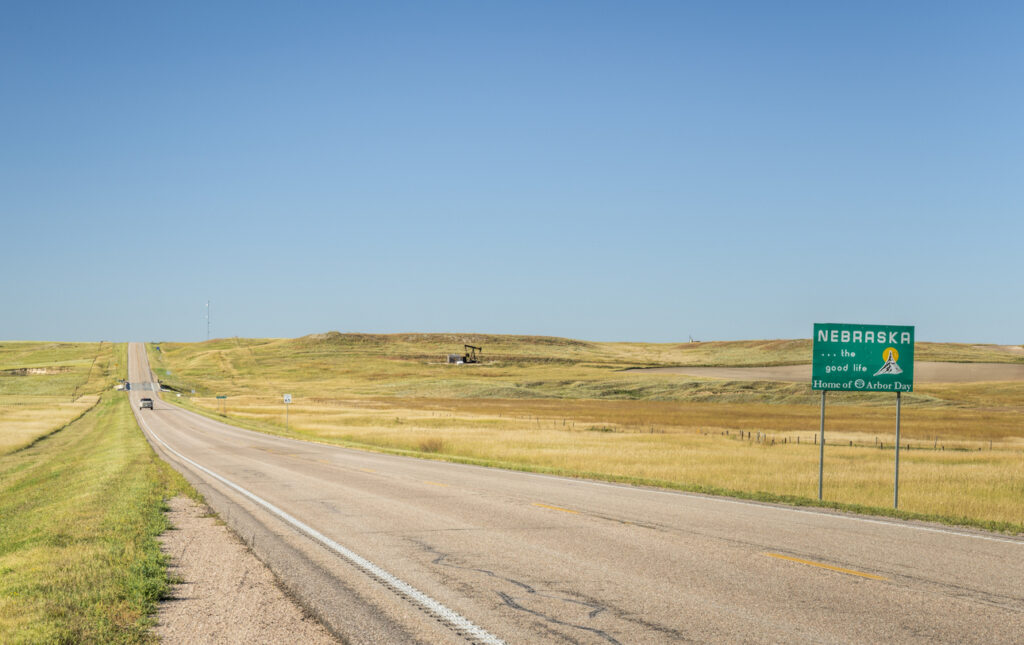
Nebraska’s diverse landscapes, rich culture, and welcoming communities make it an ideal place to call home. Whether you want a family residence, hunting land, or a working farm, Lashley Land is here to help.
As one of Nebraska’s leading land brokerages, our team connects buyers and sellers with properties that match their goals across every region of the state. With over 140 years of combined experience, our agents understand Nebraska’s land, from serene woodlands to vast open spaces. We work with clients on hunting tracts, recreational properties, residential acreages, and farm and ranch ground, and we guide each buyer through the process from start to finish.
Contact Lashley Land today to begin your journey toward finding the right Nebraska property.