
Short Answer: Agribusiness is the full network of activities that turn raw agricultural products into food, fuel, fiber, and finished goods. It includes farming operations, food processing, equipment manufacturing, supply chain logistics, and the management and sales roles that keep the agriculture industry running. For Nebraska landowners, agribusiness is both the economic sector their land supports and the system that determines its long-term value.
Nebraska’s agricultural economy generates more than $25 billion in annual cash receipts, and behind every bushel of corn and head of cattle is a much bigger system at work. That system is agribusiness, and if you own land in Nebraska, it shapes your property’s value whether you realize it or not. This guide breaks down what agribusiness actually is, how the agribusiness industry operates, and why it matters to landowners across the state.
Defining Agribusiness in Plain Terms
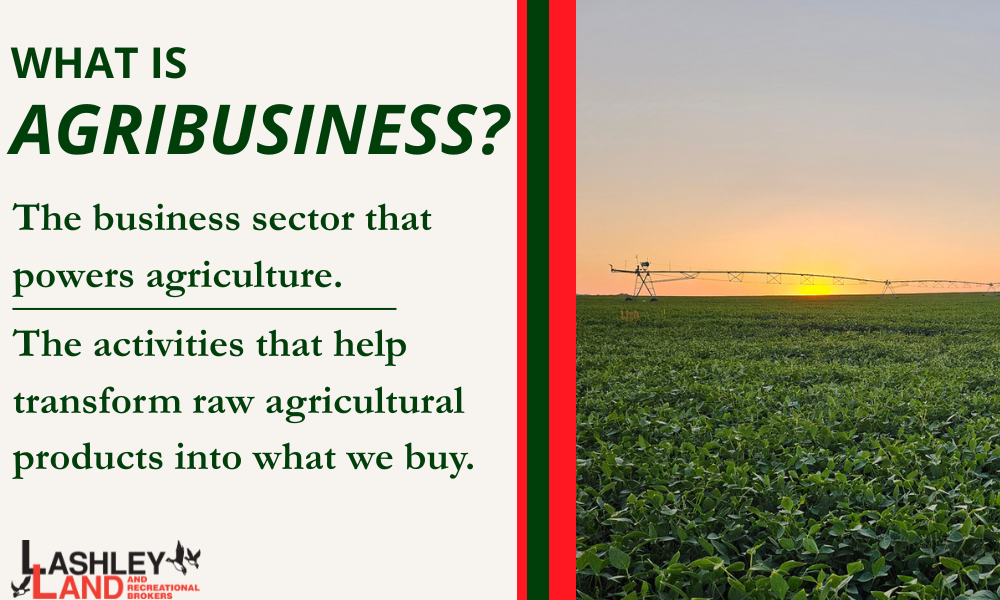
Agribusiness is the business side of agriculture. It covers every step that takes a raw material from the field to the consumer, including production, processing, distribution, marketing, and the support services that make it all possible. Think of agriculture as the act of growing and raising, and agribusiness as the broader business sector built around it.
Agriculture vs. Agribusiness
- Agriculture: Growing crops and raising livestock on the land
- Agribusiness: The full economic sector, including farm equipment dealers, food processing plants, ag lenders, and agribusiness companies that move products to market
Why It Matters in Nebraska
Nebraska ranks among the top agricultural states in the United States. Almost every rural community is tied to the agribusiness sector in some way, from the local co-op to regional ethanol plants and meat processing facilities. Understanding this system helps landowners see where their property fits.
The Major Sectors of the Agribusiness Industry
The agribusiness industry is wider than most people think. It pulls together producers, manufacturers, processors, and service providers into one connected supply chain.
Production Agriculture
This is the foundation. Crop production, livestock operations, and the day-to-day farming operation all fall here. It is where agricultural production begins.
Inputs and Equipment
Producers cannot operate without the businesses that supply them:
- Farm machinery and farm equipment manufacturers
- Seed, fertilizer, and crop protection companies
- Livestock feed manufacturers
- New technology providers, including precision ag tools, GPS systems, and drone services
Processing and Distribution
Raw agricultural products rarely reach consumers in their original form. Food processing facilities, grain elevators, ethanol plants, and packing houses turn raw materials into finished goods, then move them through the supply chain.
Support Services
A long list of agribusiness professionals keep the system running:
- Agribusiness insurance providers
- Agricultural lenders and financing partners
- Farm management firms
- Land brokerages and appraisers
- Trucking and logistics companies
Careers and Education in Agribusiness
The agribusiness field offers some of the most stable and varied career opportunities in the country. As the world’s population grows and food security becomes a bigger priority, demand for skilled workers continues to climb.
Common Career Opportunities
Agribusiness professionals work in offices, on farms, in plants, and out in the field. Common roles include:
- Farm and ranch managers
- Sales representative positions for equipment, seed, and inputs
- Commodity traders and grain merchandisers
- Agricultural lenders and loan officers
- Agronomists and crop consultants
- Land brokers, auctioneers, and appraisers
Education Pathways
Schools across the country offer strong programs in agricultural business and agricultural economics. Pathways include:
- An associate degree in agricultural business or production
- A bachelor’s degree through an agribusiness program, often paired with animal science or agricultural science
- An advanced degree for research, policy, or executive roles
- Working with an academic advisor to align coursework with long-term career goals
Why the Field Keeps Growing
Agribusiness keeps expanding because the world needs more food, fiber, and fuel each year. A growing global population, evolving agribusiness policy, and continued investment in agricultural productivity all create steady demand for talented people across the business sector.
Why Agribusiness Matters to Nebraska Landowners
For landowners, agribusiness is not an abstract concept. It directly affects what your land is worth, what it can produce, and how easily you can sell or lease it.
Land Value Follows Agribusiness Health
When agribusiness companies invest in a region, land values tend to follow. A new ethanol plant, expanded feedlot, or growing processor creates demand for nearby acres. When local agribusiness struggles, land markets often soften.
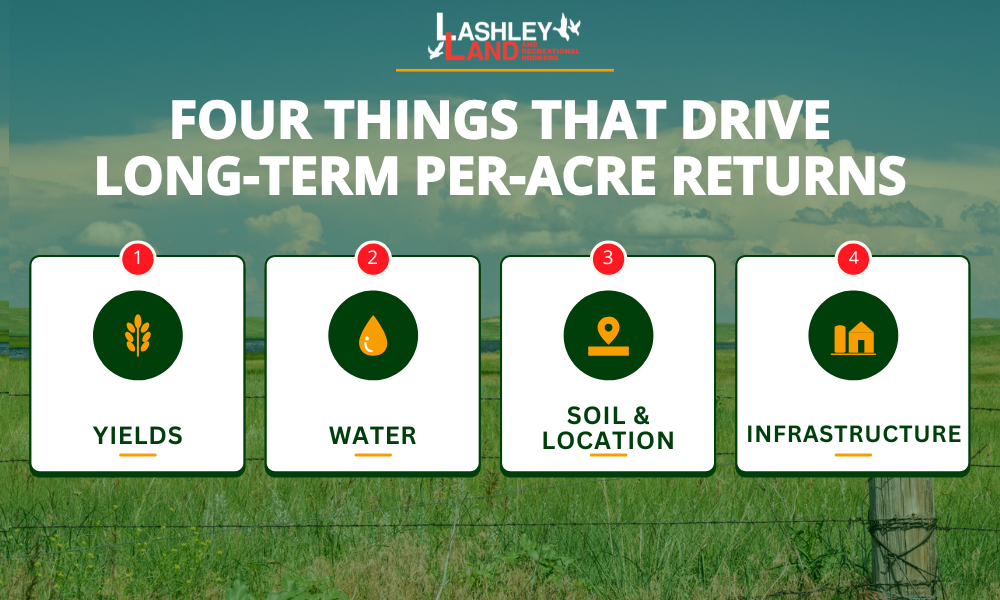
Productivity Drives Long-Term Returns
Several factors influence per-acre value:
- Crop yields and overall agricultural productivity
- Access to natural resource assets like water rights
- Soil quality and proximity to processing or shipping hubs
- Infrastructure such as irrigation, grain storage, and road access
Risk Factors Worth Watching
Smart landowners pay attention to forces that move the agribusiness sector:
- Climate change and weather volatility affecting crop production
- Commodity price swings tied to global demand
- Shifts in agribusiness policy at the state and federal level
- Labor availability for farm workers and seasonal help
The Future of Agribusiness in Nebraska
Agribusiness is changing fast, and Nebraska landowners are well positioned to benefit. The fundamentals remain strong: good soil, abundant water in many regions, established infrastructure, and a workforce that understands the land.
Feeding a Growing World
Food security is becoming a national and global priority. As the world’s population continues to climb, productive farmland becomes more valuable, not less. Nebraska’s role in food production and livestock supply puts the state at the center of that conversation.
Technology and Innovation
New technology is reshaping agricultural production:
- Precision agriculture and field-level data
- Improved genetics in seed and animal science
- Sustainable practices that protect soil and water
- Renewable energy uses, including wind and solar leases
Nebraska Spotlight in Agribusiness
According to the University of Nebraska’s Department of Agricultural Economics, ag-tech adoption is shifting the labor landscape across Nebraska farms and ranches. Automation, GPS guidance, precision planting, and digital management tools are reducing the need for repetitive manual labor while increasing demand for workers with technical, mechanical, and data-analysis skills. Nebraska producers are among the national leaders in adopting these technologies, which is creating new career paths in precision ag, livestock data management, and integrated farm systems.
Opportunities for Landowners
Whether you own a working farm, a family ranch, or recreational ground, your property is part of an essential economic sector. That creates real opportunity for income, appreciation, and generational wealth, especially when paired with sound farm management and the right marketing.
Putting It All Together for Your Land
Agribusiness covers far more than planting and harvesting. It is the full system that connects Nebraska farms and ranches to consumers across the country and around the world. For landowners, understanding that system is the first step toward making smart decisions about buying, selling, leasing, or managing land.
A few things worth remembering:
- Agribusiness includes production, processing, equipment, services, and sales
- Nebraska’s rural economy depends on a healthy agribusiness sector
- Land value is tied to productivity, location, and local market conditions
- Long-term planning pays off, especially with experienced guidance
How Lashley Land Helps
Lashley Land has spent decades working with Nebraska families on farms, ranches, and recreational properties. Our team helps landowners with farm management, water rights and mineral searches, valuations, and marketing strategies built around real local knowledge. We focus on honest guidance and long-term relationships, not pressure.
Talk With a Nebraska Land Expert
If you have questions about what your farm, ranch, or recreational property is worth in today’s market, the team at Lashley Land is ready to help. We offer honest, grounded advice built on more than 140 years of combined experience across Nebraska. Contact Lashley Land and get a clear picture of where your land fits in the larger agribusiness story.