
Why Land Tenure Matters for Rural Property Owners (And How to Protect What’s Yours)
The short answer: Land tenure is the legal foundation of how you hold, use, and transfer your property. Whether you own a working farm, a recreational tract, or inherited acreage, understanding your tenure arrangement protects your land rights, your income, and your ability to pass land on to the next generation. In Nebraska and across rural America, getting this right is one of the most important things a landowner can do.
Most rural property owners spend a lot of time thinking about soil quality, water access, commodity prices, and market conditions. But fewer landowners spend enough time thinking about how they actually hold their land. Land tenure — the legal terms under which you own, use, and transfer property — isn’t just paperwork. It determines what you can do with your ground, how it’s taxed, who can use it, and what happens to it when you’re gone.
In Nebraska, where agricultural land is the backbone of rural communities and family livelihoods, tenure security isn’t something you can afford to overlook. Understanding your land tenure rights is how you protect what you’ve built and what you plan to leave behind.
Here’s what every rural property owner should know.
What Is Land Tenure, Exactly?
The Basics, in Plain Terms
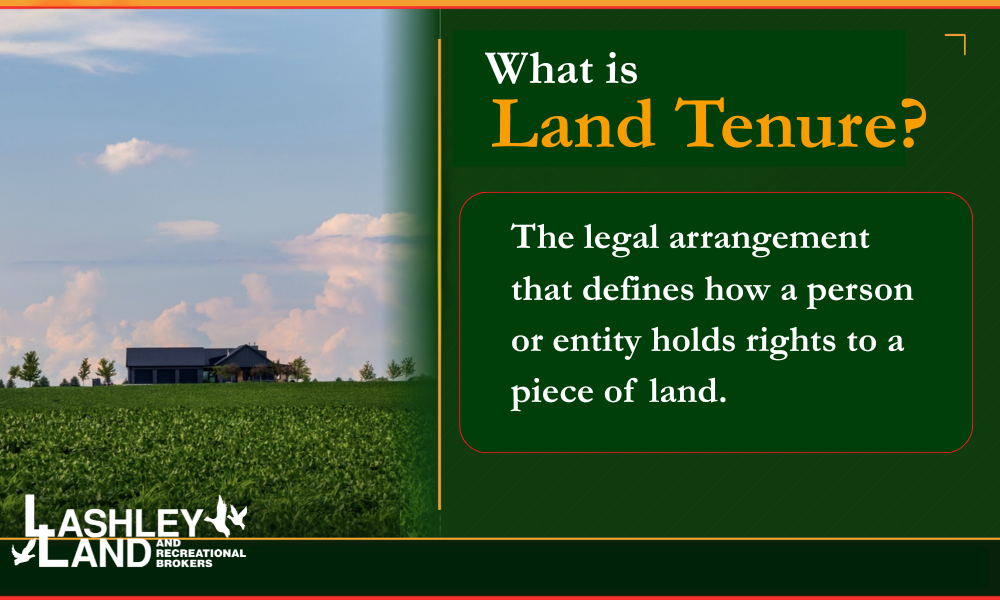
Land tenurerefers to the legal arrangement that defines how a person or entity holds rights to a piece of land. It covers everything from full land ownership to lease agreements to communal land arrangements where multiple parties share access and use.
Think of it this way: your deed tells you that you own the property. Your tenure arrangement tells you what that ownership actually means — what rights you hold, what restrictions exist, and how those rights can be transferred.
Land tenure systems vary around the world. In the developing world, customary tenure, where land rights are passed down through tradition rather than formal legal ownership, is still common. The United Nations and international organizations like the Tenure Facility have spent decades working to formalize these systems and strengthen secure tenure for vulnerable populations. In the United States, we operate under a more structured legal framework, but that doesn’t mean the details are simple. Even here, tenure issues can get complicated fast, especially in rural areas where properties have been in the same family for generations.
Why It’s More Than a Legal Formality
Land tenure touches nearly every decision a rural property owner makes. It determines:
- Who can farm, lease, or develop the land
- Who inherits the property when the current owner passes away
- What financing options are available
- How the property is taxed and classified
- What happens if there’s a dispute over boundaries or access
For Nebraska families, secure property rights are tied to legacy and livelihood. A farm that’s been handed down for four generations carries emotional weight well beyond its dollar value. But if the land tenure arrangement isn’t solid (unclear title, outdated ownership structure, undocumented rights), that legacy is at risk.
Common Types of Land Tenure in Nebraska
Not all land ownership looks the same. Here are the most common tenure arrangements you’ll encounter.
Fee Simple Ownership
Fee simple is the most straightforward form of land tenure. You own the property outright with exclusive rights to use, lease, develop, and sell it. It’s the gold standard for property rights in the United States.
But even full ownership has limits:
- Easements, zoning, and conservation obligations can restrict land use
- Water rights may not automatically come with surface ownership
- Mineral rights may have been severed from the land title decades ago
Just because you hold the deed to the surface doesn’t always mean you own what’s underneath, or the water running through it.
Leasehold and Cash Rent Arrangements
A significant amount of Nebraska’s agricultural land is farmed by someone other than the owner. Lease arrangements are a fundamental part of the state’s land tenure systems and generally fall into two categories:
- Cash rent: The tenant pays a fixed annual rate per acre regardless of crop performance
- Crop-share: The landowner and tenant split production costs and revenue
For landowners, leasing provides a steady household income without the daily demands of farming. For tenants, it provides access to productive ground without the capital for outright purchase. But verbal agreements, as common as they are in the Midwest, create real risk when circumstances change. A well-structured, written lease protects both parties and supports the long-term agricultural productivity of the land.
Life Estates and Trust Ownership
Life estates are common in multigenerational farm families. The basics:
- A life tenant holds the right to use and benefit from the land during their lifetime
- A remainderman holds the future interest and will inherit full ownership
- The life tenant cannot sell the property without the remainderman’s consent
Trust ownership offers more flexibility and is increasingly popular for estate planning. A properly structured trust can help families avoid probate, manage tax obligations, and set clear terms for how agricultural land is managed and transferred. But trusts require a professional legal setup.
Joint Tenancy and Tenancy in Common
When multiple people own the same property, how it’s titled makes a real difference:
- Joint tenancy: Includes right of survivorship — when one owner dies, their share automatically passes to the surviving owner(s)
- Tenancy in common: No automatic transfer — each owner’s share goes through their estate
For inherited farmland with multiple heirs, this distinction can mean the difference between a smooth transition and a drawn-out legal process. It’s one of the most common land tenure issues families face, and one of the easiest to prevent with proper planning.
Why Land Tenure Should Be on Every Landowner’s Radar
It Directly Affects Your Property Taxes
Nebraska uses an agricultural land valuation system that assesses farmland based on productive capacity rather than market value, a significant benefit for working farms and ranches. But maintaining that classification requires meeting certain use requirements. Changes in land use, ownership structure, or tenure arrangement can trigger reassessment and unexpected tax consequences.
It Shapes Succession and Estate Planning
A huge amount of Nebraska’s agricultural land will change hands in the coming decades as the current generation ages. National policies around estate taxes, stepped-up basis, and 1031 exchanges all play a role, but the foundation starts with how the land is titled.
Common pitfalls include:
- Outdated deeds that don’t reflect current family circumstances
- Properties stuck in probate because legal ownership was never updated after a death
- Multiple heirs inheriting land with no agreement on what to do with it
Addressing tenure early — while everyone is still at the table — prevents these problems from becoming crises.
It Impacts Financing and Investment Decisions
Lenders care deeply about land tenure. What they look for:
- A clean land title with no unresolved claims
- A clear ownership structure
- Documented rights — water, mineral, access
Whether you’re buying your first quarter section or building a portfolio of agricultural land, land tenure security isn’t just a legal concept. It’s a financial one. Lashley Land can connect you with trusted ag lenders familiar with Nebraska transactions.
It Protects Against Disputes
Boundary disputes. Contested easements. Unclear verbal leases. Inherited land with heirs who can’t agree on next steps. These situations are more common than most people think, and they almost always trace back to inadequate tenure documentation.
In rural areas where neighbors depend on each other, a dispute over property rights can damage more than just your finances. Getting tenure right protects your investment and your standing in the local community.
Nebraska-Specific Considerations
Water Rights Are Part of the Picture
In Nebraska, water rights are closely tied to land tenure and can significantly affect property value and land use. The state’s Natural Resources Districts regulate groundwater use, and those regulations vary from one part of the state to another. In some areas, well permits and allocation limits are strictly managed, while others have fewer restrictions.
For anyone buying, selling, or managing agricultural land in Nebraska, understanding water rights documentation is essential. Irrigated land commands a premium precisely because of its access to water, but that access depends on tenure rights that need to be verified, not assumed. Lashley Land’s water rights and mineral search services exist specifically to help landowners navigate this.
Mineral Rights May Not Follow the Surface
Across the Great Plains, mineral rights can be severed from surface ownership, and often have been, sometimes decades ago. A landowner may hold fee simple title to the surface but have no legal ownership of the minerals below. This is a classic land tenure issue that catches buyers off guard if they don’t investigate before closing.
Always confirm whether mineral rights convey with the sale. It’s a detail that directly affects the property’s long-term value and your exclusive rights as an owner.
Conservation Easements and CRP Contracts
Conservation programs — CRP, EQIP, conservation easements — create binding obligations that run with the land, not the owner. If you purchase a property enrolled in a conservation program, you inherit those commitments.
These programs serve important purposes. They support natural resources protection, reduce land degradation, promote ecosystem services, and contribute to broader goals around sustainable development and climate change mitigation. Conservation easements in particular can play a role in forest protection, wildlife corridor preservation, and long-term land stewardship.
But they also limit what you can do with the property, sometimes significantly. Understanding these obligations before you buy is a non-negotiable part of due diligence.
The Bigger Picture: Why Tenure Security Matters Beyond Your Fence Line
Land tenure isn’t just an individual concern; it’s foundational to rural communities, food security, and economic growth at every scale.
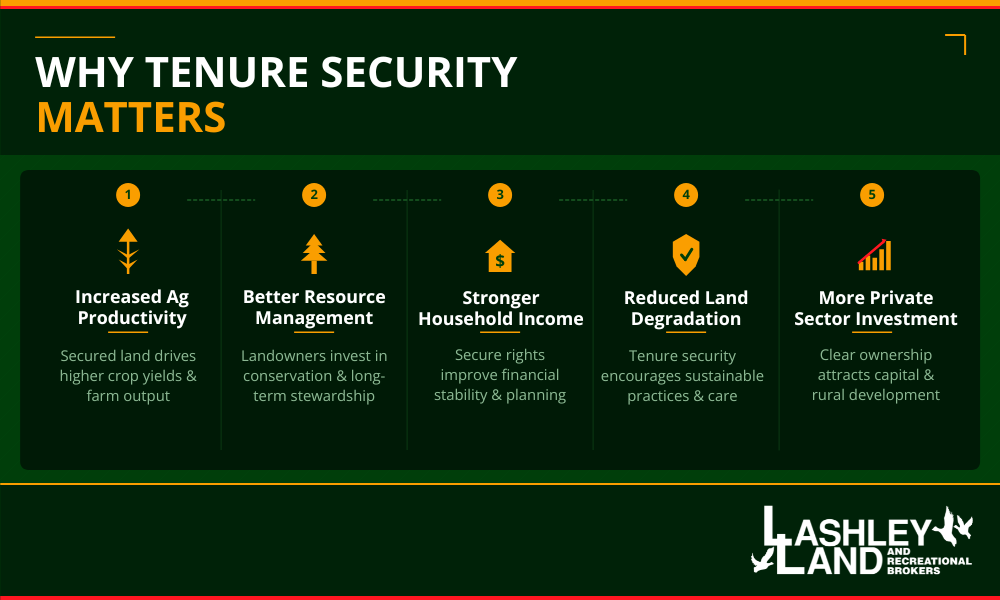
Globally, organizations have documented what happens when people have secure tenure rights. The outcomes are consistent and measurable:
- A percent increase in agricultural productivity on secured land
- Better management of forest land and natural resources
- Stronger household income and improved food security
- Reduced land degradation and stronger ecosystem services
- Greater private sector participation in rural development
These benefits aren’t limited to the developing world or traditional lands in remote regions. The same principles hold true in Nebraska. When rural landowners have clear, secure property rights, they invest more in their ground, adopt better conservation practices, plan for the long term, and strengthen their local community.
Insecure tenure — unclear titles, disputed boundaries, fragmented ownership — has the opposite effect. It discourages investment, accelerates land degradation, and makes it harder for communities to respond to challenges like climate change.