
How to Register Your Farm as a Business
The short answer: Registering your farm as a business typically involves choosing a business structure (LLC, corporation, sole proprietorship, or partnership), registering with the Nebraska Secretary of State, obtaining an EIN from the Internal Revenue Service, and securing any required state and local permits. The registration process can often be completed in a few weeks, though the right legal structure for your farm operation depends on your specific goals, tax situation, and liability concerns.
Whether you’re turning a family operation into a formal business or starting fresh with newly acquired farmland, registering your farm as a business is one of the most important steps you can take to protect your assets and set yourself up for long-term success.
Let’s walk through each step so you know exactly what to expect.
Why Registering Your Farm Matters
Protecting What You’ve Built
When you operate as an unregistered farm, there’s no legal separation between you and your agricultural business. That means if something goes wrong—an equipment accident, a contract dispute, unpaid debt—your personal assets could be at risk.
Establishing a formal business entity creates a clear line between your personal finances and your farm liabilities. It also gives your operation a recognized business identity, which matters when you’re signing contracts, applying for loans, or entering into land transactions. For anyone serious about building a farm that lasts for generations, this protection is foundational.
Financial and Tax Advantages
Beyond liability protection, business registration opens doors to agricultural tax benefits and deductions that aren’t available to hobby farm operators. It makes the application process for FSA farm loans, USDA programs, and disaster assistance much more straightforward. Banks and lenders take you more seriously when you’re operating as a registered business rather than as a sole proprietor with no formal structure.
A registered farm business also simplifies your bookkeeping. When your farm finances are separate from personal accounts (including that business credit card you use for feed and supplies), tracking income, expenses, and depreciation becomes far less complicated.
Choosing the Right Business Structure for Your Farm
Before you file any paperwork, you need to decide what type of business entity makes sense for your situation. Each structure comes with different implications for liability, taxes, and paperwork.
Sole Proprietorship – Simple but Limited
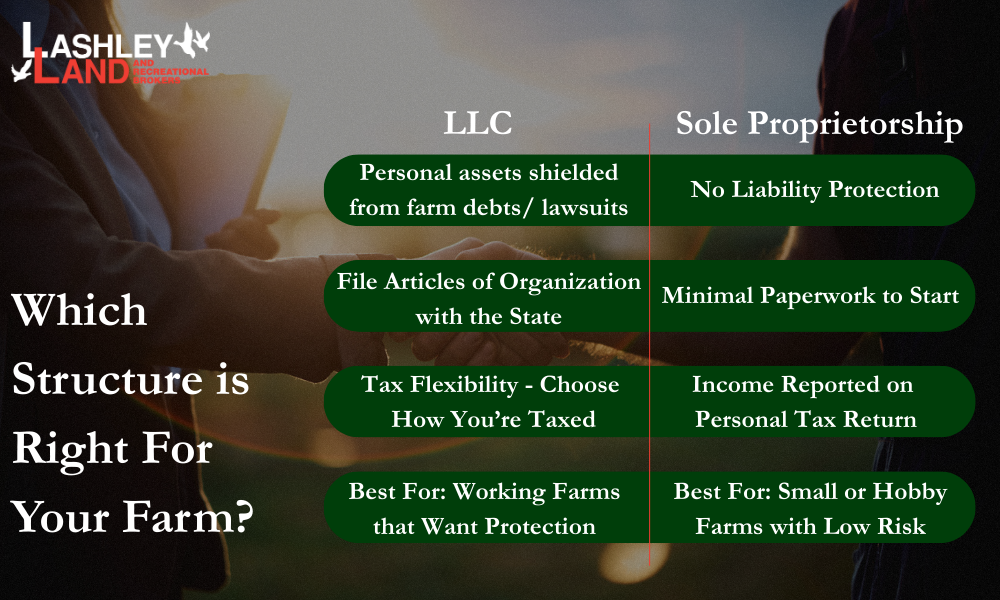
A sole proprietorship is the easiest way to operate a farm business. There’s minimal paperwork, no formal registration required with the state (beyond a fictitious name filing if you’re using a business name different from your own), and you report farm income directly on your personal tax return.
The downside? There’s no separation between personal and business liability. If your operation incurs debt or faces a lawsuit, your personal assets are on the line. This structure works best for small, low-risk operations or true hobby farms where the stakes are relatively low.
Partnership – When You’re Not Going It Alone
If you’re farming with family members, a neighbor, or a business partner, a partnership might make sense. General partnerships are straightforward to form, but each partner shares full liability for the business.
A limited partnership or limited liability partnership offers more protection, limiting some partners’ exposure to the amount they’ve invested. Any partnership arrangement requires a solid agreement that spells out ownership percentages, responsibilities, profit-sharing, and what happens if someone wants out. Without that document, disagreements can get complicated fast.
LLC – A Popular Choice for Nebraska Farmers
The limited liability company has become one of the most popular structures for farm operations across the United States, and for good reason. An LLC provides liability protection—your personal assets are generally shielded from farm debts and legal claims—without the complexity of a full corporation.
LLCs also offer flexibility when it comes to taxes. You can choose to be taxed as a pass-through entity (like a partnership or sole proprietor) or elect corporate taxation if that’s more advantageous. The filing requirements in Nebraska are relatively straightforward, and ongoing maintenance is minimal compared to corporations.
Corporation (S-Corp or C-Corp) – For Larger Operations
Corporations offer the strongest liability protection and can provide tax advantages for higher-income agricultural operations. However, they come with more paperwork, formal requirements (like holding annual meetings and maintaining corporate minutes), and additional complexity.
An S-Corp allows income to pass through to shareholders, avoiding double taxation. A C-Corp pays taxes at the corporate level, which can be beneficial in certain situations. For most beginning farmers and mid-size operations, an LLC offers the protection of a corporation with less administrative burden.
Step-by-Step Registration Process in Nebraska
Once you’ve settled on a business structure, here’s how to make it official.
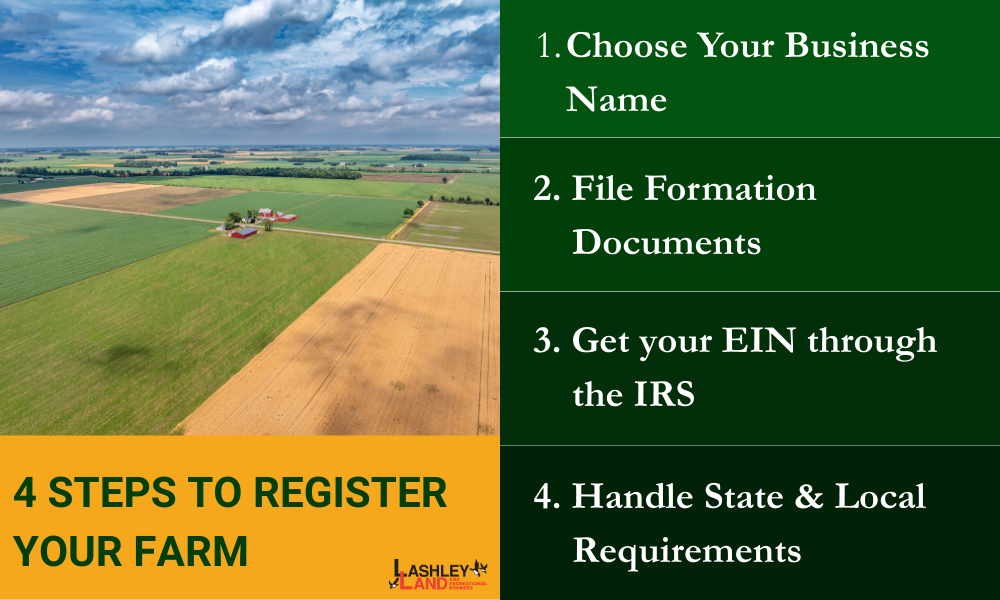
Step 1 – Choose and Reserve Your Business Name
Your business name must be distinguishable from existing Nebraska businesses. You can search the Nebraska Secretary of State’s database to check availability. If you find a name you want but aren’t quite ready to file, you can reserve it for 120 days for a small fee.
If you’re operating under a name different from your own legal name (or your LLC’s official name), you may also need to file a fictitious name registration with your county clerk.
Step 2 – File Formation Documents
For a limited liability company, you’ll file Articles of Organization with the Nebraska Secretary of State. Corporations file Articles of Incorporation. Both can be submitted online or by mail, and filing fees are reasonable.
The documents require basic information:
- Your business name
- Registered agent (someone in Nebraska authorized to receive legal documents on behalf of the business)
- Principal address
- Names of organizers or incorporators
Step 3 – Get Your EIN from the IRS
An Employer Identification Number is required if you plan to:
- Hire employees
- Open a business bank account
- File certain tax returns
Even if none of those apply right now, having an EIN is useful—it keeps your Social Security number off business documents and establishes your operation as a legitimate business entity. You can obtain an EIN from the Internal Revenue Service for free, and the online application takes just a few minutes.
Step 4 – Register for State and Local Requirements
Depending on your business activity, you may need to register with the Nebraska Department of Revenue. This applies if you’re:
- Collecting sales tax
- Hiring employees (which triggers unemployment insurance requirements)
- Conducting certain types of business
Check with your local government about county permits or zoning compliance. Some agricultural activities have different requirements depending on location. Additional registrations or licenses may include:
- Premises registration (if you’re raising livestock)
- Organic certification
- Specialty crop or value-added product licensing
- Farm-plated vehicle registration for agricultural equipment used on roadways
Additional Considerations for Nebraska Farm Owners
Operating Agreements and Bylaws
If you form an LLC, Nebraska doesn’t legally require an operating agreement—but you should have one anyway. This document covers critical details:
- Ownership percentages
- Decision-making authority
- What happens if an owner wants to sell their interest
- How the business will be managed day-to-day
- Succession plans for passing the operation to the next generation
For multi-generational or family-owned farms, an operating agreement is especially important. It keeps family members on the same page and prevents disputes down the road. Corporations need bylaws that serve a similar purpose.
Water Rights and Mineral Rights
Business registration doesn’t automatically transfer or clarify water rights and mineral rights. These are separate from surface land ownership in Nebraska and need to be addressed during any land purchase or business formation.
Key considerations include:
- Irrigation rights and permits if your farm operation depends on water access
- Mineral rights ownership (oil, gas, or other resources beneath your property)
- Any existing leases or easements that affect how you can use the land
These issues are worth discussing with a land professional before you finalize any transaction.
Insurance and Risk Management
Your business structure affects what types of insurance coverage you need and can obtain. A comprehensive risk management plan should include:
- Farm liability insurance
- Crop insurance
- Equipment coverage
- Additional endorsement options based on your specific operation
Talk to an insurance agent familiar with agricultural operations to make sure you’re adequately protected. The right coverage can mean the difference between recovering from a setback and losing everything you’ve worked for.
Getting Started
Registering your farm as a business takes some upfront effort, but it’s an investment in your operation’s future. The right structure protects your family, simplifies your finances, and positions you to take advantage of the programs and opportunities available to Nebraska’s agricultural community.
Thinking about buying farmland to start or grow your operation? The team at Lashley Land & Recreational Brokers has helped Nebraska farmers and ranchers find the right property for over 140 years combined. From productive agricultural ground to recreational properties perfect for a beginning farmer looking to build something new, we know this land and the people who work it.
Contact us for a free consultation and let’s talk about what you’re looking for.