
How to Find Investment Properties in Nebraska
Nebraska’s agricultural land has consistently outperformed many traditional investments, but finding the right property requires more than browsing online listings. While the housing market in urban areas gets most of the headlines, savvy property investors have long understood that rural Nebraska offers opportunities you won’t find in crowded metropolitan real estate markets.
The best investment properties in Nebraska are found through a combination of working with experienced local land brokers, understanding regional market dynamics, identifying properties with multiple income potential, and conducting thorough due diligence on water rights, soil quality, and long-term value factors.
Whether you’re looking for income-producing farmland, a recreational property with hunting potential, or a ranch with appreciation upside, here’s how to find investment-worthy land in the Cornhusker State.
Know What “Investment Property” Means in Nebraska
When most people think of real estate investment in Nebraska, they picture endless rows of corn and soybeans. But Nebraska’s investment opportunities extend far beyond traditional farming operations:
- Farms and ranches with crop or livestock income, providing steady cash flow for property owners willing to work with tenants or manage operations themselves
- Recreational land for hunting and fishing that generates rental income through leases while appreciating over the long term
- Rural acreages near growing communities like Kearney, Grand Island, and Norfolk where residential property gains development potential as towns expand
- Properties with water rights or mineral value that significantly impact property value in a state where irrigation drives productivity
Defining Your Investment Goals
Before browsing available listings, clarify what you’re actually looking for:
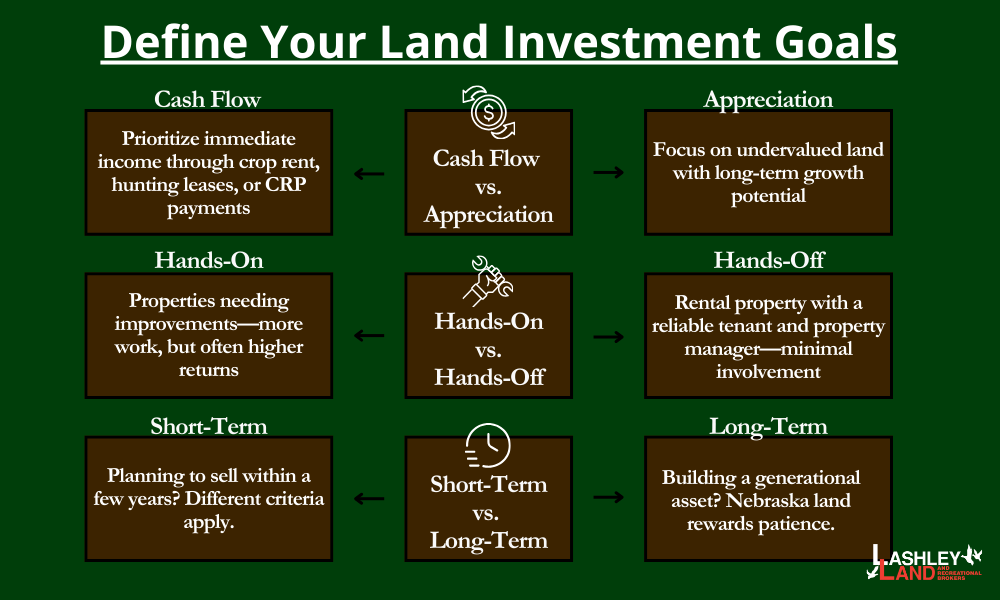
- Cash flow vs. appreciation: Some investors prioritize immediate passive income through cash rent, while others focus on buying undervalued land for long-term gains
- Hands-on vs. hands-off: A rental property with a reliable tenant and property manager requires minimal involvement, while a ranch needing improvements takes more attention but often delivers higher returns
- Timeline considerations: A real estate investor planning to flip within a few years has different criteria than someone building a generational asset
Nebraska land rewards patience. The investors who do best usually think in decades, not quarters.
Where to Look—And Where Most Investors Miss Opportunities
Beyond the Big Listing Sites
Most people start their property search online, scrolling through national platforms like LandWatch, Zillow, or Realtor.com. These sites have their place, but if online listings are your only strategy, you’re seeing the same properties as every other investor in the country.
The reality of rural real estate is that relationships still drive many transactions. Local land brokerages often have access to properties before they hit the public market. Landowners frequently approach brokers they know and trust before deciding whether to list publicly.
Estate sales and inherited properties represent another category that flies under the radar. When families inherit farmland, they don’t always rush to list it. A broker with deep roots in the community often knows about these situations and can facilitate introductions that benefit everyone involved.
Regions Worth Watching
Nebraska’s land market isn’t monolithic. Understanding regional specifics is essential before committing capital:
- Eastern Nebraska: Some of the most productive row-crop ground in the country—purchase prices run higher, but so does productivity
- The Sandhills: Cattle ranching and recreational uses at lower per-acre prices, though properties require significant acreage for meaningful returns
- River corridors: Properties along the Platte, Loup, Elkhorn, and Republican Rivers attract buyers combining agricultural income with hunting and fishing opportunities
- The Panhandle: Values heavily dependent on water availability, presenting unique dynamics for the potential investor
Working with a Land Broker Who Knows the Ground
Why Specialization Matters
The difference between a residential real estate agent and a dedicated land specialist is significant. A real estate professional who focuses on land understands soil productivity ratings, water access and rights, hunting pressure and habitat quality, lease rates, and local agricultural economies.
Local knowledge matters enormously. Nebraska has 93 counties, each with its own quirks and market conditions. A broker who’s spent decades working in a particular region knows which areas are gaining value, which properties have hidden issues, and which landowners might be ready to sell. It’s why firms like Lashley Land prioritize deep Nebraska roots and hands-on experience over generic sales credentials.
What an Experienced Broker Brings to the Table
Working with real estate professionals who specialize in land provides distinct advantages:
- Off-market access: Brokers with established relationships often hear about properties before anyone else and know which estates are being settled
- Realistic valuations: Experienced brokers can quickly assess whether an asking price is reasonable, protecting investors from overpaying
- Complex transaction guidance: Help navigating water rights, mineral searches, and financing options saves significant headaches
- Lender relationships: Financing agricultural land differs from securing a mortgage for a primary residence, and specialized brokers know which mortgage lenders work with rural properties
Due Diligence That Protects Your Investment
The Numbers Behind the Land
Smart investors look beyond the purchase price to understand the complete financial picture:
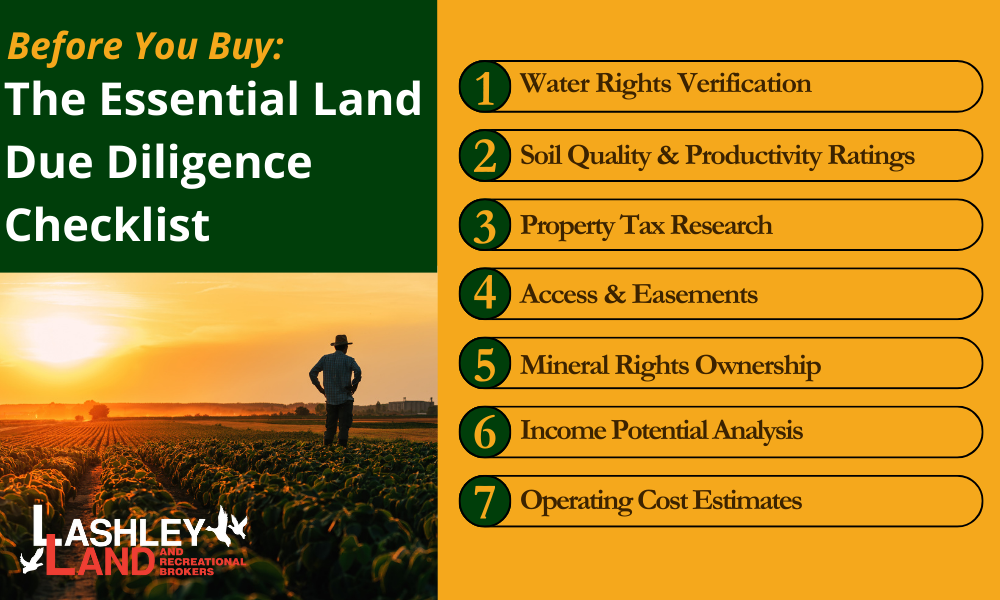
- Income potential: Cash rent rates for cropland, CRP payments for enrolled properties, or hunting lease income for recreational ground—your county extension office or local broker can provide typical rates
- Property tax: The most significant ongoing expense, with rates varying considerably across Nebraska’s counties
- Operating costs: Insurance, maintenance, and property management fees eat into returns more than many first-time investors expect
Understanding these costs ensures the numbers actually work before you commit.
The Details That Make or Break a Deal
Water rights verification is essential for any property where irrigation matters. Nebraska water law is complex, with different rules for groundwater and surface water. Understanding what rights convey—and any restrictions—should happen before you make an offer.
Additional due diligence should cover:
- Soil quality and productivity ratings from USDA soil surveys
- Access and easements confirming legal road access and any limitations on building
- Mineral rights ownership since these are sometimes severed from surface ownership
- Vacancy rate considerations for properties dependent on tenant income
Understanding what you’re actually buying matters for both current use and future property value.
Making Your Move—From Search to Closing
Timing the Market (Or Not)
Every investor wonders whether to wait for better conditions. The honest answer is that timing land markets is difficult, and waiting for the “perfect” deal often costs more than it saves.
Nebraska land values have generally trended upward over the long term. Investors who waited for a major correction during the past decade mostly watched prices climb higher. Seasonal patterns do affect the market—fall and winter see more listings as harvest wraps up—but quality properties sell quickly in any season.
The best approach is to define clear criteria, work with a knowledgeable broker, and be prepared to act when the right property becomes available.
Financing Agricultural and Recreational Land
Financing land purchases works differently than securing a conventional mortgage for single-family homes or commercial real estate like an apartment building or office buildings. Agricultural lenders like Farm Credit Services and local banks with ag lending departments evaluate productivity, income potential, and your overall financial picture.
Key financing considerations include:
- Higher down payments: Many lenders require 20-30% down for agricultural properties
- Different interest rate structures compared to residential mortgages
- Specialized loan terms that vary based on property type and borrower qualifications
Working with a broker who has relationships with agricultural lenders, or consulting your financial advisor, helps you understand your options and find the best fit for your investment strategy.

Find Your Nebraska Investment Property with Lashley Land
Finding investment properties in Nebraska comes down to clarity on your goals, local expertise, and thorough due diligence—not just scrolling through listings. The investors who succeed understand what they’re looking for, work with real estate professionals who know the ground, and verify the details that affect long-term value.
The right property is out there, but it often takes a knowledgeable partner to find it before someone else does. With over 140 years of combined experience in Nebraska land sales, the Lashley Land team brings the local insight, industry connections, and honest guidance that help investors make confident decisions. Whether you’re a first-time investor exploring farmland or an experienced buyer expanding into recreational properties, we’ll help you find opportunities that match your goals, including listings you won’t find anywhere else.
Ready to explore investment opportunities across Nebraska? Contact the Lashley Land team to discuss what you’re looking for and what’s available.