
Nebraska Farmland Market Trends into 2026: What Landowners Need to Know
Nebraska’s farmland market is at a turning point. After years of steady gains, including a record high in 2024, farmland values dipped for the first time in six years. Whether you’re thinking about buying, selling, or simply keeping tabs on your investment, understanding where the land market stands and where it’s headed matters now more than ever.
Nebraska farmland prices saw a modest decline in 2025 after several years of strong appreciation. But the full picture is more nuanced than a single number. What your land is worth depends on the type of ground you own, where it’s located, and what’s happening in the broader ag economy. Here’s what’s shaping the market trend right now.
The Big Picture: Nebraska’s Farmland Market in 2025
A Record Run That’s Finally Cooling
Nebraska’s land prices climbed steadily over the past six years, driven by strong commodity prices, tight supply, and financially healthy buyers. That run pushed the statewide average farm real estate value to record highs in 2024. But 2025 marked the first pullback in that streak — a modest correction, not a freefall.
The real estate market saw both fewer farmland sales and softer pricing compared to previous years. Transaction volume slowed as buyers took a more cautious, disciplined approach. The market is adjusting, but the foundation underneath it is still solid.
Not All Land Types Are Moving the Same Direction
One of the most important trends to understand is the split between cropland and grazing land. Irrigated and dryland cropland values softened as crop profitability tightened. Meanwhile, grazing land and pasture actually gained value over the past year, bucking the broader trend.
Strong cattle prices are driving demand for pasture acres, while lower grain sale prices are cooling competition for cropland. If you own tillable acres focused on row crops, the market feels different than it does for a rancher sitting on native grass.
Fewer Acres, Fewer Sales, But That’s Not Necessarily Bad
Land sales across Nebraska declined in volume, with fewer tracts coming to market overall. But a quieter market doesn’t automatically mean a weak one. Buyers are more selective, and quality farmland with fertile soil, good water access, and solid improvements is still drawing competitive interest at auction. The supply of land simply isn’t keeping up with long-term demand.
What’s Driving Nebraska Farmland Trends Right Now?
Commodity Prices and Farm Income Are Squeezing Margins
Lower corn and soybean prices have tightened the financial picture for many Nebraska operations. Net farm income declined significantly in 2024, and forecasts point to continued pressure. When a farmer is dealing with tight margins and rising input costs, land purchases and expansion tend to slow down. That reduced buying pressure is one of the biggest reasons cropland values softened this year.
Borrowing Costs Are Keeping Buyers Cautious
Interest rates have been at multi-decade highs, and the Federal Reserve’s monetary policy decisions continue to ripple through the real estate market. Higher borrowing costs affect everything from operating lines of credit to long-term farm real estate loans. Some buyers are sitting on the sidelines, waiting for rate relief before making a move. That hesitation has contributed to fewer transactions overall.
The Cattle Market Is Telling a Different Story
While crop producers are navigating high prices on inputs and low prices on grain, cattle producers are in a much stronger position. The national cattle herd is at historic lows, and cattle prices are near record highs. That strength flows directly into grazing land and pasture values, with cash rents for pasture also trending upward. Producers with flexible ground may be shifting away from crops and toward livestock as a result.
Tight Supply Still Favors Landowners
Even with softer pricing on cropland, demand from 1031 exchange buyers, neighboring farmers, and long-term investors remains steady. Land is still one of the most sought-after assets in agriculture, and there simply isn’t enough of it changing hands to satisfy demand. That tight supply continues to put a floor under farmland value across the state.
How Location and Land Type Shape Value Across Nebraska
Two States in One
A statewide average price doesn’t tell you much about what a specific parcel is worth. Eastern Nebraska counties with rich, fertile soil and proximity to markets consistently command the highest land prices in the state. Western and central Nebraska offer more affordable ground, but values vary widely based on water access, soil quality, and productivity.
The gap between regions can be significant, which is why working with rural appraisers and land professionals who understand your specific area is so important.
What Makes One Parcel Worth More Than Another?
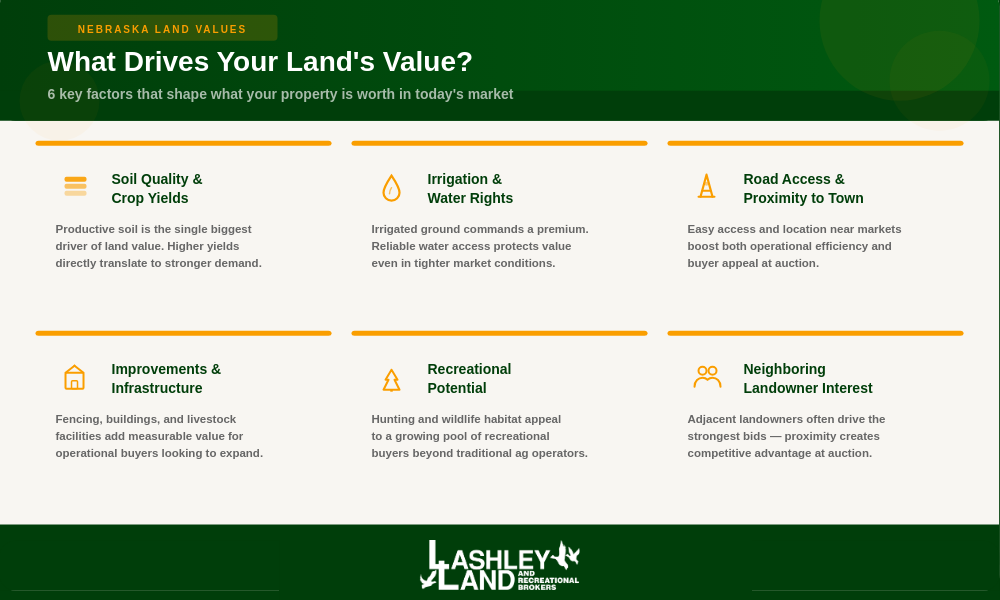
Several factors influence what any individual piece of Nebraska land is worth, including soil quality and crop yields, irrigation infrastructure and water rights, road access and proximity to towns, improvements like fencing, buildings, and livestock facilities, recreational potential such as hunting and wildlife habitat, and neighboring landowner interest. No two parcels are the same, and benchmark values or annual survey averages can only tell you so much.
Marginal Land Is Feeling the Most Pressure
Buyers in 2025 are more selective than in recent years. High-quality, productive tracts with strong fundamentals are still selling well. But marginal land, parcels with poor access, limited water, or less productive soils, is seeing softer demand. For sellers of these properties, realistic pricing and strong marketing matter more than ever.
Where Is Nebraska’s Farmland Market Headed?
Multiple industry sources expect Nebraska farmland values to remain generally stable heading into 2026. Benchmark farms tracked by regional lenders showed modest gains in the second half of 2025, and the consensus among farm managers and land professionals is that this is a recalibration, not the start of a significant decline.
Long-term fundamentals like limited supply, productive land, and growing global food demand still support the market.
Factors to Watch in the Year Ahead
Buyers and sellers should keep an eye on several factors that could shift the land market in either direction: the direction of commodity prices and whether crop margins improve, Federal Reserve decisions on interest rates and borrowing costs, cattle market strength and herd rebuilding timelines, weather and growing conditions for the 2026 crop, trade policy and tariff developments, and changes to federal farm programs and crop insurance. Emerging land use trends like renewable energy development and solar farm leases may also play a growing role in how landowners think about the long-term value of their ground.
Why Waiting for the “Perfect Time” Can Be Risky
Land is a long-term asset. Trying to time the market perfectly is nearly impossible — and both buyers and sellers benefit from acting with good information rather than waiting for conditions that may never arrive. Understanding your local market is far more valuable than chasing national headlines.

The Best Way to Know What Your Land Is Really Worth
Nebraska’s farmland market is shifting, but it’s built on strong long-term fundamentals. Whether you own irrigated cropland, native pasture, or a recreational property, the real answer to “what’s my land worth?” comes down to factors that go well beyond a statewide average.
That’s where local expertise makes all the difference. Working with an experienced Nebraska land broker gives you a clearer, more accurate picture of what your specific property is worth in today’s market. At Lashley Land & Recreational Brokers, we bring over 140 years of combined experience and deep roots across Nebraska’s diverse land markets — from the row crop country in the east to the ranch land out west.Curious what your Nebraska land is worth today? Contact Lashley Land today to talk with a broker who understands your area, your land type, and what buyers are looking for right now.