

What a Property Deed Really Means for Nebraska Landowners
Short Answer: A property deed is the legal document that transfers ownership of real property between two parties. In Nebraska, that deed becomes part of the public record once it is filed with the county register of deeds. Recording is what protects your claim to the land and fixes your place in the chain of title.
For Nebraska landowners, the deed is more than paperwork. It is proof of ownership, a part of almost every property transaction, and the first thing a title company studies before a sale can close. Here is what a deed means, how Nebraska records one, and why the details matter when you buy, sell, or pass land on.
What a Property Deed Actually Is
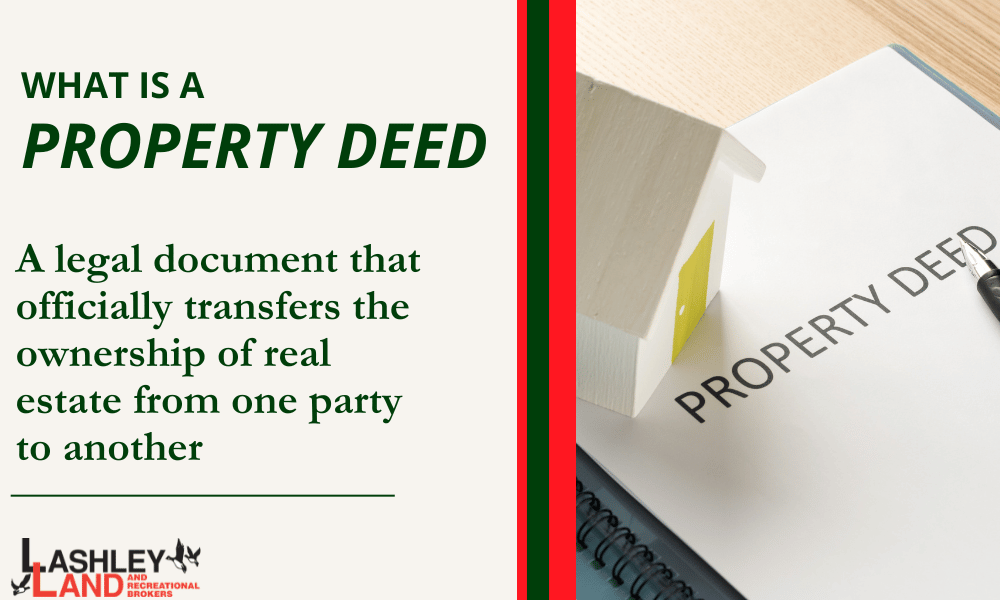
A deed is the real estate document that conveys legal title to land. It names the grantor (the person giving up ownership) and the grantee (the person receiving it), describes the land, and carries the grantor’s signature. The deed is what moves ownership to the next owner.
Deed vs. Title
Many people use these two words the same way, but there is an important difference between them.
- The deed is the physical document you sign and record.
- The title is the legal concept of ownership itself.
- A clean deed, properly recorded, is how land titles pass without dispute.
Common Types of Deeds in Nebraska
- General warranty deed: Gives the buyer the strongest protection and guarantees a clear title.
- Special warranty deed: Guarantees title only for the years the grantor owned the land.
- Quitclaim deed: Passes along whatever interest the grantor holds, with no guarantees.
Every deal is one of a kind, so the best choice really comes down to yours! Consider this your friendly starting point, not legal advice. If things ever feel difficult, an attorney can walk you through it.
How Nebraska Records Deeds

Every Nebraska county records deeds and related documents through its register of deeds. In smaller counties, the county clerk’s office handles that job. Recording is the step that turns a private agreement into a public record everyone can rely on.
Where Your Deed Gets Recorded
A deed is filed in the county where the land sits. Each county keeps its own land records, many dating back to the original land patents. In counties without an elected register of deeds, the county clerk acts as ex officio recorder under Neb. Rev. Stat. § 32-518.
The register’s office indexes every recorded document by grantor and grantee name, date, legal description, and book and page number. That index is what lets anyone trace a property’s chain of title.
What Recording Actually Does
Filing your deed at the recording office makes it an official record and gives notice to creditors and future buyers that the land changed hands. In Nebraska, the person who records first generally holds priority, so prompt filing protects your interest. The office can also take acknowledgments and administer notary oaths, then certify the original document by signature and seal.
Nebraska Recording Requirements and Fees
- Recording fee: $10 for the first page and $6 for each additional page (Neb. Rev. Stat. § 33-109).
- Form 521: A Real Estate Transfer Statement is required with most deeds.
- Formatting: Documents need a 3-inch blank space across the top of the first page and a minimum 8-point font.
- Documentary stamp tax: Charged on most transfers. The rate is $2.32 per $1,000 of value, rising to $3.32 per $1,000 on July 18, 2026.
Nebraska also allows electronic recording under the Uniform Electronic Transactions Act, though the deeds office still accepts paper documents with original “wet” signatures. In Nebraska’s smaller counties, the same county clerk’s office that records deeds also keeps vital records like marriage licenses, so one office often holds much of a community’s paper history.
A Deed Is Not the Only Thing on Record
The register of deeds holds far more than deeds. Mortgages, deeds of trust, and powers of attorney all sit in the same public record, and each one can affect a property’s title.
Quick Reference: Common Recorded Documents
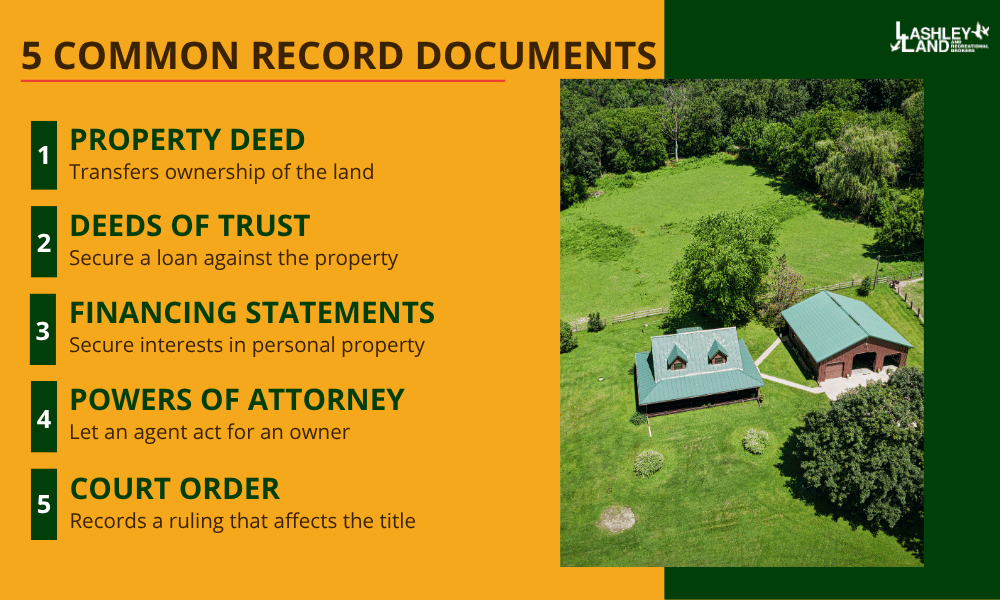
| Document | What It Does | Why It Matters to a Landowner |
| Property deed | Transfers ownership of the land | Proves who owns the ground |
| Deeds of trust | Secure a loan against the property | Back most Nebraska land and home loans |
| Financing statements | Secure interests in personal property | Can attach to equipment or fixtures |
| Powers of attorney | Let an agent act for an owner | Allow someone to sign in the owner’s place |
| Court order | Records a ruling that affects the title | Can change or cloud ownership |
Real Property vs. Personal Property
Deeds cover real property, meaning the land and what is permanently attached to it. Financing statements often cover movable assets, like farm equipment or fixtures. Knowing the difference keeps you from confusing a lien on a tractor with a lien on the ground itself.
If you are financing a purchase, our land financing page explains how deeds of trust fit into a Nebraska land loan.
How to Get a Copy of Your Deed in Nebraska

Any member of the general public can request copies of recorded documents from the register of deeds office. You can ask for a plain copy or a certified copy, which carries the office’s seal and stands as an official record.
Requesting Copies and Certified Copies
A certified copy reproduces the original document on file and usually costs about $1.50 per page, while plain in-office copies of documents cost less. Many offices take requests in person, by phone, or online, with payment by credit card. Some counties also offer an email alert that notifies owners when a new document is recorded against their property, which is a simple guard against deed fraud. Each office posts its own contact information and hours, so check your county’s register’s office before you make the trip.
When You Need a Title Search
Before any purchase, a title company runs title searches through the public record to confirm clear ownership and flag liens. A good title company turns scattered property records into one clear ownership picture. Pulling a blank deed form off the internet and filing it without legal advice is a common and costly mistake, since small errors in a blank deed can cloud a title for years. That is why most buyers lean on a title company or another professional service.
Deeds, Foreclosure, and Nebraska’s Redemption Rules
In a foreclosure, the deed of trust is what gives a lender the power to sell the land, and Nebraska’s redemption period rules are stricter than many buyers expect.
How a Foreclosure Sale Transfers Title
Most Nebraska land loans use deeds of trust with a power-of-sale clause, which allows a nonjudicial foreclosure sale under the Nebraska Trust Deeds Act (Neb. Rev. Stat. § 76-1005). A lender can instead foreclose in court, by court order, the same way a mortgage is foreclosed. After a trustee’s sale, a trustee’s deed transfers title to the new buyer.
What Nebraska’s Redemption Period Looks Like
Nebraska does not grant a redemption period after a nonjudicial trustee’s sale. Once the trustee’s deed records, ownership ends (Neb. Rev. Stat. § 76-1010). Before the sale, an owner can pay off the full loan, which works as the practical redemption period. After a notice of default, the cure window is one month, though Nebraska gives agricultural land a longer two-month redemption period (Neb. Rev. Stat. § 76-1006). That extra time matters for farm and ranch owners.
Foreclosure and auction sales can also be a way into land ownership. Our Nebraska land auctions page covers how that process works.
Count on a Clear Deed Before You Buy or Sell
A deed is the document that proves who owns Nebraska land, and how it is recorded shapes every step of a sale. With Nebraska farmland averaging $3,905 per acre as of February 1, 2026 (University of Nebraska-Lincoln Farm Real Estate Market Survey), the value tied up in a single parcel is real money. A clean, properly filed deed protects both the everyday use and the long-term financial worth of the ground beneath your boots. Keep in mind that this is general information, and complex transfers are worth review by an attorney or title company.
At Lashley Land & Recreational Brokers, our team brings over 140 years of combined experience helping Nebraskans buy and sell with confidence. If you have questions about a property, the records behind it, or your next move, schedule a free property consultation and talk with a Nebraska land specialist.